

Chesapeake wildlife resilient in 2011 despite low oxygen
By Jeff Gillies on June 20, 2012
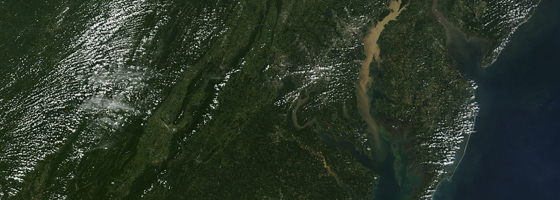
Dissolved oxygen levels in Chesapeake Bay dropped to a four-year low in 2011, driven down by a wet spring, hot summer and heavy storms in late summer, according to a report from the Chesapeake Bay Program.
An analysis of the final data on the Bay’s 2011 dead zone season found only 34 percent of surveyed waters met dissolved oxygen standards. Despite oxygen levels dipping slightly below 2010 levels and well below levels recorded a decade ago, oyster biomass and survival levels were high and disease levels were low. And though the overall area of health underwater bay grasses shrank in 2011, some important areas of grasses either grew or held steady.
Read more at Chesapeake Bay News
Image credit: NASA



0 comments