

Satellite shows summer polar ice melt exceeds expectations
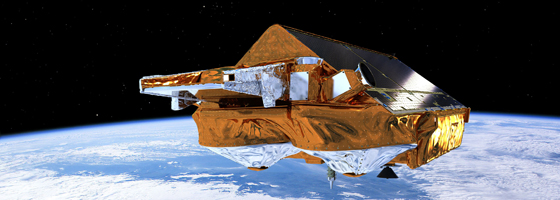
A satellite designed to monitor polar ice thickness showed that ice melt this summer greatly exceeded scientist’s predictions, according to a report from The Guardian.
The satellite, named CryoSat-2, showed that 900 cubic kilometers of sea ice melted this summer. That number is 50 percent greater than polar scientists’ predictions.
A lack of summer ice could cause the poles to heat more, as less white surface will be available to reflect sunlight. An Environmental News Network report on the discovery says that a lack of ice could cause a run on previously inaccessible fish and natural resources in the area.
The European Space Agency launched the satellite in April 2010 to monitor ice thickness. It is the first satellite built specifically for that purpose.
The Guardian reports that previous ice monitoring satellites measured ice coverage but could not easily measure ice thickness.
Scientists recording the data attribute the ice melt to climate change.
Image credit: ESA/AOES Medialab



0 comments