

NexSens XB-200 Data Buoy Review
Open water monitoring projects can pose many challenges, and NexSens Technology has the solution with the new XB-200 Data Buoy.
Easy Deployment
Data buoy deployments often require large, expensive vessels with lifting gear. At under 30 inches in diameter and just 67 lbs (plus payload), the XB-200 is easy to transport, deploy and retrieve. The XB-200 can be handled by two technicians and deployed from any small workboat, opening up new monitoring possibilities that were previously cost-prohibitive.
The compact size of the XB-200 makes it ideal for inland and nearshore applications, including limnology research, dredge turbidity monitoring, temperature or dissolved oxygen profiling, fisheries and aquaculture monitoring, harmful algal bloom detection, and spill response.
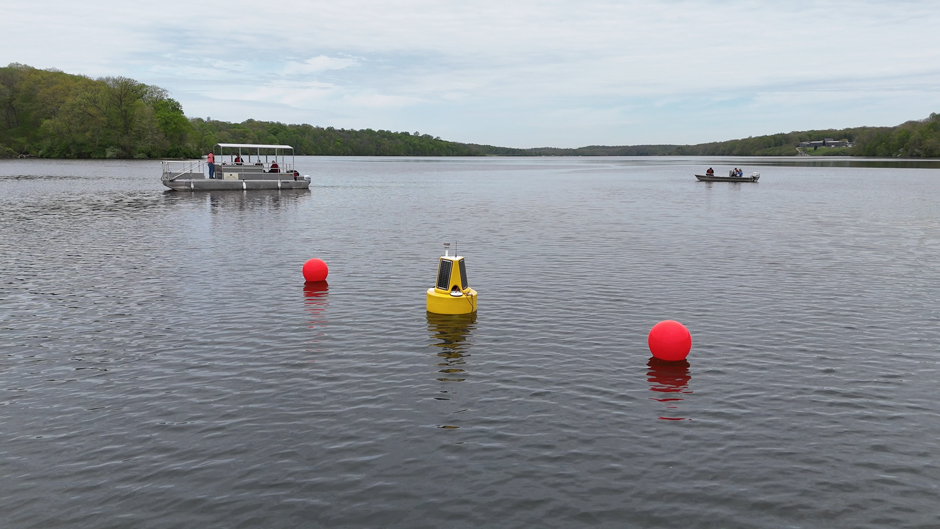
The NexSens XB-200 data buoy deployed in Acton Lake. (Credit: Josh Pene / DreamBox Studio)
Durable Design
The XB-200’s hull and solar tower are made from an impact-resistant and UV-stabilized polyethylene, offering both flexibility and toughness to endure harsh conditions during transport and at sea.
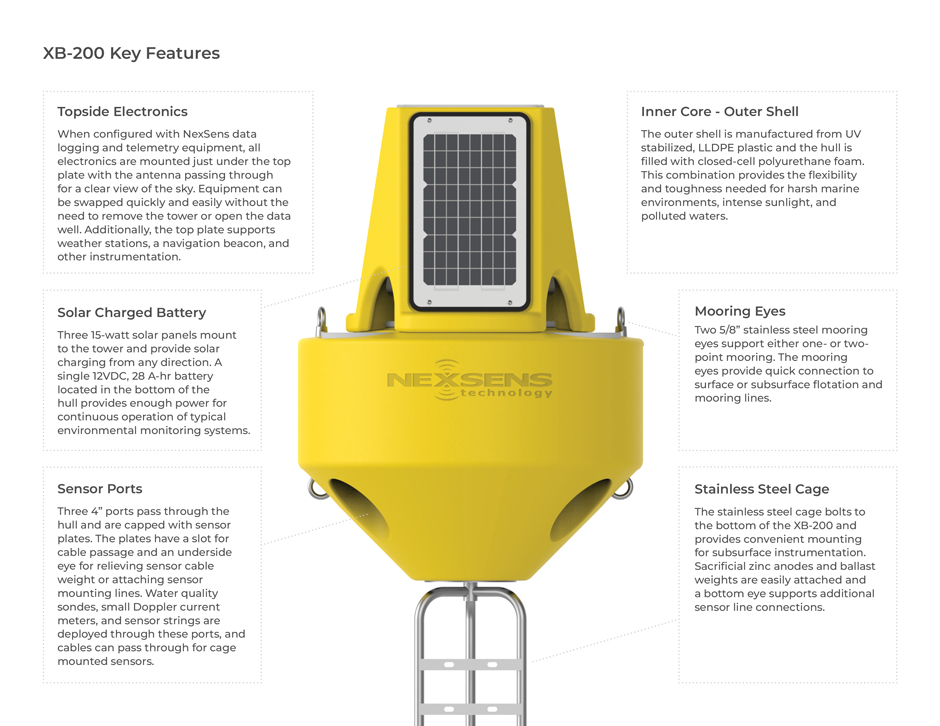
The hull is filled with a lightweight, closed-cell polyurethane foam to keep the buoy afloat even if pierced or damaged. The solar panels are coated with a clear polymer, eliminating traditional glass that is prone to breakage and shattering. Batteries are secured inside the buoy’s waterproof hull.
Power Options
Providing adequate power to support sampling and transmission requirements often drives up the size of the buoy platform. In comparison, the compact design of the XB-200 includes three integrated 15-watt solar panels and 28 or 56 A-Hr battery options that provide adequate capacity for demanding projects.
Sensor Integration Options
While sensor and instrument mounting options can be limited with many buoys, the XB-200 was designed with mounting flexibility as one of the key requirements, incorporating a subsurface stainless-steel mounting cage. Three 4” pass-through ports from topside to underwater for sensors and cables make sensor integration and mounting easy.
A full line of mooring line clamps is available for water column sensors, and a plate on top of the solar tower can be configured for weather sensors along with a navigation beacon, GPS and other equipment.
Commonly integrated sensors include weather stations, wave sensors, thermistor strings, multi-parameter sondes, Doppler current profilers, and other monitoring instruments.
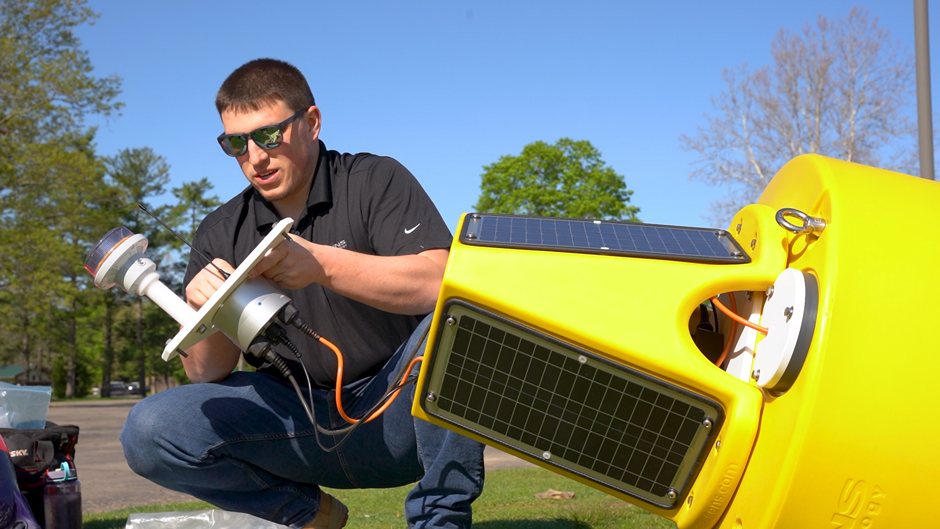
NexSens Applications Scientist Joe Davidson demonstrating how to prepare the XB-200 for deployment. (Credit: Josh Pene / DreamBox Studio)
Field Maintenance Capabilities
While servicing deployed data buoys typically requires lifting the buoy onto the boat or ship’s deck before accessing the electronics, the XB-200 was designed with easy maintenance in mind.
When configured with the NexSens X3 cellular or Iridium satellite data logger, all electronics are mounted under the solar tower top plate for quick access and easy replacement. In calm water, this service can be performed without pulling the buoy into the boat.
Next Generation Buoy Technology
The XB-200 Data Buoy is designed to overcome many of the difficulties associated with using larger data buoys. It’s easy to deploy, designed to support both submersible water sensors and topside atmospheric sensors, incorporates high-capacity battery options with solar charging, and–most importantly, it is built to provide years of service in both freshwater and saltwater applications.






0 comments