

The Fondriest Center for Environmental Studies: Restoration, Testing, Research and Education
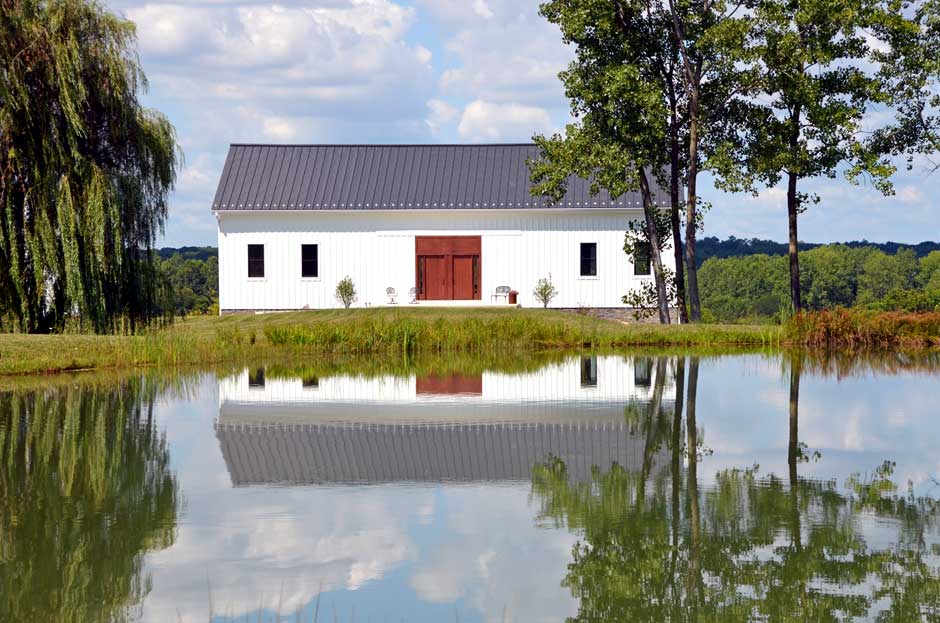 The Fondriest Center for Environmental Studies (Credit: Fondriest Staff)
Shortly after Ohio became a state in 1803, George Harner arrived in Greene County with a land deed signed by then-President Thomas Jefferson and Secretary of State James Madison. The homestead was largely old-growth forest and wetlands, and also included a fen-fed stream—the Beaver Creek.
Similar to much of the Ohio Territory, the forests eventually gave way to land clearing and grain farming. Harner’s descendants, including his son John and John’s wife, Sarah Koogler, continued to work the rich soil for many years to follow.
Much of the original property and surrounding land have since succumbed to urban sprawl. However, several protected areas remain today, including the Beaver Creek Wetlands, Koogler Wetland and Prairie Reserve, Beaver Creek Wildlife Area, Fairborn Marsh, and the Fondriest Center for Environmental Studies.
In 2014, Fondriest Environmental purchased 72 acres of land near the company headquarters with a pioneering goal in mind: to restore and protect a historically diverse southern Ohio ecosystem and create a hub for collaborative research and education.
The team added a stocked lake with native shoreline plantings, created wildlife habitat, and preserved a mid-19th-century timber-framed barn on-site.
A real-time network of monitoring sensors collects, records, and transmits environmental parameters to the company cloud. Water level, water quality, stream flow, and weather conditions are continuously recorded, and the technology tested and deployed at the station showcases just some of what is possible in the field.
Product and System Testing
The Center for Environmental Studies represents more than sustainable environmental practices. It is also an expression of Fondriest’s commitment to reliable products that have been tested and optimized in the field.
Staff engineers and scientists use the property to test new and existing technologies in real-world deployments. This field testing helps certify product performance and sensor accuracy.
Working with the instruments directly also exposes sales and support staff to many of the obstacles associated with field deployments, ultimately leading to more reliable products and systems.
Set Up and Training
One of the greatest uncertainties for field scientists and other professionals deploying equipment is how it will work in action. To address this, industry professionals regularly visit the center for training with Fondriest application engineers.
Calibration, systems integration, and deployment training sessions are available before equipment is shipped to the project site. With this approach, clients can be fully prepared and confident in their equipment before a project begins.
Habitat Restoration and Documenting Life
The property has been heavily farmed for the past two centuries, significantly degrading the soil. The team is reversing these practices and restoring the land through adaptive multi-species grazing on pastures diverse with grasses, legumes, and forbs.
Additionally, the installation of bluebird and duck boxes, the maintenance of wildflower meadows, invasive plant removal, boundary planting of native grasses, and a honeybee apiary have all helped restore biodiversity and a balanced ecosystem.
The restored meadows and wetlands, native shoreline plantings, and new animal habitats work to recreate the biodiverse ecosystem that once existed. Today, the center abounds with wildlife, as whitetail deer, coyote, waterfowl, raptors, and other animals now make their home on the historic farmland
A lake provides habitat for native fish, frogs, snakes, and turtles. Monitored in real-time with a NexSens buoy for water quality and weather conditions, data is available 24/7 online through WQData LIVE.
Fondriest staff also document the diversity of flora and fauna on the property, and over 500 species have been found and recorded in the online data center.
Educational Outreach
Staff at the center work with K-12 programs to support experiential learning. Company scientists guide students through activities such as buoy deployment and making water quality measurements. Real-time data collected at the center is available to students and teachers on mobile devices and computers, allowing for field data analysis in the classroom.
Programs like these offer excellent opportunities for students to foster an interest in the environment and grow into the passionate scientists and environmental stewards of tomorrow.
University Research
Fondriest scientists and engineers support local universities to prepare students for professional environmental careers. Graduate and undergraduate students conduct studies from start to finish on the property, with staff offering training as needed. They learn valuable techniques for sampling and environmental monitoring, which many professional organizations regularly perform.
Conference Center
The nearly 200-year-old barn on site welcomes visitors with a spacious, rustic meeting space fit for accessing different areas of the center, reviewing data, or simply admiring the views of the property’s surrounding woods.
Extensive care went into restoring the historic barn, which contains hand-sewn timber beams preserved from the original structure and furniture made from wood as old as the barn itself.
The entire Center for Environmental Studies promotes the values of Fondriest Environmental, aiming to improve the quality of equipment we supply and the knowledge of the natural systems they monitor. Learn more about the center at fondriest.com.






0 comments