

Connecting with Nature in Real-Time at the Abernathy Field Station
Just five miles away from Washington and Jefferson (W&J) College is the 57-acre Abernathy Field Station. Generously donated by the Abernathy family in 2017, the field station has served as an outdoor lab to hundreds of undergraduate students over the years.
Many classes use the Abernathy Field Station every week. For example, in BIO 111, students spend 15 weeks conducting their own research at the field station using a combination of sampling, field observations, and real-time environmental data, giving them a look into the world of science and a closer relationship with nature.
“We like to start the students in the research process in their first Biology class. It’s like a mini-masters where they’ve got 15 weeks to come up with their idea, write a proposal, get the equipment, collect the data, analyze it and present their findings to both a scientific audience and the general public,” explains Jamie March, Associate Professor of Biology at W&J College.
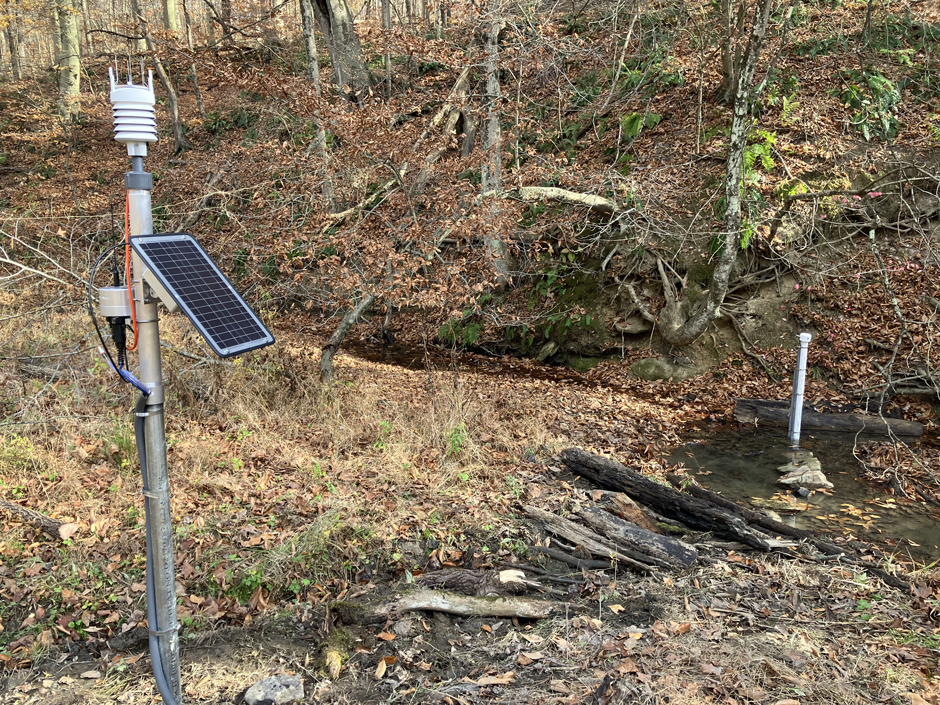
One of the Hanson Weather and Water Quality stations at W&J’s Abernathy Field Station. (Credit: James March)
Environmental Data Collection at the Abernathy Field Station
Faculty members and students also collaborate on EREN, Ecological Research as Education Network, research projects. The goal of EREN is to design research projects that can be conducted with undergraduates in short time periods–for example, a three-hour lab–but are done across the country, offering a spatially large dataset of publication quality.
Data collection for the projects varies, but two recent additions to the field station have been helping to provide additional environmental context to projects: the Hanson weather and water quality stations.
One of the stations focuses on water quality measurement, while the other records both weather and water quality conditions. Both stations are equipped with the NexSens X3 data logger and WQData LIVE for real-time data access for any W&J community member.
Both stations also include a Seametrics CT2X sensor, which measures water level, conductivity, and temperature, and one is equipped with a Vaisala multiparameter weather station.
Funding for the Hanson weather and water quality stations was generously provided by W&J alum, Dr. Joseph M. Hanson and Mrs. Mary Jane Hanson, M.Ed.
In addition to the real-time measurements, occasionally student research requires remote logging in different parts of the field station using Maxim iButtons and HOBO MX temperature Pendants.
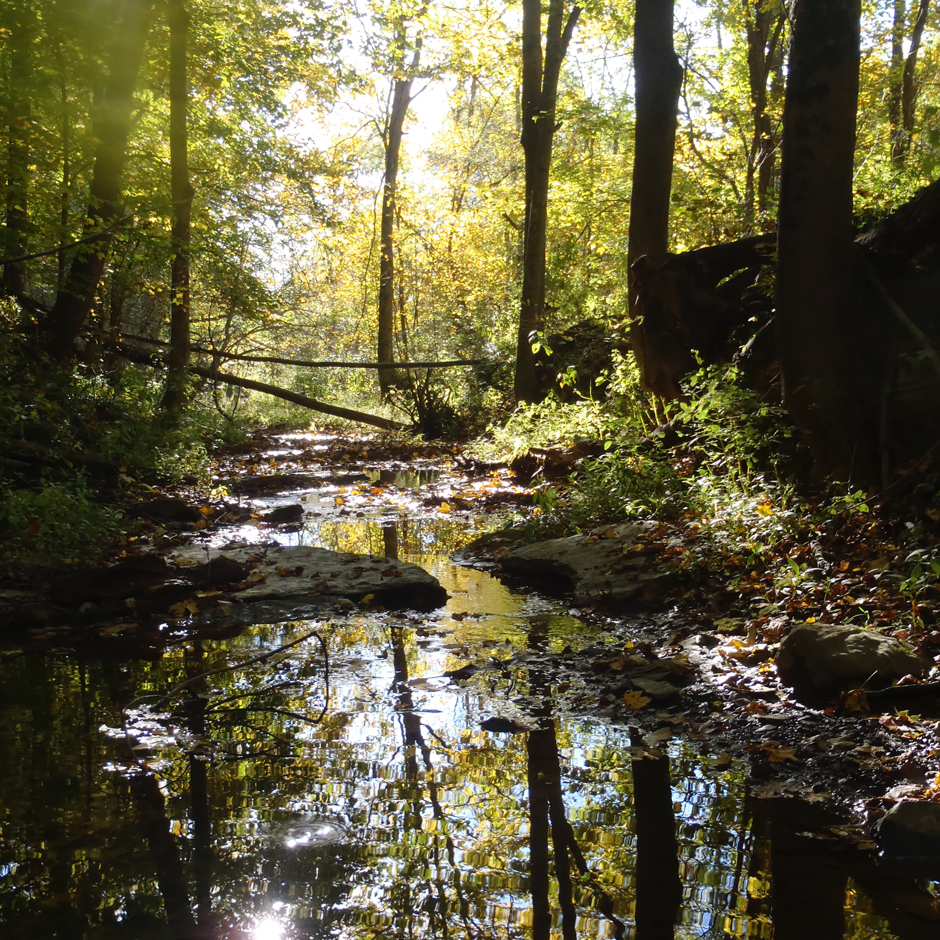
A stream at W&J’s Abernathy Field Station. (Credit: James March)
Benefits of the Field Station
For March, the field station is a unique resource to the campus for a variety of reasons. First, proximity to the station makes it possible to take trips there during standard lab periods so that students can work there weekly as opposed to just during summers, spring or winter breaks.
Second, the placement of the station serves as an ideal mesocosm of what’s going on in southwestern Pennsylvania. Nestled between a cattle farm, horse farm, two fracking well pads, and a coal mine, the environment has the potential to be impacted by a variety of anthropogenic stressors.
“It’s not 5000 acres of pristine forest in the middle of nowhere,” states March. “But I think it’s much preferable, because we can monitor for potential disturbances from these different land use activities, and can give students a window into issues that are happening locally.”
Finally, students have the opportunity to interact directly with the environment. March explains, “If you’re studying streams, I feel like you need to be in the stream. Just reading about it doesn’t have the same effect on student learning and enjoyment.”
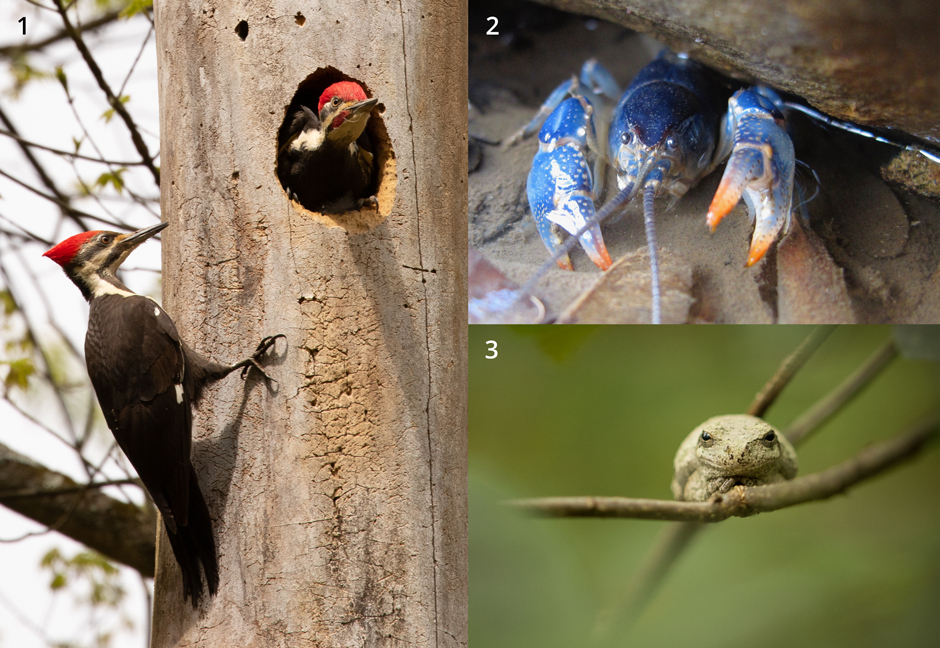
Some of the fauna at W&J’s Abernathy Field Station. (1) Pileated Woodpecker (Dryocopus pileatus), (2) Monongahela Crayfish (Cambarus monongalensis) and (3) the Gray or Cope’s Tree Frog (Dryophytes sp.). (Credit: James March)
In addition to the research potential, the area is also used by other W&J community members, such as students involved in the college’s Wellness program. While Abe and Janet Abernathy originally donated the land, the family has continued to support the field station’s mission.
Today, their son Jim serves as a caretaker for the facility, and W&J continues to receive funding from the Washington County Community Foundation to cover annual expenses. Many alumni have donated funds to help students maximize their learning and enjoyment at the Abernathy Field Station.
Some gifts are large, such as the Hanson weather and water quality stations, but the Abernathy Field Station also receives many smaller gifts from recent graduates. March finds it encouraging that alumni return to campus to visit the field station and that they share their resources, both time and money, to help W&J students.
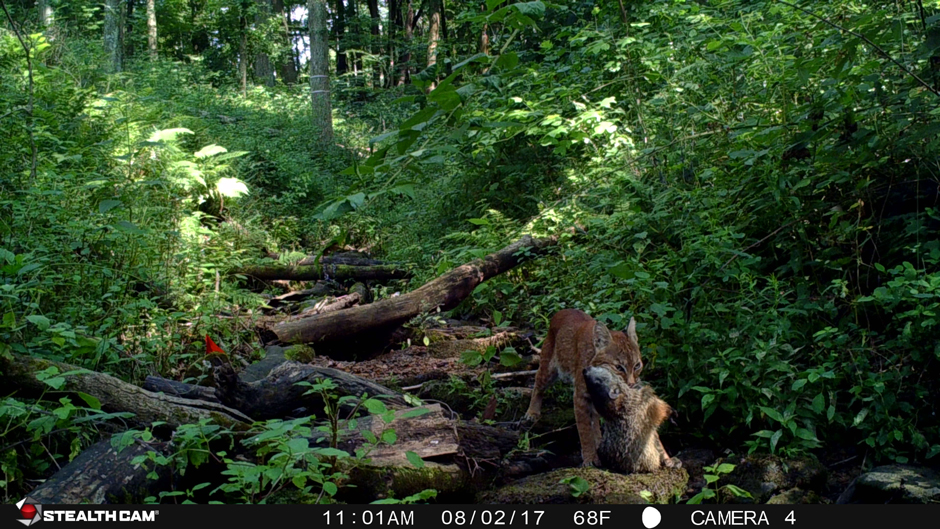
Bobcat (Lynx rufus) with Groundhog (Marmota monax). (Credit: James March)
More Than Just Research
Ultimately, the Abernathy Field Station serves as a place for students, faculty, and the community to engage with nature, which is an essential part of protecting and conserving environments.
“In addition to the power of the quantitative data, there’s an intangible benefit when students encounter some of the local biodiversity that we take for granted. I try to emphasize both the importance of quantitative data and the importance of quietly watching, listening, and enjoying nature,” explains March.
He continues, “And once you start to notice the amazing biodiversity, even in an urban environment, you are never bored. There is life everywhere, and this field station really makes seeing that possible.”
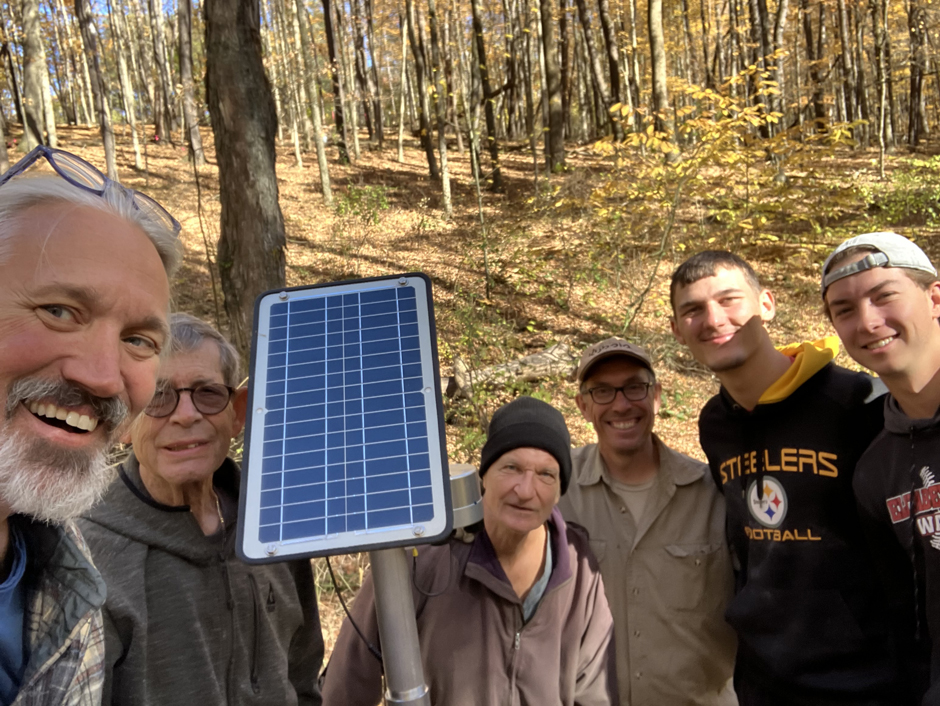
W&J Alum, Faculty, students, and AFS Caretaker work together installing the Hanson Weather and Water Quality Stations. From left to right: Jamie March, Joe Hanson, Jim Abernathy, Jason Kilgore, AJ Wardropper, and Nate Ratica. (Credit: James March)






0 comments