

Science and Community Guide Innovative Conservation Project in Patagonia
As Chile carves its way down South America’s western coast, it slowly transitions from deserts in the north to vast, plunging seaside mountains and bountiful forests in the south. This world-famous region at the tip of the continent, known as Patagonia, boasts dozens of national parks.
In the wild, nearly untouched areas of southern Patagonia at the tip of the continent, these often interconnected parks span over thousands of square miles. However, for decades, land at the northern edge of this region struggled to receive the same level of protection.
An especially gaping hole in the park map was Fundo Puchegüín, a 328,000-acre swath of wilderness in the heart of northern Patagonia.
“This place, it’s an ecological treasure,” says Juan Jose Donoso, Program Director of The Nature Conservancy (TNC), Chile. “It’s also a very important cultural landscape.”
This appreciation of the region, also known as the “Yosemite of South America,” galvanized a group of conservation organizations and companies when it was listed for sale in 2022. In December of 2025, a group of organizations, including TNC, purchased the land.
Some of the unique biodiversity and ecosystem services that Puchegüín harbors have been catalogued by science, helping to justify this purchase. Yet the true ecological complexity of this place is likely vastly understudied, and new protection may unveil its ecological secrets.
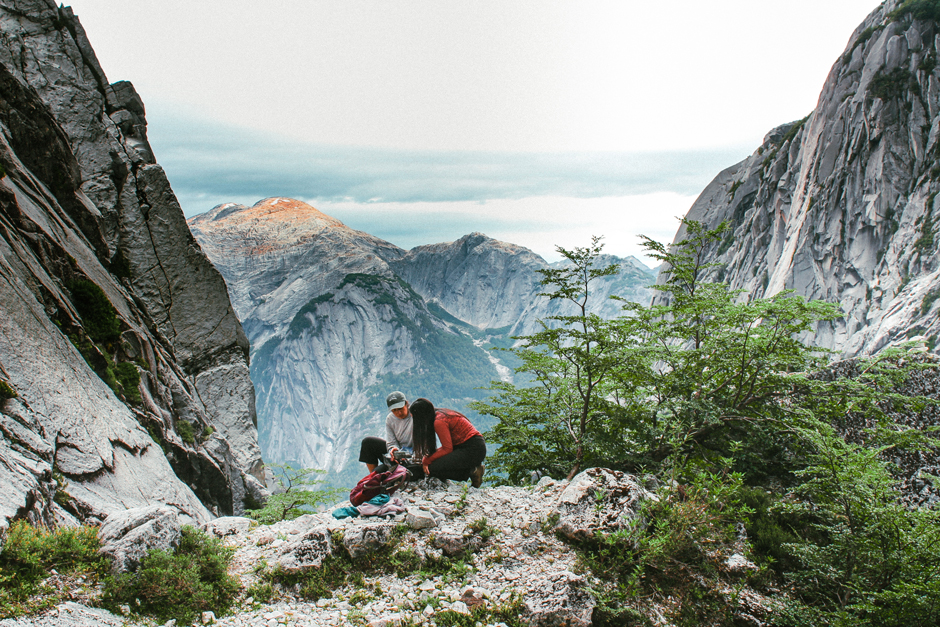
Installation of camera traps in the Cerro Anfiteatro during the Puelo Patagonia participatory monitoring program in January 2026. (Credit: Puelo Patagonia)
Fundo Puchegüín’s Ecological Importance
Fundo Puchegüín sits just east of the Chilean city of Cochamó, straddling the border with Argentina. For decades, as other tracts of land surrounding the region became protected, this central region of the Cochamó Valley faced pressures such as real estate projects and unregulated tourism.
In fact, Donoso says that over several years, much of the land was privately purchased. When it was put up for sale, TNC and others created the non-profit Conserva Puchegüín to protect an area with ecological benefits that far outweigh its size.
The initiative was first led by Puelo Patagonia, a local non-profit, which later invited other organizations, including TNC, to join due to the scale of the territory and the ambitious fundraising effort required.
“This is part of a missing link, [there was] a missing part of a puzzle,” Donoso says. “Because having Puchegüín under protection, you will have over 4 million acres of a network of protected areas all across Chile and Argentina.”
The Chilean government has implemented a long, interconnected system of parks south of Puchegüín. Therefore, as the northern end of this vast protected area, Donoso says the coalition’s purchase increases habitat connectivity.
“This is a very relevant place as an ecological corridor all across these protected areas,” he says.
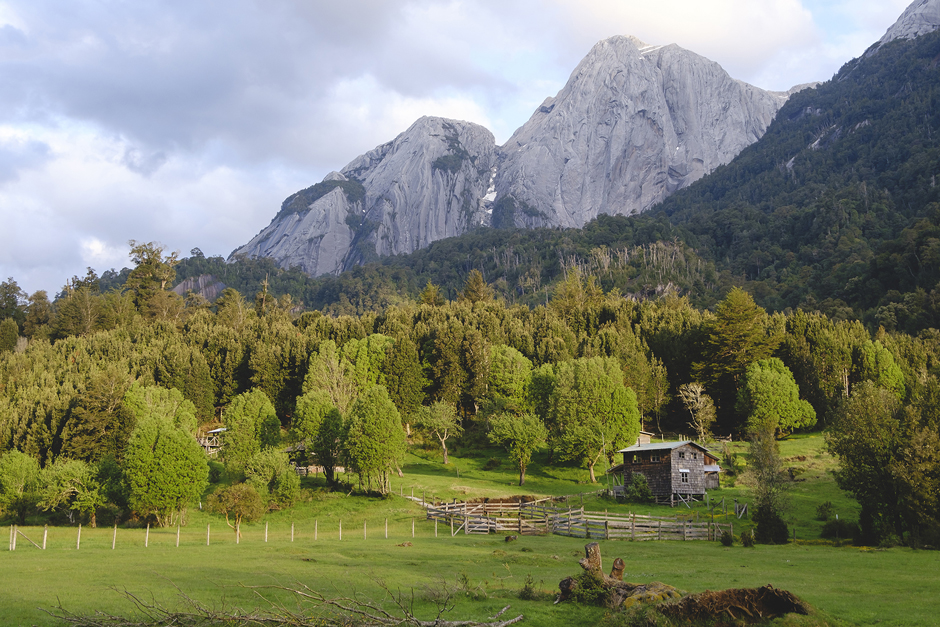
View of Cerro Trinidad, located within Fundo Puchegüín. (Credit: Rodrigo Manns)
Conserva Puchegüín already has evidence supporting its importance. Before multiple groups banded together to buy the property, a local non-profit in the region, Puelo Patagonia, supported baseline scientific studies in the Cochamó Valley.
Donoso says that one of the most important findings was confirming the presence of the endangered huemul deer in Puchegüín, and a few populations of the extremely rare rodent Wolffsohn’s viscach, of which Donoso says little is known.
The region also contains 11% of the world’s alerce trees, large and ancient trees related to North America’s redwoods. Additionally, almost 50% of the property is primary, old-growth forest.
Puelo Patagonia has also mapped hundreds of square miles of rivers, lakes, and glaciers in Puchegüín, according to its Communications Director, Josefina Vigouroux. In fact, Puelo Patagonia has already protected the Puelo River, whose headwaters start in Puchegüín, by creating a water reserve.
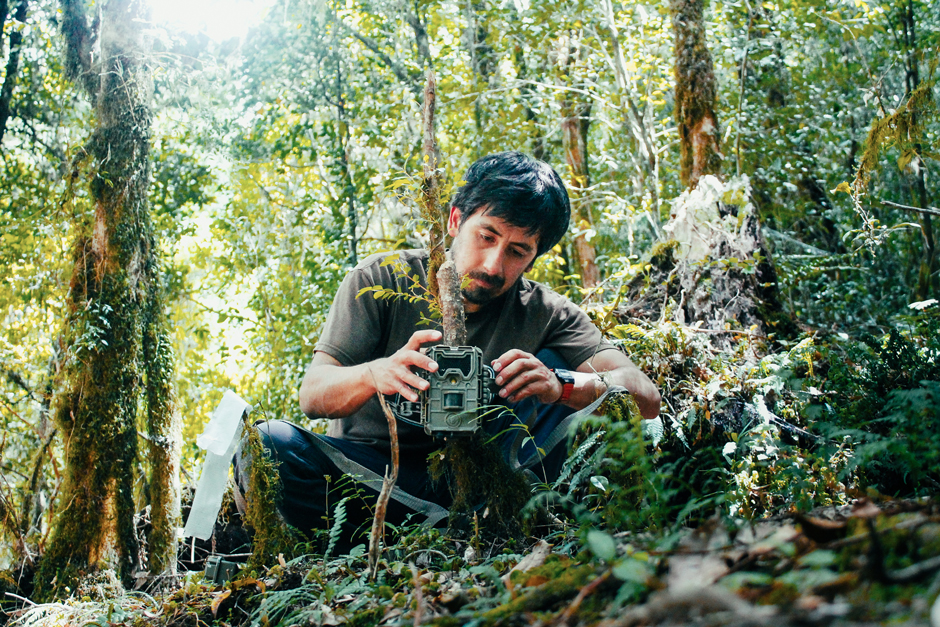
Fernando Novoa, Puelo Patagonia wildlife veterinarian, installing camera traps in Puchegüín. (Credit: Puelo Patagonia)
Research and monitoring in their 2024 annual report also detailed the hundreds of hectares of wetlands and peatlands in the region, and monitoring has shown it be a vital carbon sink in South America.
Yet, while Puelo Patagonia’s baseline monitoring showed Puchegüín harbors unique biodiversity, much of it is still unexplored and understudied.
“Puchegüín is one of those rare landscapes where significant scientific discoveries are still possible at scale,” Vigouroux says.
However, Conserva Puchegüín plans to change this.
“This is a huge property that remains scientifically understudied,” Donoso explains. “So that will be part of our next steps, and the coalition will be working on that.”
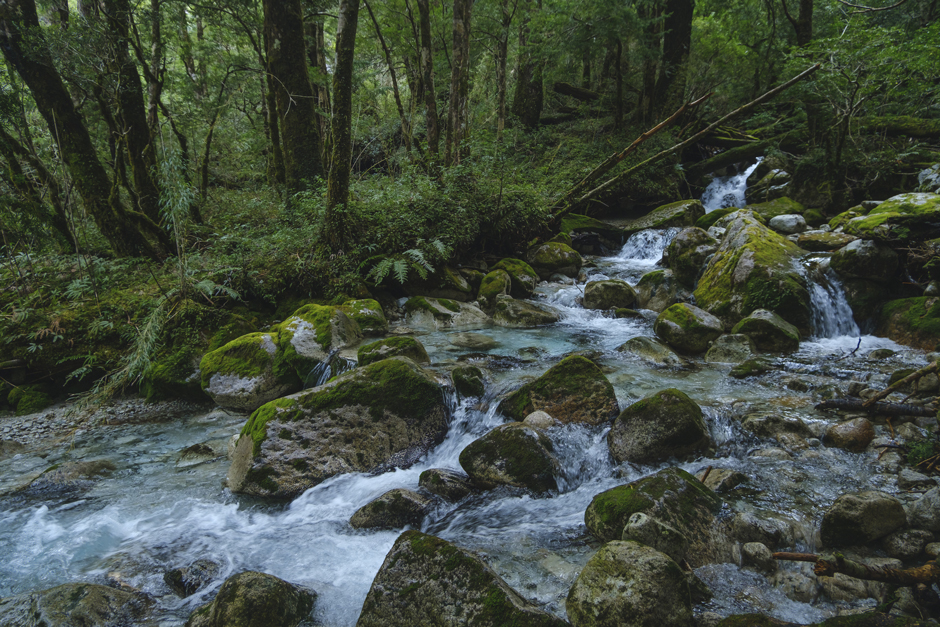
The Cochamó River is 40-kilometers long and rises in the Andes Mountains, flows through Valle Cochamó, and empties into the Reloncaví Estuary. Its watershed was among the first to be protected in Chile, thanks to the local organization Conservación Cochamó, which successfully opposed the construction of a seven-dam hydropower project. (Credit: Rodrigo Manns)
Monitoring Puchegüín for the Future
After purchasing Fundo Puchegüín, the coalition’s next steps are zoning the area into strict protected and multi-use areas. They plan to strictly conserve 80% of the property, while leaving the remaining 20% to local communities, who will continue living, farming, and implementing sustainable tourism on their land.
“We will be working in parallel on zoning and participatory planning, so that will help us with conservation planning and monitoring,” Donoso says.
However, with so little of the property’s ecology well understood, he says more studies and monitoring must take place before these designations can be implemented.
“The next steps will be to work on understanding better the whole property, understanding the ecological significance of different species, and the ecosystemic services,” Donoso explains.
Puelo Patagonia will lead ongoing knowledge-building and monitoring efforts in the area, as part of the work the Conserva Puchegüín alliance needs to move forward. These will include hydrology, ecology, and wildlife research projects.
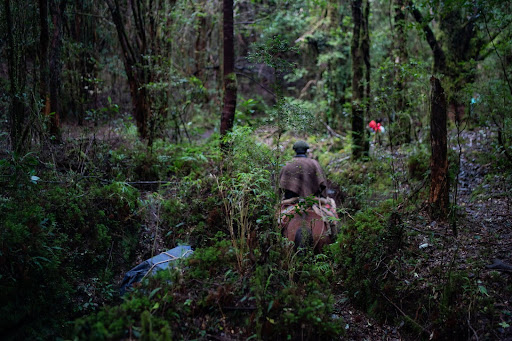
An arriero and his horse on the historic trail to Paso El León. The route was historically used to move livestock between Chile and Argentina. Today it continues to be used for herding, and is also links Cochamó with Argentina, crossing the Andes through native forests, crystal-clear rivers, and mountain landscapes. (Credit: Valentina Thenoux)
“With these new studies, we will [better understand] the property, and that will guide us to develop these conservation strategies,” Donoso says.
Fundo Puchegüín is also at the brink of a new national conservation strategy within Chile. A few years ago, all of the country’s protected areas were organized under one agency, the Biodiversity and Protected Areas Service (SBAP).
Donoso explains that Puchegüín will be one of the first protected areas under this law that also actively incorporates multi-use activities within its boundaries.
Hence, why TNC and all the partners within Conserva Puchegüín emphasize the importance of these scientific studies: to ensure they are protecting the most important ecological areas while still respecting local communities.
“That’s why I really like this project, because of how embedded cultural protection [is] and also biodiversity,” Donoso says.
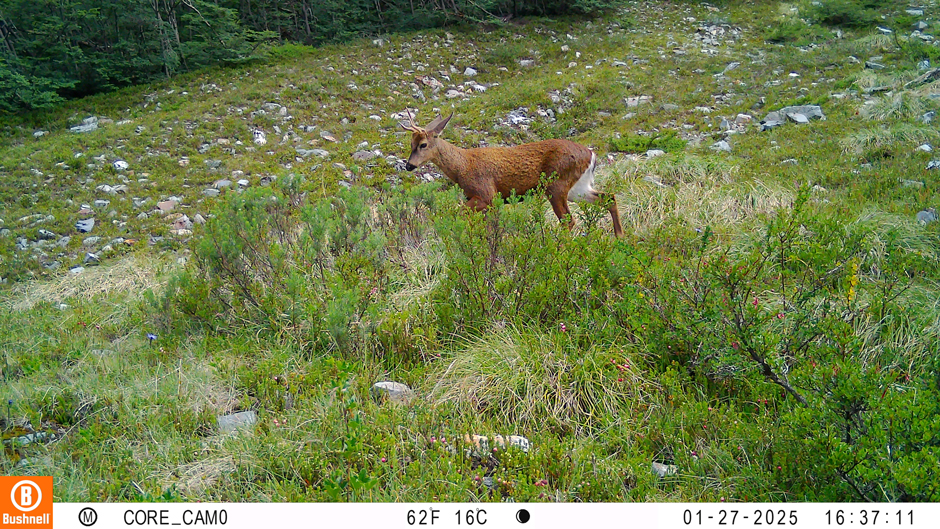
Adult male huemul deer captured by a camera trap in Pucheguin (Valle Río Manso) on January 27th, 2025. (Credit: Puelo Patagonia)
Protecting Puchegüín’s Culture Alongside Conservation
Fundo Puchegüín is located within Chile’s Cochamó District. Due to its large size, the property itself spans multiple landscapes, including the Cochamó Valley, the Puelo River basin, and the Manso River valley, among others.
Rural families have lived in the Fundo Puchegüín region and greater Cochamó Valley for generations, which first saw settlers arrive in the early 1900s to farm and ranch. However, unlike other areas, Donoso says these settlers formed a harmonious relationship with the land, using sustainable agriculture practices.
“You have rural families living here for many generations, maintaining a very traditional livelihood, [and] very connected to conservation,” Donoso says.
Therefore, when Conserva Puchegüín began exploring the idea of purchasing the land, the organizations knew they needed to include these communities and their traditional knowledge. In fact, Donoso says that the coalition conducted over 100 interviews and meetings with these local inhabitants before the purchase was completed.
These interactions helped Conserva Puchegüín decide on their 80/20 split, and it’s likely that the coalition may have never purchased the land without local support.
“This knowledge is essential for guiding monitoring efforts, identifying emerging threats, and designing realistic conservation solutions,” Vigoroux says.
But the community’s deep ties to the land render Donoso confident that the multi-use model will still be successful.
So while local families continue farming the land or leading tourists into the backcountry, scientists will work right alongside them. The next several years will see the partners monitoring wildlife, water resources, and invasive species to help design the conservation plans that will protect Fundo Puchegüín for the foreseeable future.
Conserva Puchegüín hopes to eventually turn the land over to the Chilean government and ensure long-term protection through national park status, rendering it the northern peak of Chile’s incredible Patagonian park system. For now, however, the work remains on the ground, rooted in an evolving partnership between conservationists, scientists, and locals.
“There’s a strong view from the community of protecting this place,” Donoso says.
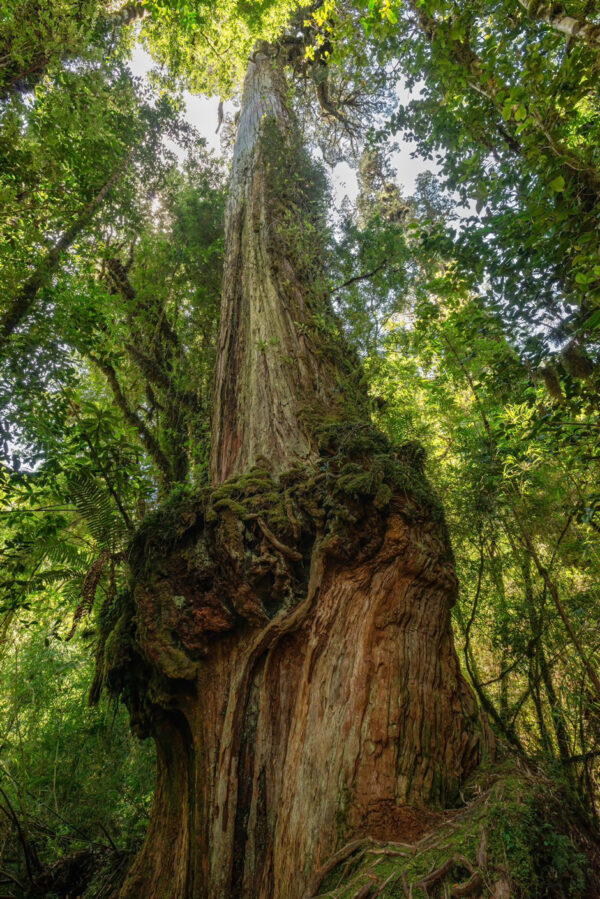
An ancient alerce, an iconic Chilean conifer, is protected by law. Studies have shown that it can store large amounts of carbon, making it a key ally in mitigating the climate crisis. Puchegüín is home to 11% of the world’s alerce trees. (Credit: Henri via Adobe stock)






0 comments