

Testing CO2 Removal Strategies in the Pacific Northwest
The ocean plays a key role in carbon dioxide (CO2) removal and storage, also known as carbon sequestration. However, with increasing emissions, a large amount of CO2 escapes into the atmosphere, worsening climate change and leading to increases in surface temperatures.
In order to mitigate some of these impacts, researchers like Ally Savoie at the Pacific Northwest National Laboratory (PNNL) are working hard to identify ways to safely improve the CO2 removal and storage capabilities in the ocean.
Savoie started her career at Wright State University, where she worked in Silvia Newell’s lab examining biogeochemical cycling of nutrients in a river system.
From there, she decided to pursue a master’s in marine science at the University of Southern Mississippi with Dr. Chris Hayes and a PhD in oceanography at Texas A&M University with Dr. Katie Shamberger, focused on inorganic carbon cycling.
She explains, “I studied carbonate chemistry around oyster and coral reefs to understand how the water chemistry impacts those different organisms, anywhere from the coast all the way out to the deep sea.”
Today, Savoie is spending her days looking at ways to improve ocean conditions and minimize the impact on aquatic ecosystems and organisms. This includes testing the leading marine CO2 removal (mCDR) strategies, including ocean alkalinity enhancement (OAE).
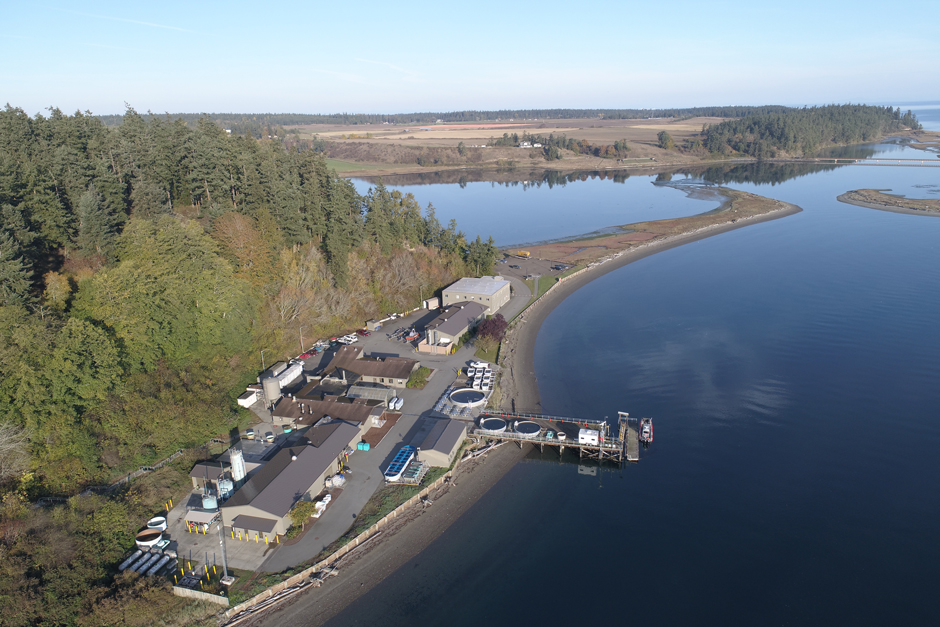
Aerial view of PNNL’s shoreline campus. (Credit: PNNL)
Testing The Capabilities of CO2 Removal Methods
OAE treatments involve treating seawater by adding a basic (or alkaline) solution, leading to a larger absorption of CO2 from the atmosphere. This CO2 gets converted to a more stable form of inorganic carbon by the ocean, which can then be stored for thousands of years.
However, if over-treated, calcium carbonate may form, resulting in precipitation that removes all of the alkalinity added by the treatment and potentially more from the original water source, impacting the ocean’s natural ability to store CO2, which can lead to out-gassing of CO2 back to the atmosphere.
Savoie’s work focuses on determining these treatment thresholds and establishing at what point precipitation forms. Because OAE is so dependent on temperature and salinity levels, measuring performance under various water quality conditions is essential.
A combination of micro/mesocosm laboratory experiments as well as field trials are used to test strategies.
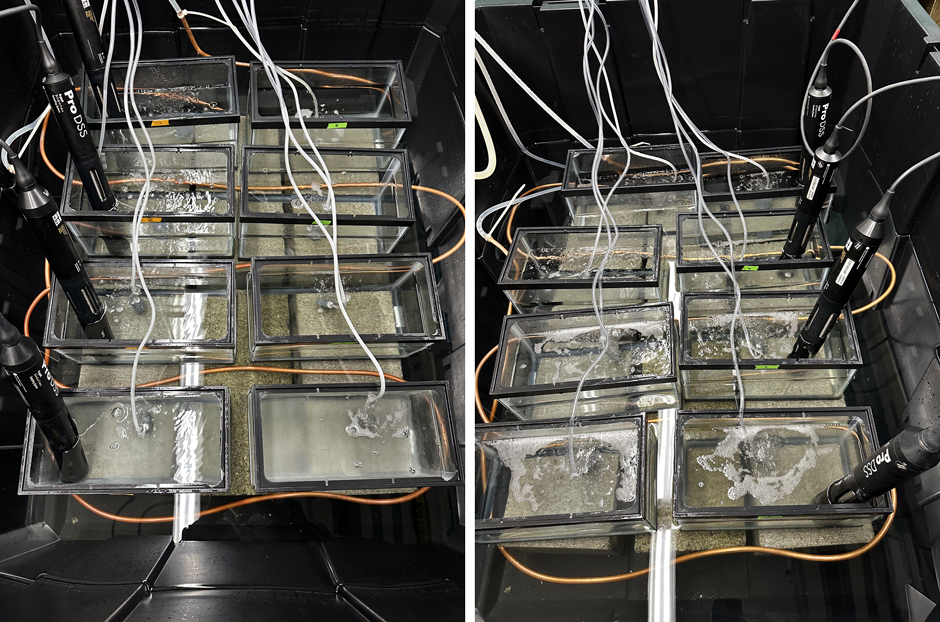
YSI ProDSS sondes in tanks collecting salinity, temperature, pH, and turbidity measurements during laboratory OAE experiments. (Credit: Ally Savoie)
The microcosm studies involve a temperature-controlled water bath with eight 8-liter tanks. Four of these tanks contain unfiltered water from Sequim Bay, Washington, and the other four contain filtered water from the bay.
Savoie explains, “We’re able to see how the biology that might be present in the water impacts that addition of base–if we remove the biology and it’s filtered, do we potentially reduce the chance of precipitation?”
For each of these groups, there is a control tank and then a low, medium, and high treatment tank that each receives a specific amount of base.
She continues, “We’re looking at this across a wide range of temperatures and a wide range of salinities that can be experienced in the coastal environment, because we want this to be applicable to wastewater treatment plants or desalination plants all across the coast or for modelers who want to simulate and test OAE at a broader scale for various regions.”
Four YSI ProDSS multiparameter water quality meters are used to measure temperature, salinity, pH, and turbidity in each of the tanks currently being evaluated. The meters are left in the tanks for three hours after the alkalinity treatment is applied, then rinsed off and placed in the other four tanks, which are also treated and observed.
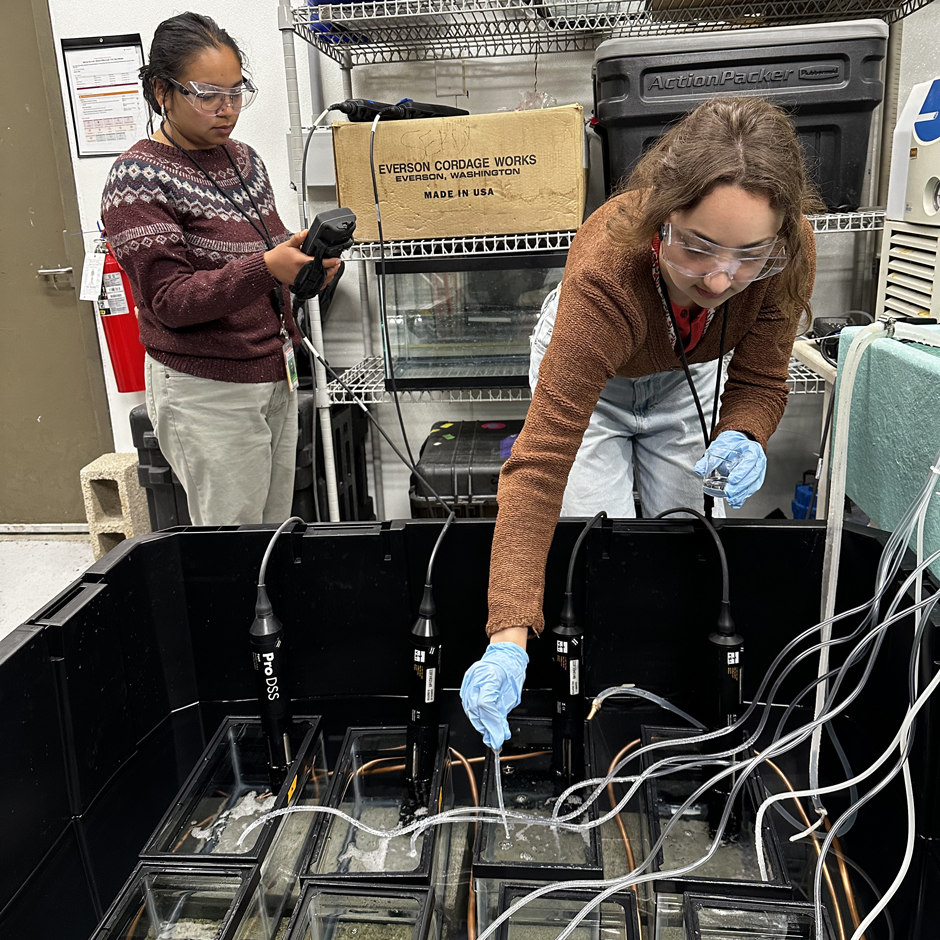
SULI Summer 2025 interns, Quetzali Morales Lumagui (left) and Carina Tostado (right), conducting OAE lab experiments. (Credit: Ally Savoie)
For a closer look at the precipitation particles, field deployments usually include a Sequoia LISST 200X submersible particle size analyzer, “which allows us to look at particle size distribution and concentrations as well,” states Savoie.
In addition to the lab experiments, Savoie shares that PNNL has conducted a few field tests in the bay as well. Many of these field tests have involved working with local government, tribal entities, academics, and industry partners to test various treatments.
Due to the longer-term monitoring needs of these projects, Savoie swaps out the ProDSS meters for YSI EXO2 sondes in the field “because we can program them, deploy them for multiple days, collect data, and then recover them.”
They also use submersible autonomous moored instruments, or SAMIs, to measure pH and partial pressures of CO2 gas.
In addition to a wide variety of sensing equipment, Savoie collects grab samples to examine total alkalinity and dissolved inorganic carbon, which includes dissolved CO2 gas, carbonic acid, bicarbonate, and carbonate ions.
The combination of lab and field tests is essential to improving CO2 removal treatments. By establishing thresholds in the lab, Savoie can avoid triggering the formation of precipitation in the field, preventing any potential harm to organisms in the bay or elsewhere.
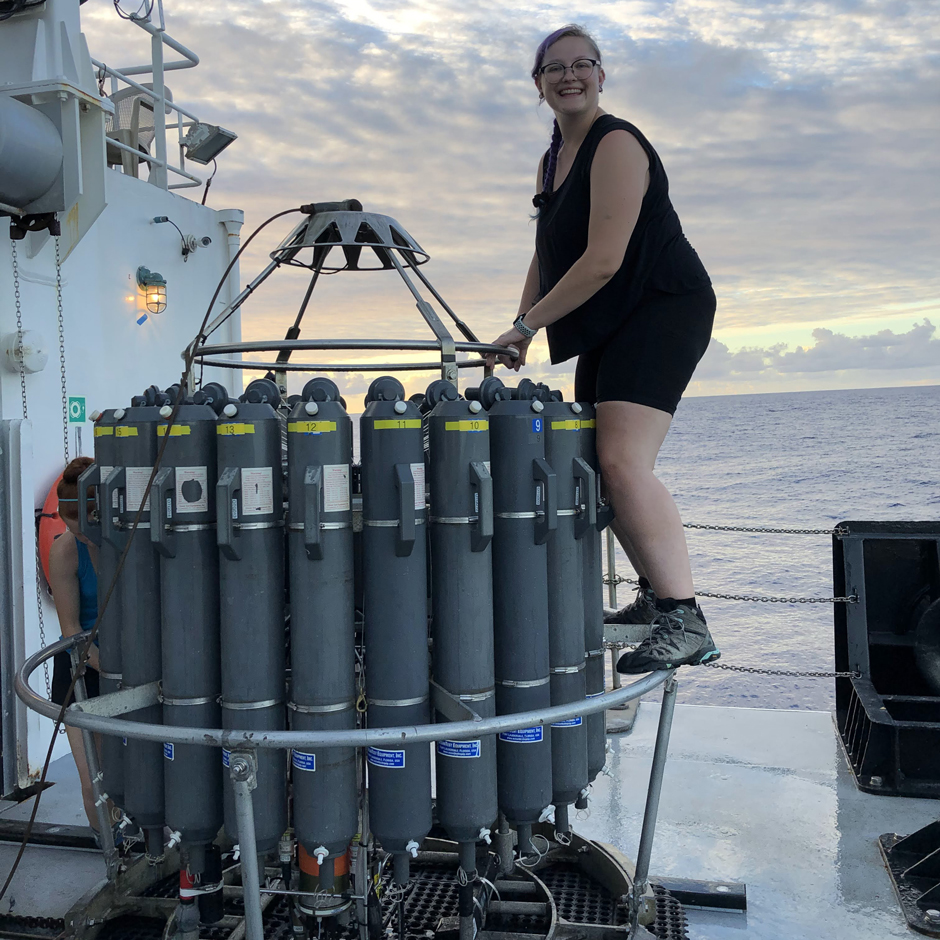
Ally, during a cruise in the northern Pacific Ocean, focused on deep-sea coral reefs on the Northwestern Hawaiian Islands and the Emperor Seamount Chain. (Credit: Makeda Mills)
Testing OAE Capabilities in Sequim Bay
Sequim Bay is an ideal location for testing CO2 removal treatments since it has its permitted wastewater treatment plant on site, which outputs into the bay.
“That’s where this sort of technology would really thrive, as it can be easily paired with a wastewater treatment plant or a desalination plant, and when they outfall, they could outfall a slightly more basic product to help remove CO2 and ameliorate acidification,” explains Savoie.
She continues, “But we don’t want to do so in a way that could ever harm the environment. So, this is why we’re trying to establish those safe thresholds. If we’re to do it out here on the Pacific Northwest where the water is very cold and salty, it can hold more alkalinity without harmful effects compared to warmer or fresher waters.”
Water conditions in Sequim Bay, along with other areas on the west coast, typically have cold, salty waters from the Pacific that can hold higher concentrations of alkalinity. In comparison, areas on the East Coast tend to be warmer and fresher and likely have lower thresholds for how much alkalinity can be added safely.
“That’s what we’re attempting to do, is establish those thresholds so we could deploy it at a larger scale and do more field testing across a number of environments safely,” states Savoie.
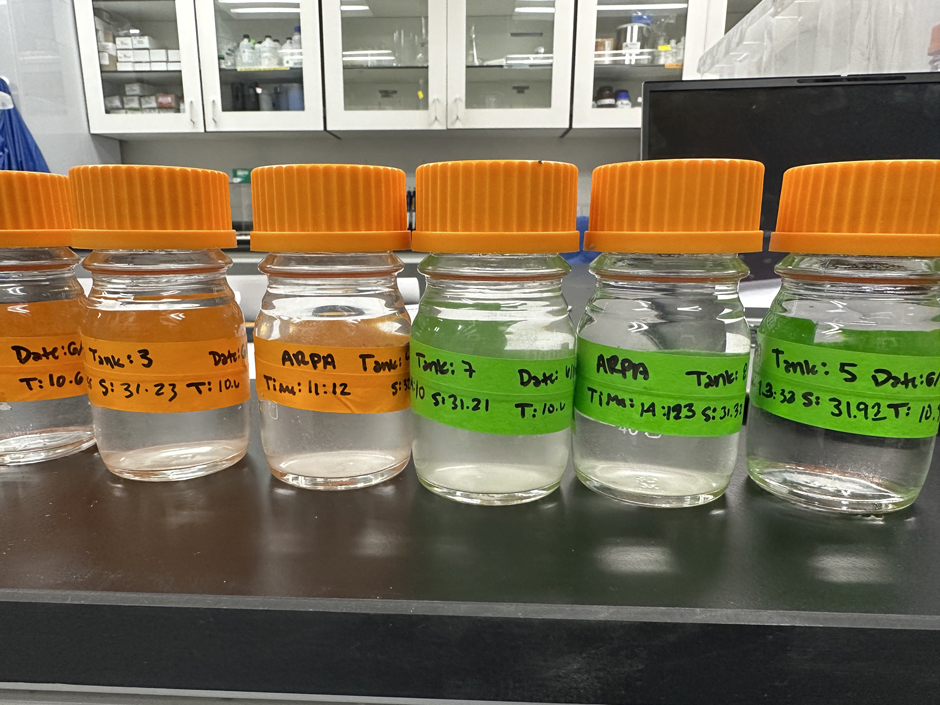
Total alkalinity/dissolved inorganic carbon samples with increasing amounts of precipitation from laboratory OAE experiments. (Credit: Ally Savoie)
Marine CO2 Removal: An Ever-Evolving Field of Research
Savoie started her post-doctoral research at PNNL in March of 2025, but she says that already she’s seen how quickly things can evolve and just how expansive this work is, including improving conditions in the environment, but also working with industry to develop products that work.
To support these growing projects, it is essential to involve student interns and recent graduates, providing them with lab and field experience early in their careers—something that has been particularly rewarding for Savoie, who recalls how important her own mentors were early on.
“With a background in oceanography and a focus on inorganic carbon cycling and understanding how it impacts reef ecosystems, working on the solution side of things was a pleasant change,” according to Savoie.
“I [previously] focused on consequences of increasing atmospheric CO2 and ocean acidification, but now I get to work on a potential solution, which, you know, creates a feeling of optimism in your work and for the future of the ocean.”
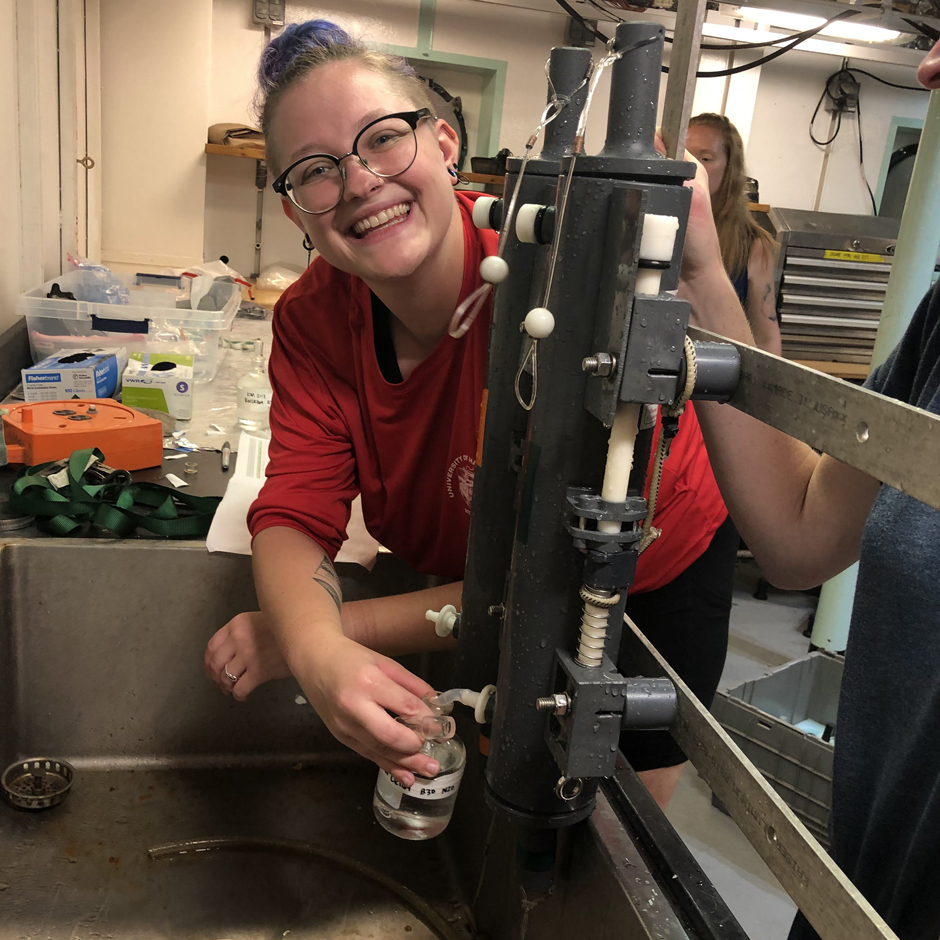
Ally sampling for total alkalinity and dissolved inorganic carbon from niskins collected at deep-sea reefs in the northern Pacific Ocean. (Credit: Makeda Mills)






0 comments