

Eager Beavers: Reintroducing Beavers to London for the First Time in Over 400 Years
Beavers are celebrated ecological engineers. Famously, they fell trees to access their primary food source–bark and leaves–and to build dams which trap sediment, creating ponds and meadows rich in biodiversity.
Like humans, beavers initiate landscape-scale transformations, and their activities shape their surroundings, leaving a legacy for those that come after them.
In Enfield, where London’s sprawling northern suburbs give way to countryside, a family of beavers introduced in 2022 is reshaping the environment and providing a natural defense against floods.
In March 2022, beavers were first introduced to the six-hectare enclosure in Enfield. The original pair did not hit it off and so were replaced by a bonded pair–captured in Scotland by the Beaver Trust whilst rooting through a farmer’s field–who were released in December 2022. In May 2023, their first kit was born.

Two beavers sit in the hollowed-out interior of a large felled tree in the middle of one of their ponds. (Credit: Capel Manor College, Forty Hall Farm)
Beavers in Britain
As a species, beavers predate Homo sapiens–they first emerged in North America around 33 million years ago.
Following river valleys and changing climates, they colonized Eurasia and made their way to Britain. When Britain first became an island–cut off from Europe by rising sea levels some 8,500 years ago–there were an estimated 100,000 Eurasian beavers, Castor fibre, living in its lakes and rivers.
But agriculture and land use change, trade in fur and castoreum, and bounties on beavers meant populations crashed. By the 16th century, they were extinct in Britain, and at the beginning of the 20th century, the global population of Eurasian beavers had been reduced to approximately 1,200 individuals.
In the last 30 years, beavers have been reintroduced in Britain–a move that acknowledges their disproportionate impact on the landscape in providing natural flood management and supporting nature recovery.
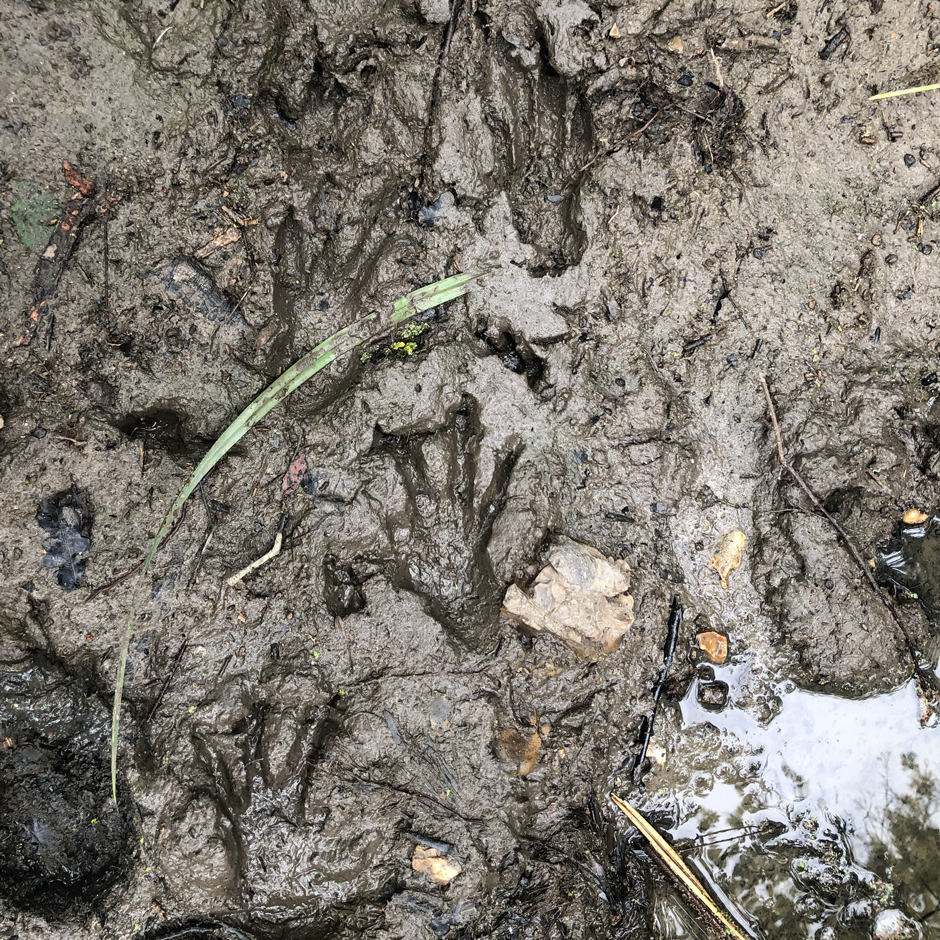
Beaver footprints in their enclosure. Beavers have short limbs, with large, webbed hind feet to aid swimming. (Credit: Capel Manor College, Forty Hall Farm)
Reintroducing Beavers to London
In the grounds of Forty Hall, a 17th-century manor house built on the foundations of a 12th-century royal palace in North London, beavers have been reintroduced to the capital for the first time in 400 years.
The rewilding programme is one part of Enfield Council’s Landscape Recovery Project and is a collaboration with Capel Manor College, London’s environmental college.
Lou Drury is a Farm Assistant at Forty Hall Farm. Part of her role is stewarding the growing family of beavers that live in an enclosure within the grounds and monitoring their environmental impact.
The key objective, Drury explains, is flood mitigation. “It floods quite a lot downstream in Edmonton and Tottenham,” she says. “The council wanted to see if they could do something natural that would help, rather than putting in lots of structures that would cost a lot of money.”
“From the Capel Manor College side, it’s a really good conservation project to have,” she continues. “The students are learning a lot and getting a lot of new skills”–students studying subjects as varied as agriculture, animal care and arboriculture come to the site for lessons.
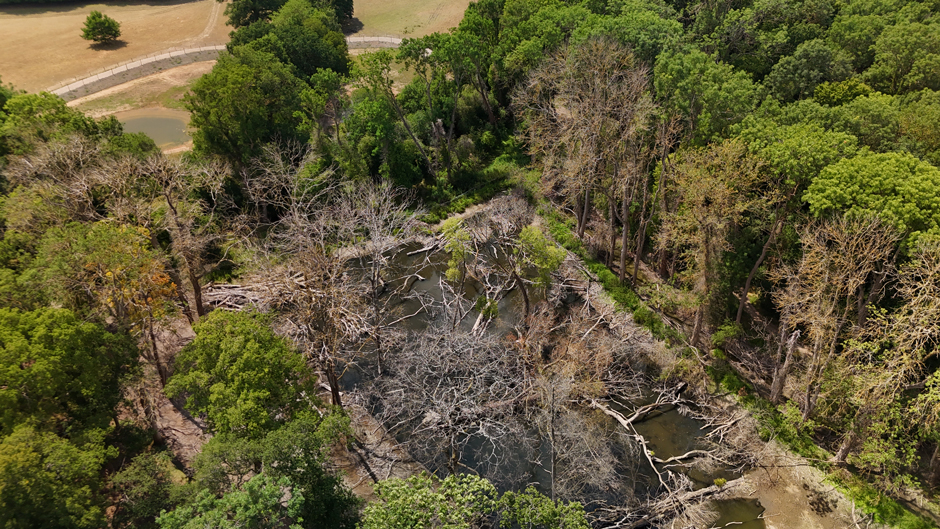
An aerial view of the beaver enclosure at Forty Hall, showing the main pond in the foreground–with the two lodges in the top left corner–and the newer pond in the expanded enclosure at the top. (Credit: T3chFlicks)
First Introductions
In March 2022, a bonded pair of beavers–captured in Scotland by the Beaver Trust whilst rooting through a farmer’s field–were introduced to the six-hectare enclosure in Enfield.
Before the beavers moved in, their habitat was wooded–“It wasn’t necessarily a place that held a lot of water, but it had a lot of big ditch systems,” Drury says.
“Pretty much straight away, within the first two nights, they were building massive things,” she recalls. “The beavers came through, felled all the trees, cleared a massive space, and held the water back. I still don’t really understand how, it’s crazy how they’ve managed to do it […]. I definitely think they’re really smart.”
They also built two lodges–dome-shaped dwellings with submarine access points–in their enclosure, carefully layering “sticks, then mud, then reeds, then moss, and then sticks.”
In their enclosure, the beavers have thrived. “The first year, they had one baby–called a kit. Last year they had four, and this year I’ve seen one so far, so there are eight of them in there,” Drury smiles.
Recently, the project received a grant from the Greater London Authority to extend the enclosure by an additional hectare and increase public engagement.
“In the new enclosure, they’re mostly just felling and eating trees. They’re not doing any big works in there that we can see yet,” she adds.
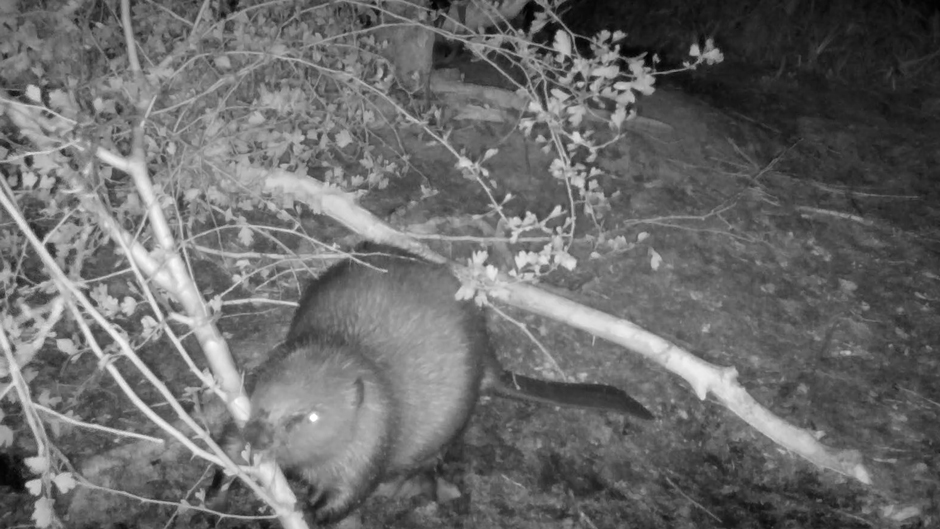
A beaver attempts to pick up a large stick from a recently felled tree. (Credit: Capel Manor College, Forty Hall Farm)
Environmental Impacts
Despite an exceptional weather year so far–the UK has experienced its driest January to June since 1976 and the second warmest June on record–the beavers still have plenty of water in their ponds.
And while it’s too soon to quantify the true impact of the beaver dams on flooding, Drury notes that anecdotally, they so far appear to be reducing their severity.
“They’re bringing in so much wildlife,” Drury emphasizes. “They’ve naturally coppiced the woodland, and everything has opened up. This year we’ve had so many more forest plants and flowers that have never been here before.”
The new beaver pond has only existed for two months, but an increase in animal and insect life has already been observed. Around the more established ponds, the beaver-enhanced habitat welcomes a wealth of diversity, including a pair of resident barn owls, kingfishers, and grass snakes.
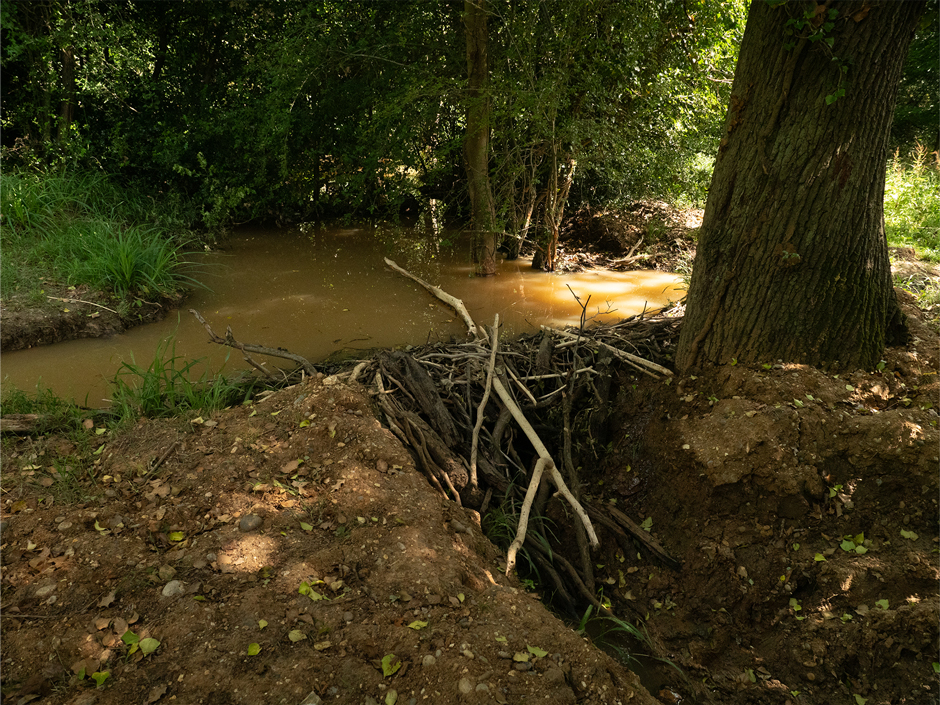
A small but effective beaver dam. This would take approximately an hour for a beaver to build. (Credit: T3chFlicks)
Monitoring a Beaver-Shaped Landscape
The beaver family’s health and impact on the environment are monitored through a variety of methods.
Weekly water samples are taken to monitor input, output, and water quality between the beaver ponds. Lab tests are run for nitrogen, ammonia, pH, nitrates and phosphates. Drury hopes to add sediment testing soon to quantify the ponds’ carbon sequestration.
The purpose of these tests is twofold: to understand how the beaver-modified landscape is impacting water quality, and to ensure the ecosystem is safe for habitation.
This water quality testing has only been in place for around a year, and Drury is wary of drawing conclusions when the expanded enclosure means the ecosystem is still in flux. But she is cautiously optimistic. So far, “they seem to be making a little improvement,” she notes.
Camera traps are used to monitor beaver health. “If we notice anything behavioral or any injuries, we can catch them up and check them,” she explains.
GPS surveys track how the beavers move through their environment, the walkways they create, and the vegetation they fell. The latter is also measured in vegetation surveys that track regrowth.
Additionally, drone surveys capture bigger picture patterns of environmental change.
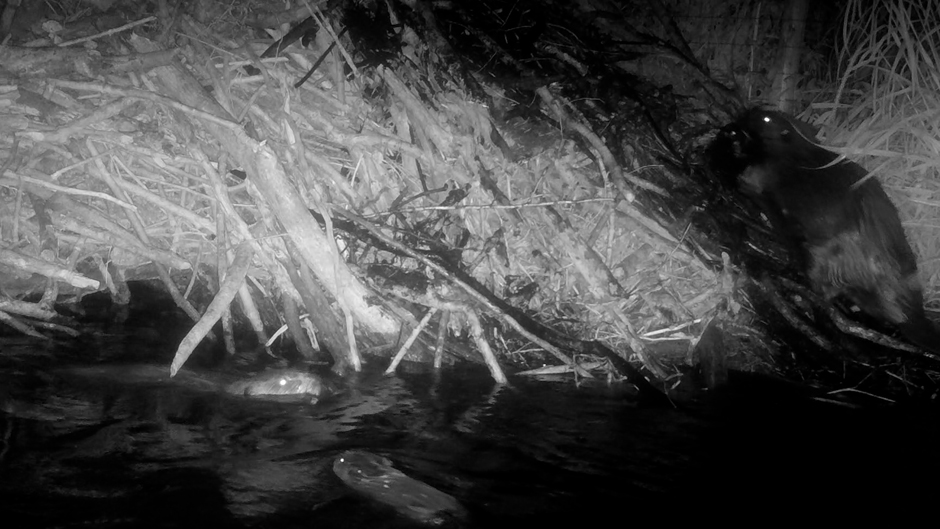
Two beavers swim as another carries material onto the lodge. Beavers can carry surprisingly heavy loads by tucking objects under their chin and holding them in their front paws as they walk on their hind legs–as this beaver was seen doing. (Credit: Capel Manor College, Forty Hall Farm)
Complexities of Rewilding
Reintroducing species is complex, technically challenging and often political. By its very nature, rewilding requires relinquishing some degree of environmental control and letting nature take its course–not always an attractive prospect for residents or land users.
“It’s scary, the damage that they can do, but I think if they’re put to good use, they can create some amazing spaces,” acknowledges Drury.
Challenges faced by some beaver rewilding programs elsewhere aren’t as significant as those at Forty Hall, where the beavers live enclosed on council-owned land with no recreational fishing on connecting streams.
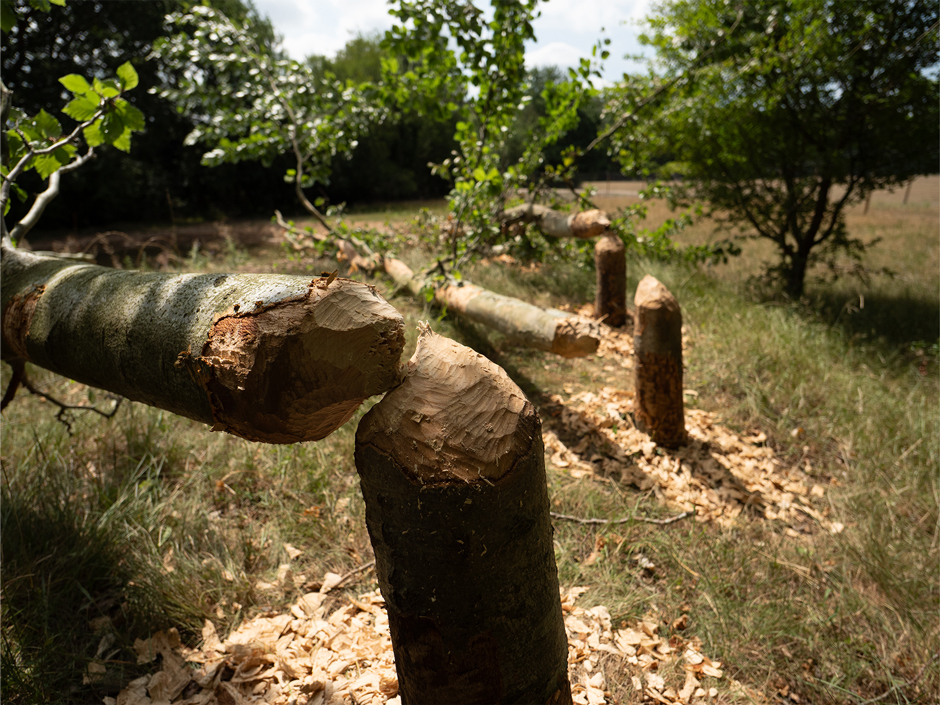
Beavers fell trees to access their primary food source and to access materials to build dams. The teeth marks on the tree help the team identify which beaver’s handiwork it is, and the height of the felling point is a good proxy for estimating beaver size. (Credit: T3chFlicks)
The Future of Enfield’s Beavers
Although the Enfield beaver rewilding project is still in its early stages, its positive impacts are already evident, and these charismatic creatures are winning hearts and minds–“It’s not lost on me how privileged I am to do this job,” Drury asserts.
With success so far, “there’s talks in the project to have more beavers around more areas [in Enfield],” she says, “to help with the flooding and hold the water back further up.”
The Enfield beaver project will likely support rewilding efforts elsewhere, too. In September, the oldest of the kits will reach dispersal age, and the team is working with the Beaver Trust on its possible relocation to another rewilding program.
Rewilding creates ecological ripples, and reintroducing this keystone species to London after four centuries of absence is an exciting step that signals a long-term commitment to nature-based solutions and environmental recovery in this pocket of North London.






0 comments