
About Stephanie Andrews

Stephanie Andrews is a Climate Scientist and Systems Specialist with NexSens Technology. She read Geography at the University of Cambridge (MA Cantab), where she was also sub-editor of the Geography department’s magazine, Compass. Andrews joined the Environmental Monitor Staff in 2024, focusing on highlighting environmental monitoring efforts across the world and NexSens user stories. In her free time, she enjoys exploring new places, scuba diving, and gymnastics. 
Articles By Stephanie Andrews

The buoy has been successfully piloted and will be redeployed in Spring 2025 for its first full season of data collection.
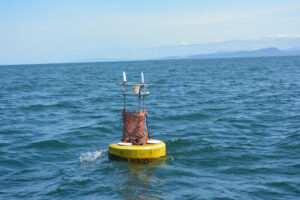
The buoy measures basic water quality parameters to mirror manual measurements, as well as additional parameters which the team is interested to explore in more depth.
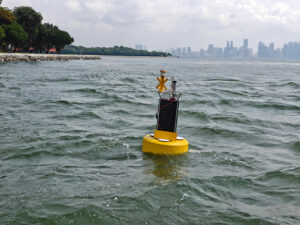
The buoy is located off Kusu Island and measures waves, current, and weather. The Elcee team conducts regular maintenance to collect data and ensure the buoy continues to work effectively and within regulations.
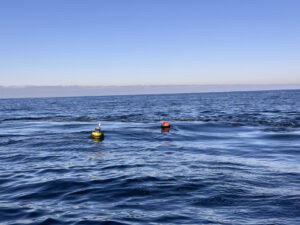
The small size of the NexSens CB-75-SVS means it can be deployed from a small vessel, but is still visible to maritime traffic.
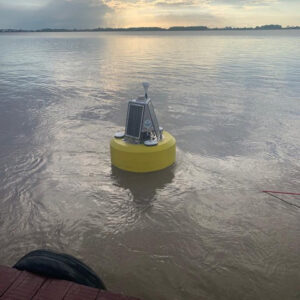
In Guyana, CB-450 buoys measure spatial and seasonal variations in water quality, supporting the management of water resources and development of water quality standards.
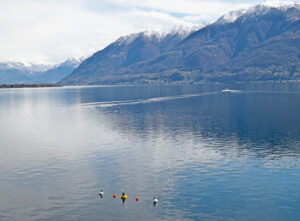
The Ticino region in southern Switzerland is home to dramatic subalpine landscapes, but is changing quickly as a result of climate change.
Oregon’s coast is the ideal location for WEC technology, but with maximum wave heights exceeding 60ft, it’s a challenging working environment.
The buoy systems play an integral role in monitoring the environmental impact and efficacy of OAE efforts in Halifax Harbor.
These systems are providing the first real-time tide data since legacy systems failed, providing valuable insight for local officials and regional RIMES monitoring.
Lake Geneva’s depth (over 300m at its deepest point) makes it a good place to measure waves without bathymetric influences, and is sometimes called the “pocket ocean".
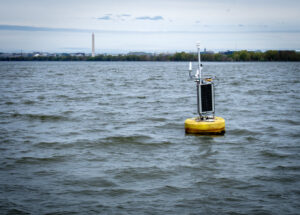
The CURBY on the Potomac River. It provided environmental observing support to aid teams working on-site.
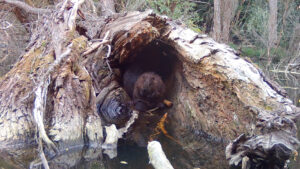
Two beavers sit in the hollowed-out interior of a large felled tree in the middle of one of their ponds.
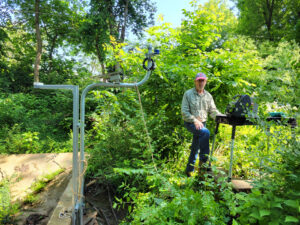
Adjustments being made to one of the systems, which sits at a tunnel mouth.
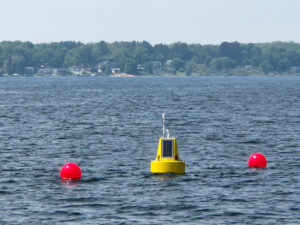
The NexSens XB-200 “Smart Buoy” was deployed at White Lake in June 2025.
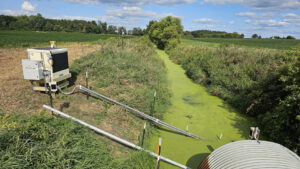
One type of station set-up, showing a radar water level sensor, weather station, water sampler, nutrient analyzer, and sondes for temperature, turbidity, conductivity, soil moisture and rainfall.
The canoe at Spruce Pond, Orwell.
A dock-mounted real-time monitoring station that is used to collect data on red tides.
Monitoring station at Bound Brook, along the Herring River.
The FAMU-SOE NexSens buoy is deployed in an important oyster faming area. Through an ongoing relationship, students, researchers, and farmers, are all able to glean environmental insights from the data it provides. Credit: The School of the Environment.
NexSens Applications Scientist Joe Davidson assisting the Miami University team with the deployment of the XB-200 data buoy.