

Inside the Citizen Science Network That’s Been Monitoring Wisconsin’s Lakes for Four Decades
It’s the summer of 2012, and Paul Skawinski had just driven nearly an hour from Stevens Point through flat, central Wisconsin farmland. His destination is Porters Lake, a small, shallow lake with a few dozen docks lining its shores.
At the time, Skawinski was a Regional Aquatic Invasive Species Coordinator covering much of Central Wisconsin. As part of his position, he assisted with training volunteers for the Wisconsin Citizen Lake Monitoring Network (CLMN).
CLMN is funded by the Wisconsin Department of Natural Resources (DNR) and is based out of the University of Wisconsin-Stevens Point’s Extension Lakes Program. Over 1,000 volunteers participate in CLMN each year.
Skawinski had recently been visited by a concerned Porters Lake resident. The middle-aged man, who’d been visiting the lake his whole life, noticed a plant in the lake that he suspected was invasive Eurasian watermilfoil (Myriophyllum spicatum). He was looking to Paul to confirm the suspected ID and provide guidance on removal and management.
So, as part of his job, Skawinski offered to help. Soon after he arrived at the lake, he was out on (and in) the water with dozens of volunteers, teaching them how to identify and remove milfoil.
Just a year later, they couldn’t find Eurasian watermilfoil in Porters Lake. Skawinski was delighted at these results and realized how important these volunteers and the CLMN could be for Wisconsin lakes.
Now, over a decade later, he’s the Statewide Coordinator of the Citizen Lake Monitoring Network but still thinks back to this story as he manages this expansive citizen science project.
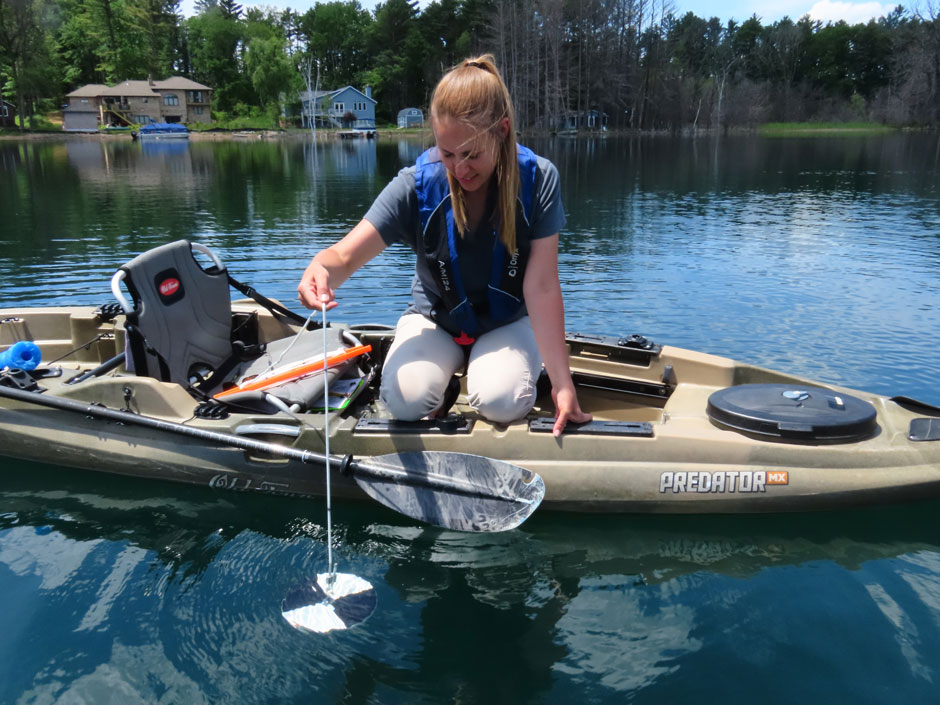
A volunteer lowers a Secchi disc to measure the water clarity of the lake. (Credit: Paul Skawinski)
How Volunteers Join the Wisconsin Citizen Lake Monitoring Network
The Citizen Lake Monitoring Network was founded in 1986, funded by the Wisconsin DNR, and based out of the University of Wisconsin-Stevens Point. Wisconsin is home to thousands of lakes, and Skawinski says citizens have plenty of reasons to join the network.
“They might be interested in property values. They might be interested in the health of the lake from an ecological perspective. They might just want a healthy lake for their grandkids to swim in,” Skawinski says.
Volunteers can choose what parameters they want to monitor, but Skawinski says it’s usually the same “package” at first. The network will first provide volunteers with a Secchi disc to begin monitoring water clarity.
He explains that if they consistently monitor water clarity for a year, they’re eligible to start monitoring water chemistry with additional equipment, which Skawinski or a regional coordinator will bring to them and train them how to use.
This set allows volunteers to measure temperature, chlorophyll, phosphorus, and sometimes dissolved oxygen, which Skawinski and his team send to the Wisconsin State Lab of Hygiene for analysis.
Longer-term volunteers often transition to more intensive monitoring, such as tracking the days of ice-on and ice-out events or monitoring invasive species. Skawinski says this work by dedicated volunteers has shown that lakes are freezing up later in the year and mid-winter thaws are becoming more common around Wisconsin.
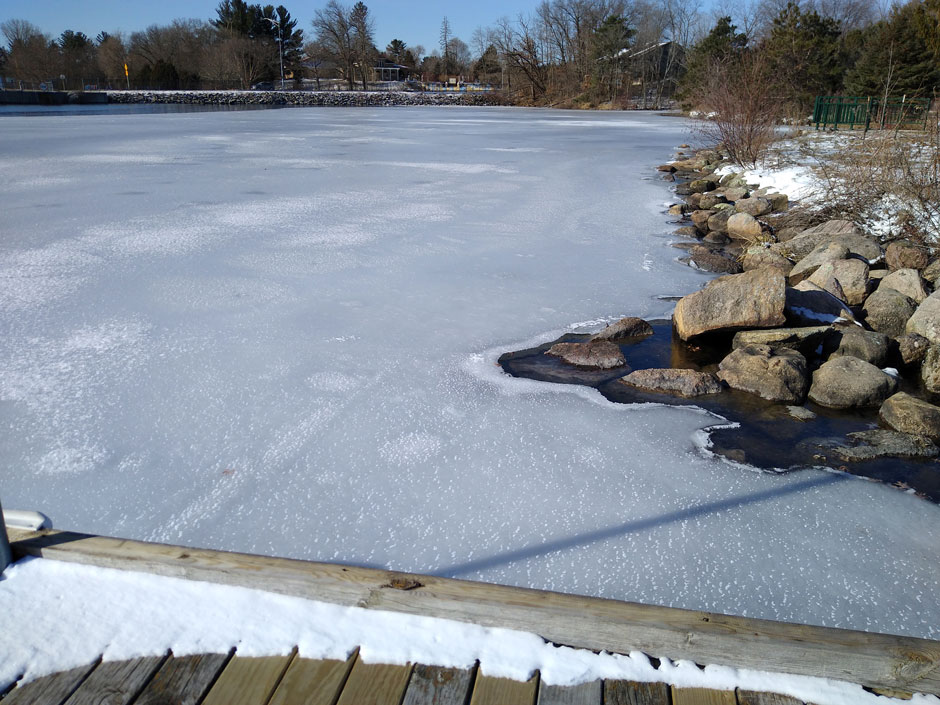
Hundreds of Citizen Lake Monitoring Network volunteers monitor ice-on and ice-off dates on Wisconsin lakes. (Credit: Paul Skawinski)
Additionally, data from the long-standing network is also used by the state to manage its thousands of lakes, and even in some multi-state studies.
“We use the data for lake management planning activities, official water quality assessments, and determining whether a lake should be on the official impaired waters list,” Skawinski says. “And it also goes into some research studies now and then, where somebody is looking for a large set of data from Wisconsin or Midwest lakes.”
It’s a well-known program among Wisconsin’s environmental professionals, and Skawinski says that he’s often connected to potential volunteers through local environmentalists or government officials whom a concerned resident has contacted.
“They noticed that the water wasn’t as clear as they remembered it last year, or they don’t catch as many fish as they used to, or there’s a lot more vegetation around their dock than there used to be,” Skawinski says. “And so that’s what inspires them to learn more about environmental monitoring and water quality.”
Volunteers are asked to input their data into an online database managed by the Wisconsin DNR. Data are then pulled into the publicly available Water Explorer Tool, which creates data tables and charts to help viewers visualize trends.
Skawinski says the tool’s accessibility and PDF download option make it friendly to all users, including non-volunteers.
“It’s used everywhere, from just an individual looking to create a little graph on their computer or talk to their neighbors, to the EPA and large multi-state research projects,” he says.
The network’s database includes every lake that has ever been monitored, regardless of when or where. Some of the lakes have been monitored since the network’s inception, and Skawinski believes that these decades of consistent data are extremely valuable.
Another interesting trend Skawinski notes is that, when a volunteer sees the result of tracking and addressing environmental changes, they often offer to help neighboring lakes with monitoring.
While the data tracking these environmental changes is valuable, Skawinski says he most enjoys going out and meeting these volunteers and transforming how they think about their lakes.
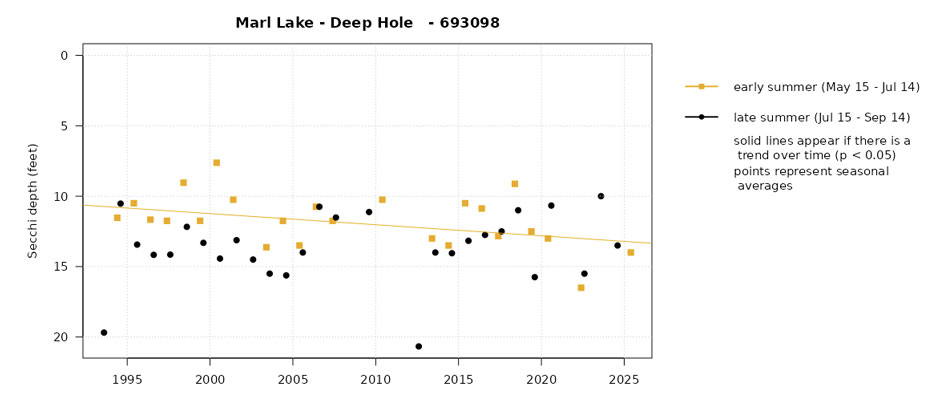
A Secchi disc depth chart showing the water clarity of a Wisconsin Lake increasing over time, created on the Water Explorer Tool. (Credit: Paul Skawinski)
Connecting With Volunteers in the Field
As Skawinski watched volunteers from around Porters Lake go scuba diving, wading, and kayaking to pull out Eurasian milfoil, he was amazed by their work.
This manual removal effort reduced the milfoil population by more than half. A small herbicide treatment was conducted to target the remaining plants, and volunteers monitored the area weekly afterward. Any living Eurasian watermilfoil plants were quickly removed by hand.
Skawinski credits the project’s success to the dedication of volunteers living around the lake and the volunteer who was monitoring the lake and noticed the unusual-looking plant.
On a boat ride the next year, Skawinski talked to the volunteer who called him and the man’s brother about the various environmental pressures on the lake and how they impact its ecosystem.
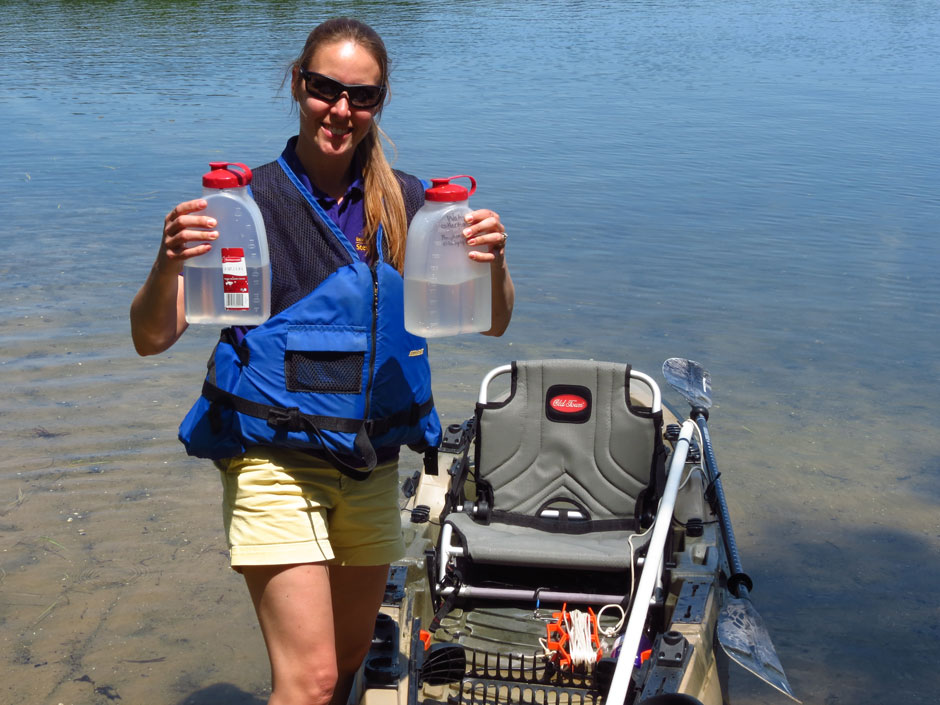
A volunteer returns to shore after collecting samples of lake water for total phosphorus and chlorophyll analysis. (Credit: Paul Skawinski)
Skawinski identified dozens of plants and animals, some rare to the region, and realized that the somewhat inconspicuous Porters Lake actually harbored incredible biodiversity.
“That helps them develop a better appreciation for the lake as a whole, and understand that the actions on the landscape around the lake are affecting not just the look of the water in the lake, but all these plants and animals that are interacting there as well,” says Skawinski, explaining the benefit of his return to Porters.
In fact, because they called Skawinski and caught the problem early, he says the Porters Lake Management District returned the remaining funds from their three-year Wisconsin DNR grant because they simply didn’t need them anymore.
The two brothers, still inspired by their initial work with the Citizen Lake Monitoring Network, have continued monitoring their lake, even into retirement. Skawinski says the water quality continues to improve.
In contrast, other lakes start addressing water quality concerns later on–sometimes after collecting data for years.
This was the case in Deer Lake, a large lake in northwest Wisconsin, where volunteers noticed that the Secchi disc showed water clarity worsening over time. The volunteers were also measuring water chemistry and noticed phosphorus increasing as well.
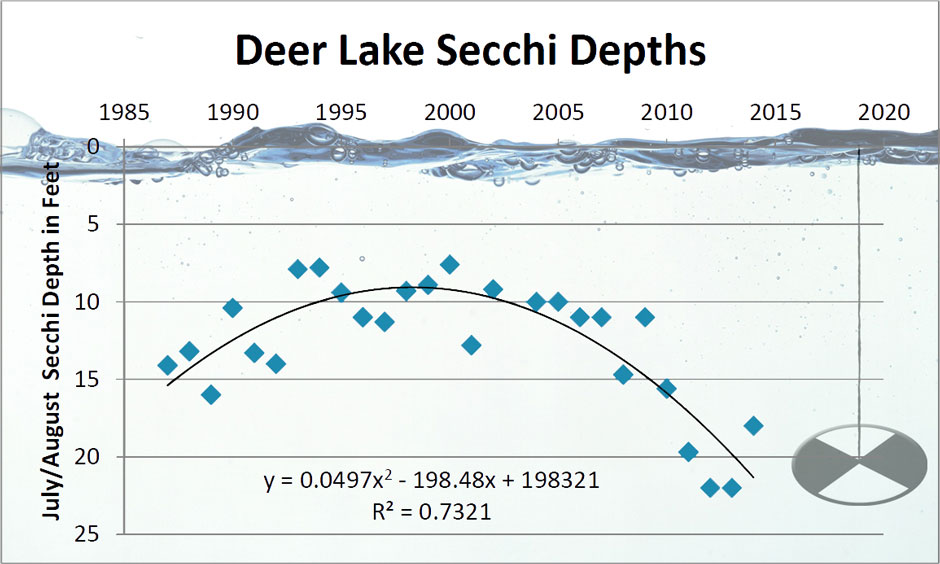
A graph of Deer Lake’s water clarity trend from 1987-2015. (Credit: Cheryl Clemens)
Skawinski says that volunteers formed a management association to address these problems, which worked on reducing erosion, restoring vegetation along the shoreline, and even acquiring nearby properties and converting them to prairies.
“They did all kinds of things, and they were actually able to keep monitoring and show that curve completely reverse,” Skawinski says.
He continues, “Their water clarity started increasing again, and their phosphorus levels were decreasing. And so that was a great example of just seeing a trend that you didn’t like and taking some action and then completely reversing that trend.”
He has seen other cases like this, and finds that getting to know the volunteers and understanding their needs is important.
When the monitoring network can provide equipment, knowledge, and enthusiasm, Skawinski is confident that it rubs off on the volunteers, many of whom have never done something like water quality monitoring before.
“I don’t want to sit here in a little office with no windows and pretend like I know exactly what everybody’s going through around the state,” Skawinski says. “So it’s helpful to meet with them at these different lakes and really understand the variables that are at play around the state with all these different people.”
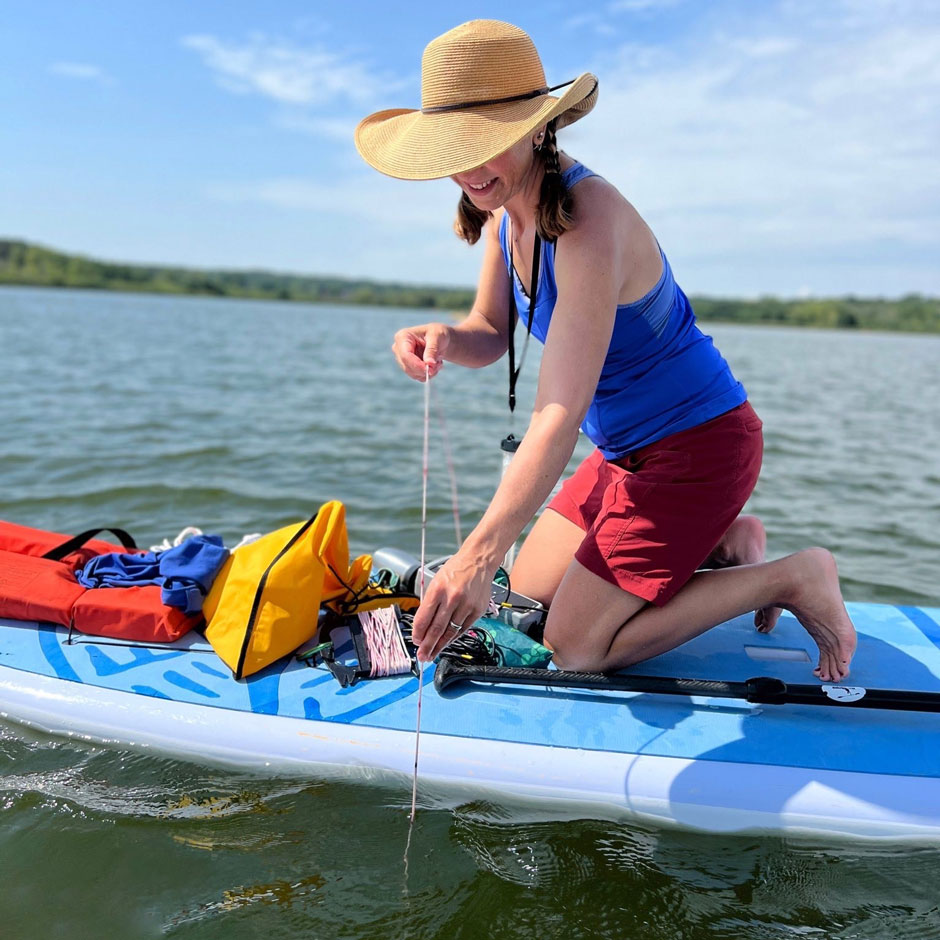
Wisconsin Citizen Lake Monitoring Network volunteer Lisa Grueneberg lowers a Secchi disc from her paddleboard on Lake Wingra near Madison, Wisconsin. (Credit: Laura Dixson-Kruijf)






0 comments