

Surfers, Fishers, and Scientists Launch Portugal’s First Regenerative Seaweed Farm
In 2011, João Macedo became the first Portuguese and European surfer to qualify for the World Surf League’s Big Wave Championship Tour. Over the next decade, he racked up podium finishes, and in 2022, he caught the largest wave of his life off the coast of Nazaré, Portugal’s world-famous surf hub.
Just two years later, he announced his retirement from professional surfing to focus on his other lifelong passion of conservation. He never fell out of love with the sport, but says the switch to conservation work was actually born from a lifetime of connecting with the ocean from the top of a board.
“One of the big gifts of surfing is this experience of nature,” Macedo says. “It just naturally breeds people that then become environmentalists.”
Macedo has taken this gift and transformed it into something tangible: creating Portugal’s first regenerative seaweed farm. Located right off the coast of his cherished Nazaré, the seaweed farm benefits a unique mix of partners, from surfers to scientists, and represents a pivotal new frontier of marine conservation in the small European nation.
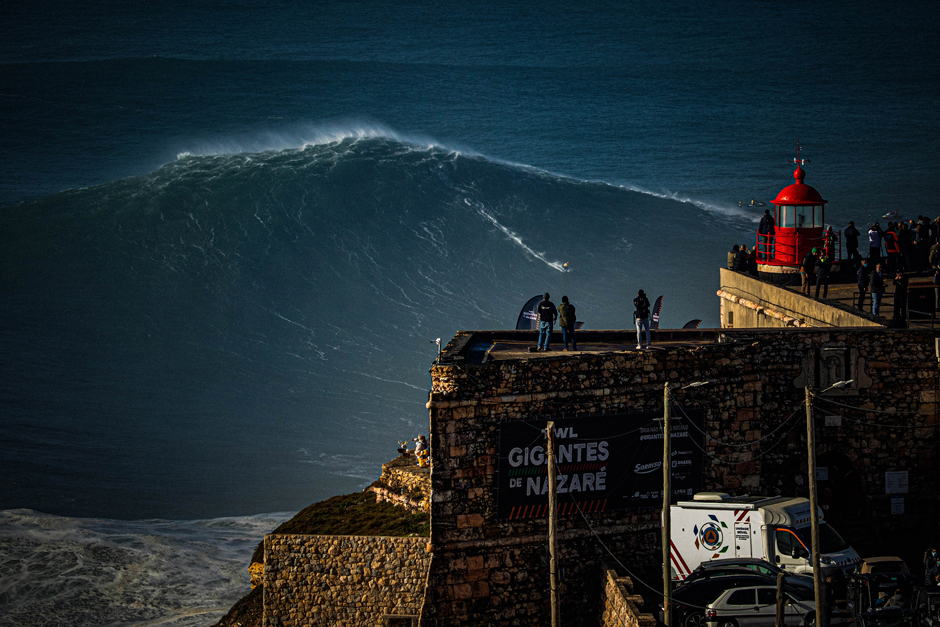
Joao Macedo rides a huge wave in Nazaré—for Hope Zones, the waves are at the core of the inspiration to protect the ocean. (Credit: Provided by the Hope Zones Foundation).
Why Nazaré, and Why Seaweed?
Even as he was catching big waves around the world, Macedo began making connections in the environmental world. He joined Save the Waves, an international non-profit dedicated to protecting surfing areas, and was instrumental in creating their World Surfing Reserves, which protect “key environmental, cultural and economic attributes in coastal communities.”
Macedo saw the success of these reserves in places like Santa Cruz, California, and the more southern Portuguese town of Ericeira. However, Nazaré was not included on this list, and Macedo sought another way to protect his favorite surf ecosystem.
“My connection as a pro surfer was something that gave me a lot of connections [to Nazaré], and it just propelled me to where I am now,” Macedo says.
While exploring ways he could protect Portuguese waters, Macedo says Luis Lages—a colleague at his alma mater, the Nova School of Business and Economics, and Moritz Seidel, a tech entrepreneur passionate about nature, began exploring the idea of a regenerative seaweed farm in Nazaré.
The World Surf League and Patagonia, his long-time surfing sponsor, reinforced this direction with a grant to experiment and push forward the idea. In 2022, with Moritz and other friends and family, he co-founded the Hope Zones Foundation to begin establishing Portugal’s first-ever regenerative seaweed farm, and on November 16th, 2025, the farm was officially launched.
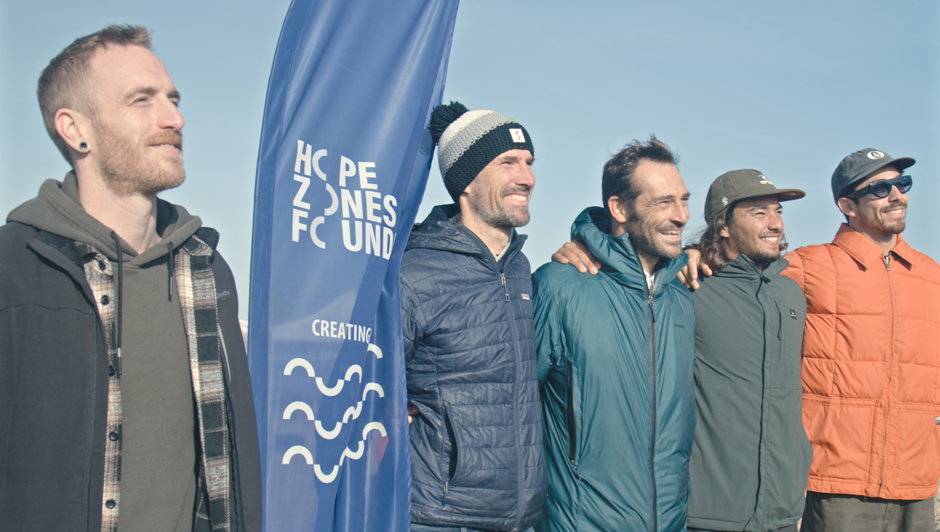
During the WSL One Ocean celebration. From left to right: Jan Verbeek, Lead Scientist at SeaForester; Joao Macedo, Co-Founder Hope Zones; Moritz Seidel, Co-Founder Hope Zones; Miguel Blanco, Hope Zones Ambassador; and Yago Dora, World Champion supporter. (Credit: Provided by the Hope Zones Foundation).
Seaweed can be efficient at carbon sequestration and act as a sink, according to a report from the Environmental Defense Fund. It’s known as a source of blue carbon, or carbon sequestered by the ocean. Macedo hopes this designation can visibly elevate the farm’s conservation impact, both to the public and the scientific community.
Moreover, regenerative seaweed farming doesn’t use intensive fertilizers found in some traditional mariculture practices. Macedo also emphasizes how it taps into seaweed’s inherent ability to restore seafloors by creating more habitat for wildlife and reviving nutrient cycles.
“Regenerative seaweed farming is very interesting, because if some areas are a bit depleted, this is a fast way of getting that habitat in place,” Macedo says.
His choice to set up a farm in Nazaré extends beyond his connection as a surfer. The same towering waves that surfers dream of catching also create an environment below the water that is uniquely suited for seaweed.
Studies have shown that seaweed can grow well in turbulent water, and although research is still needed to quantify ideal conditions, Macedo believes that if his project is successful, it can serve as a case study for future farms.
“Nazaré is so world-famous for its giant waves,” Macedo says, “So if you could have a seaweed farm in that vicinity, it really is proof that [it can happen] anywhere in the world.”
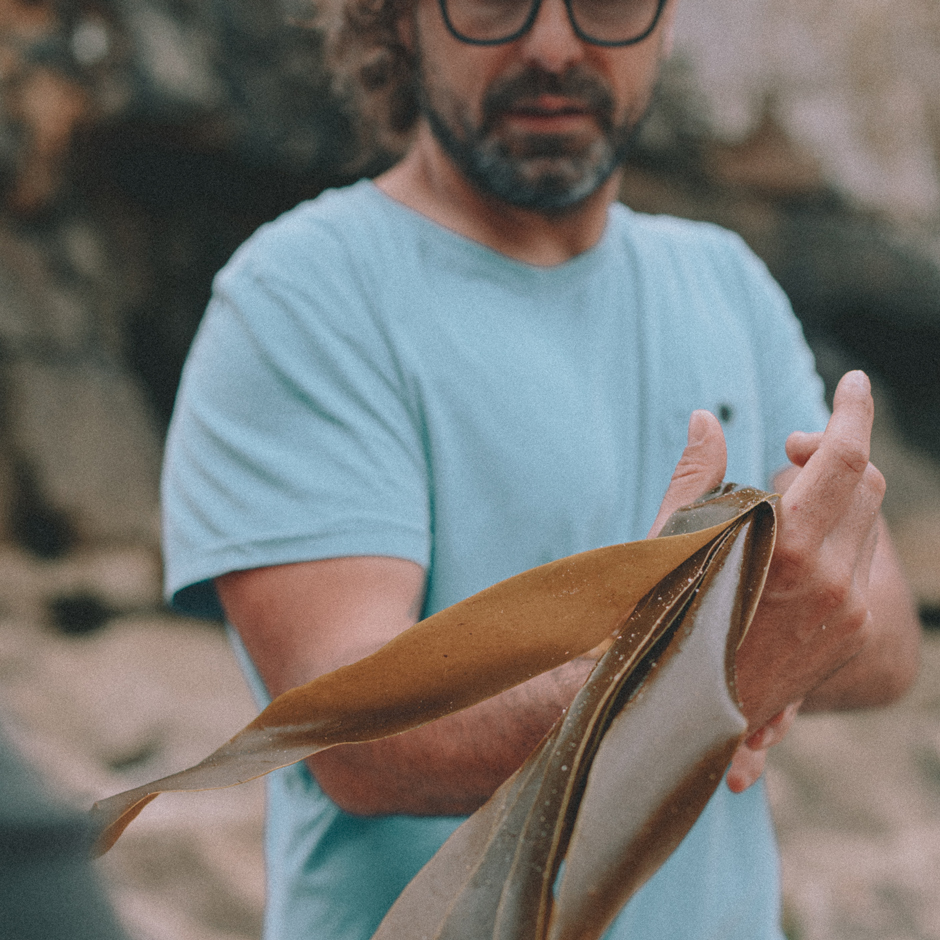
Hope Zones’ Lead Scientist and Seaweed Specialist João Franco. (Credit: Provided by the Hope Zones Foundation).
Working with Nazaré’s Local Fishing Community
However, Nazaré is not a town solely built around surfers and big waves; it’s also home to a historic artisanal fishing industry. Macedo was well aware of this, as surfing leagues often utilize fishing infrastructure, such as boats and docks, to conduct their tournaments.
He said he’s aware that fishers can sometimes be “scapegoats” for problems such as declining fisheries or degraded marine ecosystems. They’re also often banned from protected areas, which can lead to conflict when conservation projects are implemented in their waters. So, rather than working against the local community, he wanted to engage them in the process.
“I was just seeing that a lot of what was happening, not only in Portugal, but globally, was that the most successful marine protected areas (MPAs) always had the local fishing community on board,” Macedo says.
Hope Zones decided to hire fishers to help them set up their nets and seaweed pens, utilizing their labor and their boats. But Macedo didn’t just want them to participate in the project; he also led them to understand it.
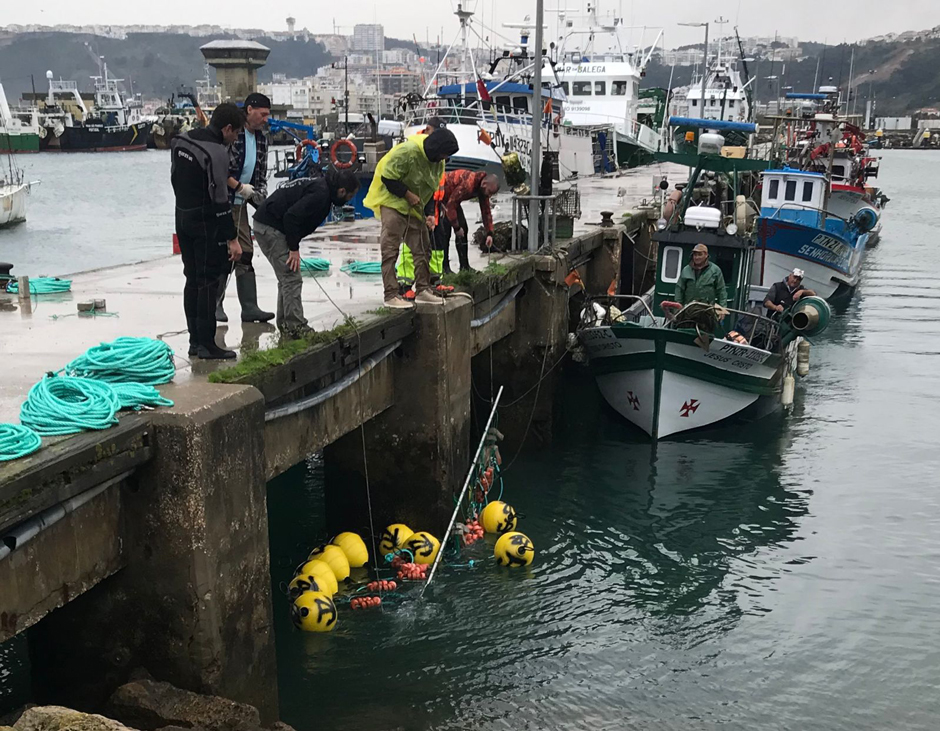
Preparing a boat launch for the seaweed farm. (Credit: Provided by the Hope Zones Foundation).
Macedo says that Nazaréan fisheries are declining, and an economic shift from fishing towards tourism has further withered the once thriving profession. He believes that innovation has left fishing behind, but hopes that new projects like his seaweed farm can not only restore the marine environment around Nazaré, but also start increasing catch rates.
“They’re understanding that it’s also an economic use of the ocean,” Macedo says.
He hopes the habitat-building nature of the farm can increase biodiversity off Nazaré’s coast, offering a “spillover” impact to fishers. To measure this expected increase in biodiversity and to quantify the farm’s carbon sequestration, Hope Zones has partnered with a local university, the Instituto Politécnico de Leiria’s Marine and Environmental Sciences Centre (MARE), to conduct long-term monitoring efforts.
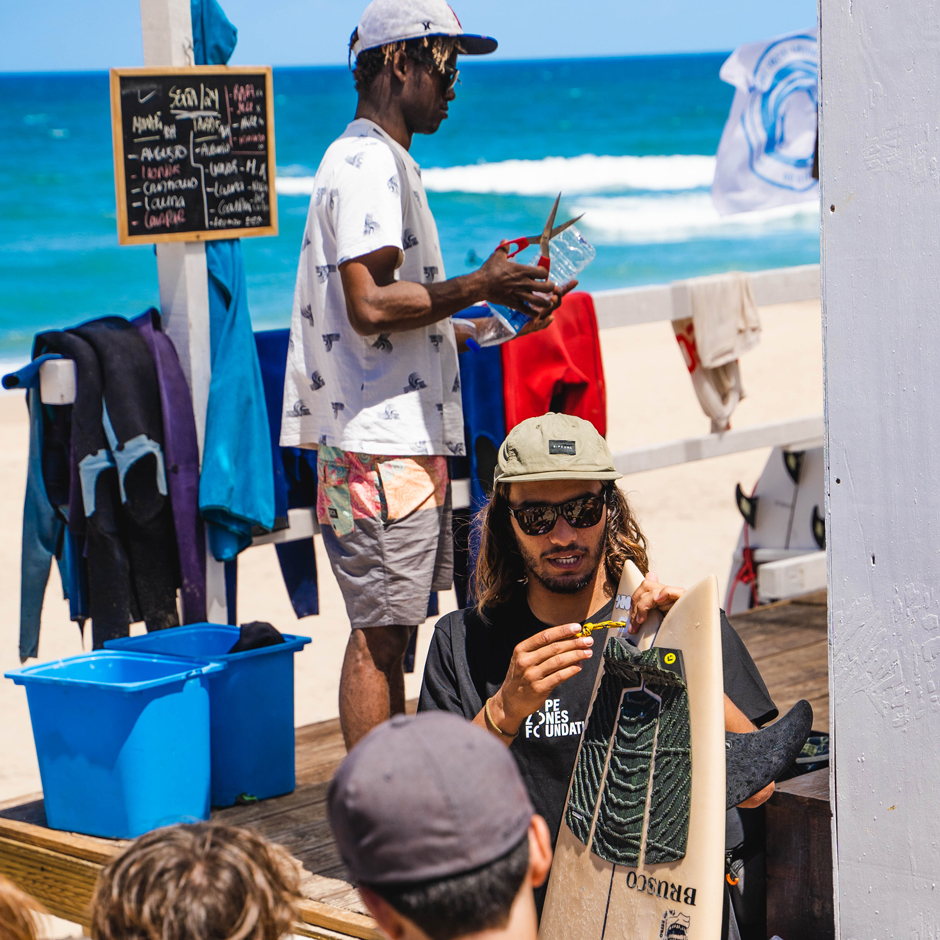
Pro Surfers Jeje Vidal (white shirt) and Miguel Blanco (with surfboard) explain the importance of recycling and waste management for the ocean in general and Marine Protected Areas in particular at Hope Zones Praia Grande, Sintra HQ. (Credit: Provided by the Hope Zones Foundation).
Monitoring the Seaweed Farm’s Environmental Conditions
The Nazaré regenerative seaweed farm is not extremely large, encompassing only 22 hectares. But this size, and the fact that it’s Portugal’s first farm of this sort, offers immense monitoring and research potential.
The Hope Zones Foundation employs various surfers, entrepreneurs, and environmentalists, but not many trained scientists. However, Macedo knew the farm needed scientific results to prove its viability.
An agreement was drafted between MARE and Hope Zones to provide the project with researchers who can monitor the farm. The tasks included a baseline ecosystem assessment conducted before the seaweed was planted, raising and cultivating the seaweed seedlings in a MARE lab, and attaching the seedlings to the seeded line spools within the farm.
These tasks occurred over the past few years, and now that the farm is officially launched, MARE will continue monitoring the farm for light availability, water temperature, and turbidity to understand the optimal growing conditions.
This monitoring phase will also coincide with carbon sequestration and biodiversity measurements, allowing Hope Zones to quantify their farm’s ecosystem services, even at a small scale.
“We’re aware that 22 hectares is not a giant carbon sink,” Macedo explains. “But we are creating an environment that we can measure, and then when we scale, we can have a much better grip on ‘what is the contribution of seaweed?’”
Scaling up the farm is the key idea driving Macedo’s plans for not only his farm, but large swaths of the nearby Portuguese coast.
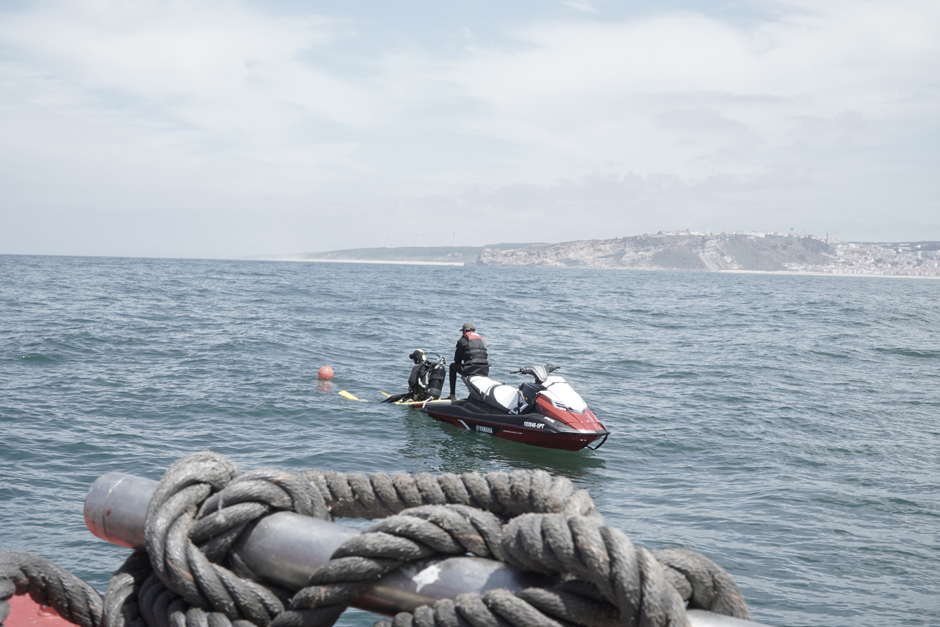
A prospective dive at Hope Zones’ seaweed licensed area; the water team waits for the next descent. (Credit: Provided by the Hope Zones Foundation).
What’s Next for the Hope Zones Foundation’s Seaweed Farm?
When Macedo envisions scaling up Hope Zones’ project, he sees it happening in two ways: increasing the protected areas around Nazaré and inspiring new seaweed farms around the world.
Macedo says some of his inspiration for the seaweed farm came from the United Nations goal to protect 30% of the world’s oceans by 2030. An increasingly popular way to protect ocean ecosystems is by creating MPAs, which limit extractive practices and allow ecosystems to recover.
However, in a smaller nation like Portugal, these can be difficult to implement. While there are some examples of MPAs in the country, like the Azores Islands, Macedo recognized that an MPA around Nazaré would be difficult to create at first.
“MPAs [involve] really lengthy lobbying,” Macedo says. “So, for a small organization like ours, we understood that we wouldn’t survive that.”
This justified his decision to start with a small, private farm, in the hopes that they could prove the benefits of a protected and well-managed marine environment. That’s why Macedo values the water quality and biodiversity data that their monitoring will collect, so they can use these ecosystem services to lobby for more protected areas.
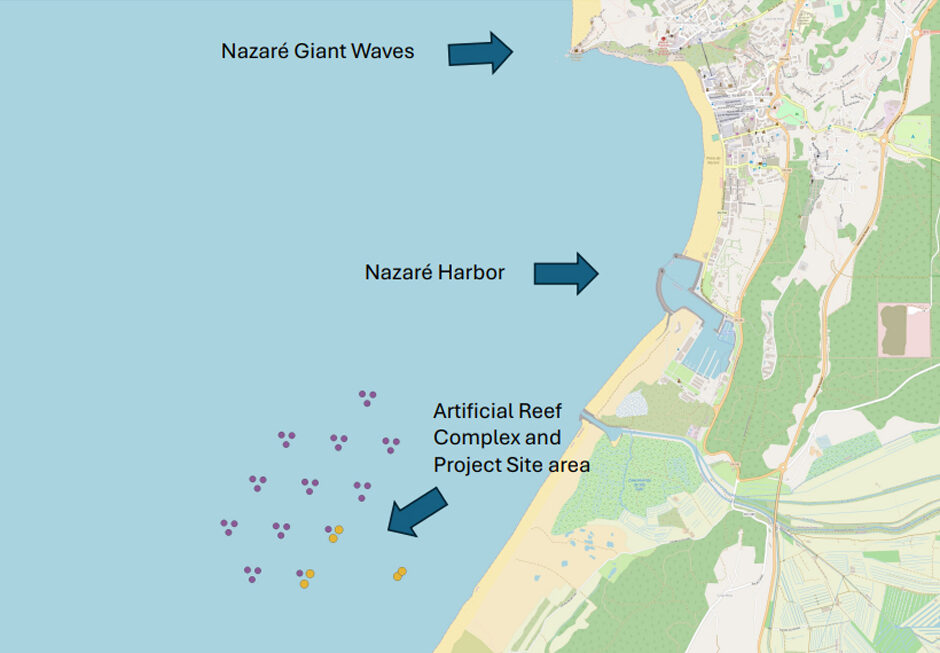
Map of Nazaré explaining the location of Portugal’s First Regenerative Seaweed Farm (Credit: Provided by the Hope Zones Foundation).
Macedo says that, if the monitoring shows a positive environmental impact from the farm, Hope Zones will petition the government to create MPAs surrounding his farm. But he doesn’t just want to revitalize his beloved Nazaré coastal waters; he wants to conserve huge chunks of the Portuguese coast.
“We have a dream of a bigger MPA, or various MPAs that would actually be from Nazaré all the way to Lisbon,” Macedo says, which includes the Sintra-Cascais-Mafra Oceano Azul Foundation MPA initiative.
He continues, “[It’s] the coastal area, where I learned to surf and the Westernmost tip of Europe, and a big conservation project that Hope Zones has aligned with”.
Even with his lofty goals of establishing large-scale MPAs, Macedo wants to continue working on seaweed farms. He sees the Nazaré farm as a case study for future farms, hoping to prove they can be beneficial not only economically, but also in conservation.
As a surfer who has caught waves around the world, the global reach appeals to Macedo. He says that if his small farm in Nazaré can inspire more to follow him, no matter where it happens, he’ll see it as a success
“A really important [concept] for us as an organization is that anywhere in the world where there’s a fishing community, where there’s an ocean, where there are waves and surfers, regenerative seaweed farms can become a really important conservation tool,” Macedo says.
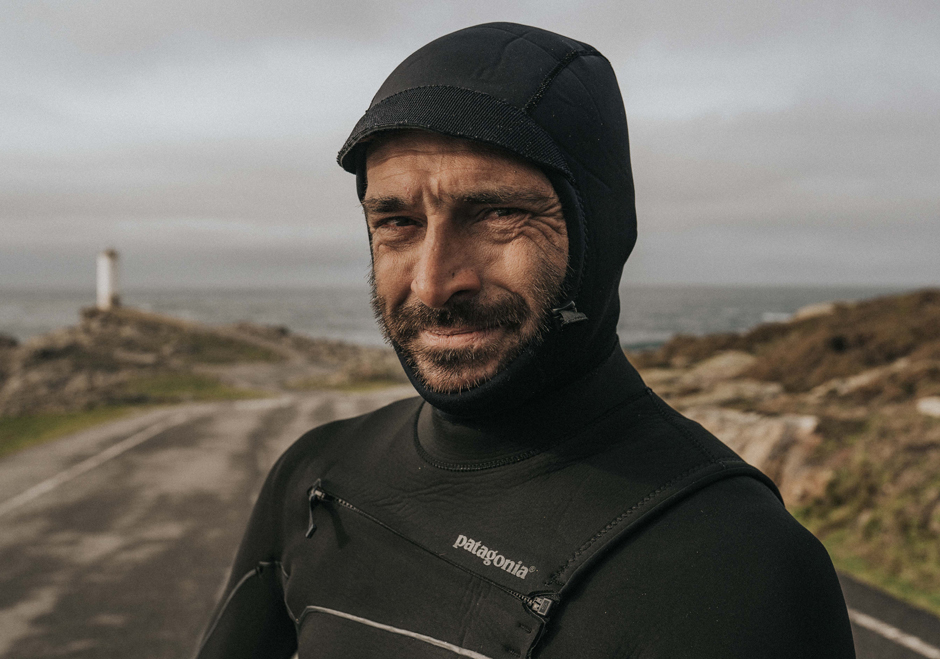
Hope Zones President and Patagonia Ambassador João Macedo. (Credit: Provided by the Hope Zones Foundation).






0 comments