
Partners for Clean Streams: Monitoring Water Quality in Northwest Ohio and Fostering Community Engagement
Growing up around a highly frequented yet often-polluted state lake in his hometown, Jesse Stock learned early on that the protection of freshwater resources and stewardship of the natural world build stronger, more connected communities united by shared goals.
Dow Lake, located in Strouds Run State Park, was a man-made lake used primarily for recreation and flood control, and drained in the winter. Stock recalls seeing all of the litter and waste that ended up in the lake each year when it was drained.
Fortunately, he was not the only person who noticed these issues and a collaborative, community-wide initiative to clean up the lake was started.
Twice a year, locals invested in protecting the lake would clean up the lake, roadways, and surrounding shoreline.
“While it wasn’t a large-scale effort, it had a big impact on me personally. It motivated me to continue to take responsibility for that space. And it was really rewarding emotionally for me as a resident and a leader within the community to say, ‘Look, it’s such a better place when it is more pristine and clean and we’re aware of the issues,’” states Stock.
He continues, “I didn’t just want to talk about the problem—I wanted to be the change and take meaningful steps to fix it.”
This early lesson is what led Stock to become involved in Partners for Clean Streams, a Northwest Ohio-based nonprofit that organizes water cleanup projects, manages a water quality monitoring program, and shares environmental data with the community to improve public knowledge of issues in the region.

Several sampling locations are adjacent to schools, allowing for direct partnership with K-12 teachers and students to participate in water monitoring. (Credit: Kat Kieffer / Partners for Clean Streams)
Evolution of Partners for Clean Streams’ Water Quality Monitoring Program
While Partners for Clean Streams has been cleaning up Lake Erie’s western basin and the surrounding waters for decades, the organization’s volunteer-led water quality monitoring programs started just four years ago when they joined the Cleveland Water Alliance’s Lake Erie Volunteer Science Network (LEVSN).
Partners for Clean Streams helped establish Community Water Action Toledo (CWAT) to bring together local organizations and leverage their existing volunteer pools for community water monitoring.
The CWAT program was made possible through funding from the Greater Toledo Community Foundation. Their support enabled CWAT to launch its involvement with LEVSN and established standard operating procedures for sampling, ensuring consistent data collection across the network
Like other LEVSN partners, Partners for Clean Streams uses YSI ProDSS multi-parameter meters to collect conductivity, dissolved oxygen, temperature, and pH measurements.
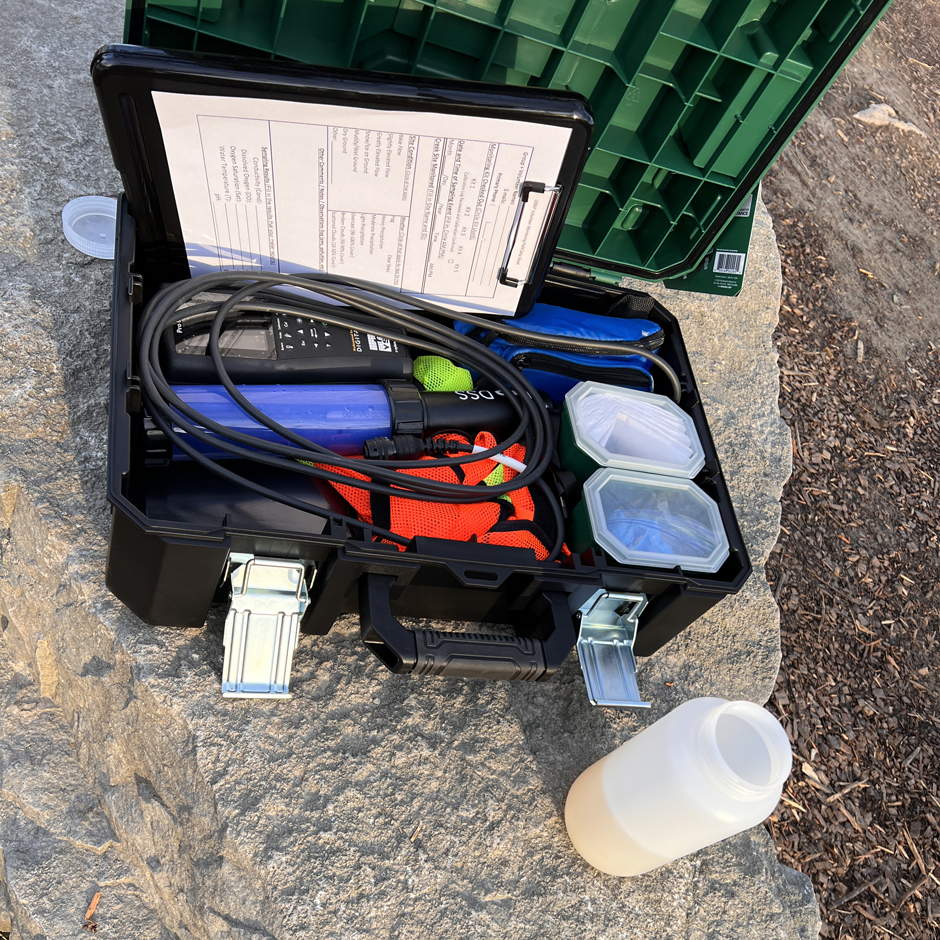
Water monitoring sampling kit used by volunteers. (Credit: Kat Kieffer / Partners for Clean Streams)
The first year of the CWAT program was staffed by over 50 volunteers from partner organizations, including The Toledo Zoo, Metroparks Toledo, and TMACOG, who collected data from 19 sites along the Maumee River, Ottawa River, and Swan Creek.
The program’s initial goal was to build a multi-year database of baseline stream health data, while engaging community members in a rigorous, community-science effort and connecting them to waterways.
The following year, the same locations were sampled as well as a few new sites, including the addition of sites on the Portage River. That same year, Partners for Clean Streams released a report documenting and analyzing their findings from the sampling program, drawing some conclusions about the health and stressors of various waterways.
They also contribute to the larger, basin-wide LEVSN Reports on the health of the Lake Erie watershed as a whole.
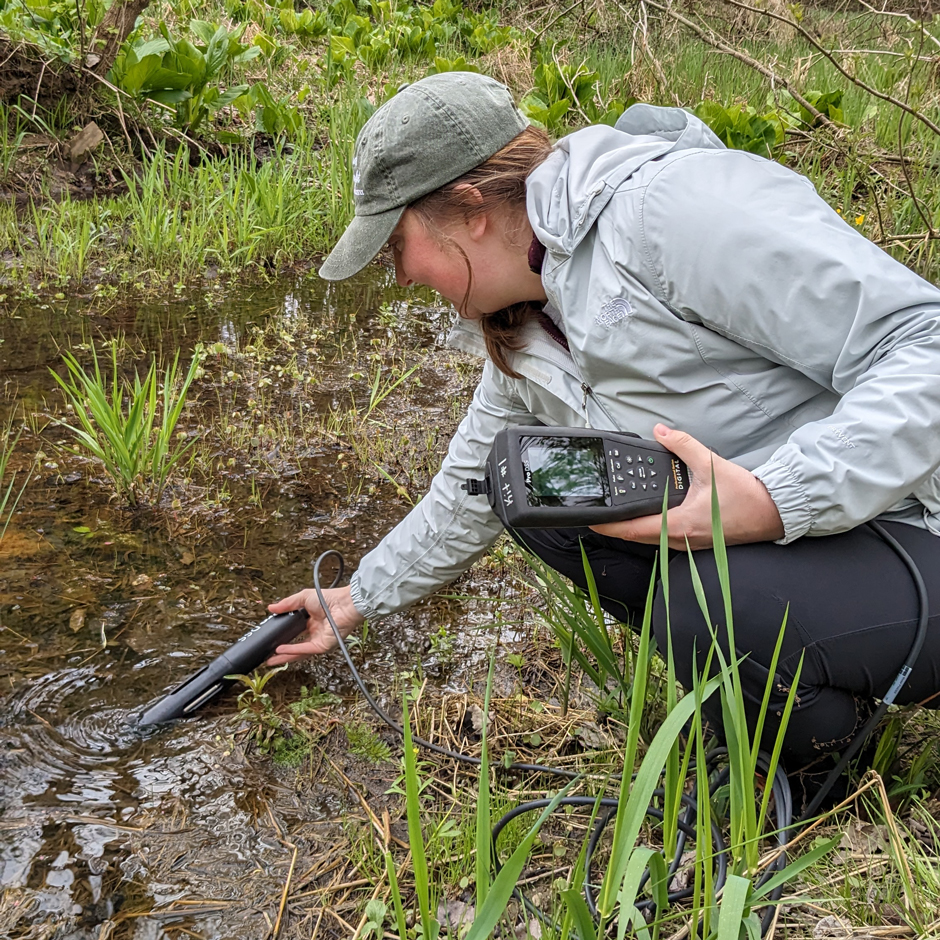
Partners for Clean Streams staff sampling at Oak Openings wetland site. (Credit: Kat Kieffer / Partners for Clean Streams)
Initially, Partners for Clean Streams’ sampling program was equipped solely with six LEVSN loaned ProDSS meters. However, the organization has recently been able to purchase three of their own, which they use for sampling at their designated sites as well as for loaning out to select projects and outreach initiatives.
For example, Partners for Clean Streams collaborates with local municipalities to monitor stormwater runoff and other nonpoint source pollution—something that is already required for permitting, but can be augmented with volunteer sampling.
Currently, there are 19 core volunteers from Partners for Clean Streams who work to collect monitoring data each month, along with continued participation from other CWAT partners.
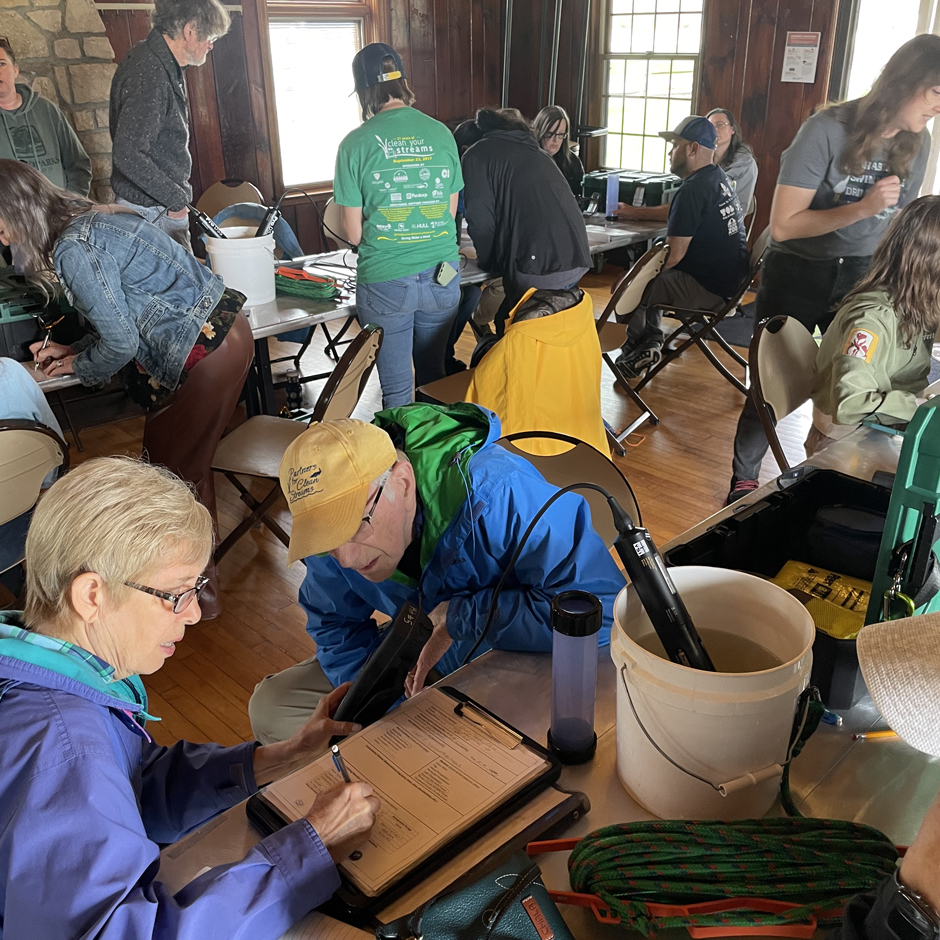
Volunteers getting hands-on training at Partners for Clean Streams’ 2025 CWAT Kickoff Event. (Credit: Mary Winkle / Partners for Clean Streams)
Even though this is a smaller team than when the program started, returning volunteers offer consistency and are dedicated to collecting this data.
Thanks to a partnership with the University of Toledo’s Environmental Sciences department, Stock—currently serving as the organization’s Executive Director—plans to expand water quality monitoring by adding a probe to test for chloride levels.
In Northwest Ohio, brine is commonly used to keep roadways safe during winter weather, but the runoff can significantly alter water chemistry. By tracking chloride concentrations, the organization hopes to better understand the impact of road salting and salt storage on the lake and surrounding waterways.
He also mentioned some future opportunities for youth to become involved in the program and learn more about the environment, by lending out their meters to local schools and hosting community events that allow young people to interact with the waterways and become more informed.
While the water quality monitoring program has evolved over the years, the goal of creating an engaged community that is aware of the watershed’s issues has remained the same. Stock believes that the best way to achieve this is by inviting them into natural spaces and using data to show that the environment is in need of protection.
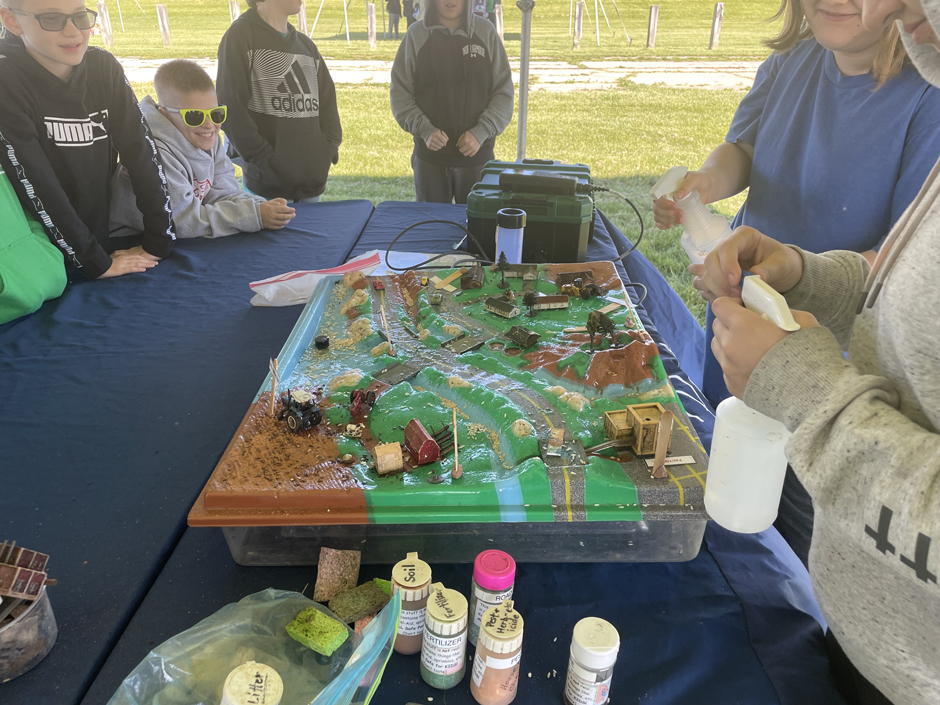
Partners for Clean Streams Staff engaging middle schoolers from Delta, OH in a wetland and waterway connectivity activity at Delta Water Celebration Day 2024. (Credit: Kat Kieffer / Partners for Clean Streams)
Data Collection in the Maumee River Watershed
Data is collected by volunteers at 27 sites using a YSI ProDSS throughout the year. Volunteers are trained and then can check out sampling kits that travel from site to site with them.
While sampling occurs at each site at least monthly, a few sites are sampled more frequently, depending on the availability of volunteers and sampling kits.
Most volunteers sample a few sites per outing, collecting water in a bucket for sampling or spot sampling directly in the stream, depending on site conditions.
Measurements are recorded on an included data sheet. A few additional items, like a first aid kit, site maps and routes, and gloves, are also packed in the kits, ensuring that volunteers have everything they need in the field.
All of the collected data is synthesized and quality checked by Water Quality Analysts at Partners for Clean Streams and then shared publicly for community members and researchers to view on Water Reporter.
Though samples only take a few minutes to collect, the data can have far-reaching impacts, such as informing policy and environmental planning.
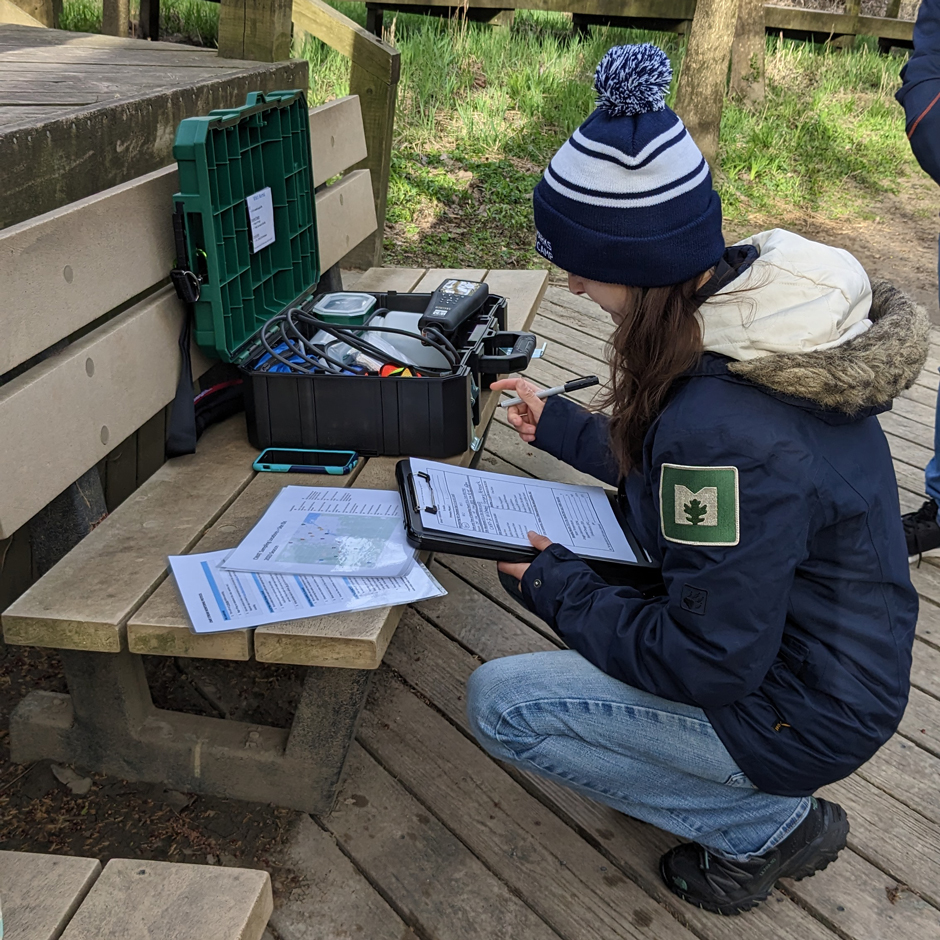
Metroparks Toledo staff recording water data from the Ottawa River at Wildwood Preserve. (Credit: Kat Kieffer / Partners for Clean Streams)
The Importance of Public Involvement in Water Quality Sampling
Partners for Clean Streams has a staff of just three people, and Stock notes that collaboration with community members is essential for the program’s success. Additionally, when residents are out collecting data, they have a greater knowledge of what’s happening in the waterway.
“Community members are often the key decision-makers when it comes to water issues,” says Stock. “If they’re not aware of the problems affecting our waterways, it becomes easy to overlook the choices that could lead to meaningful change and improve the overall health of the water system.
He continues, “We’re using this as a way to start conversations, educate the community about what we’re seeing in the waterways, and support municipalities by building public awareness and community involvement.”
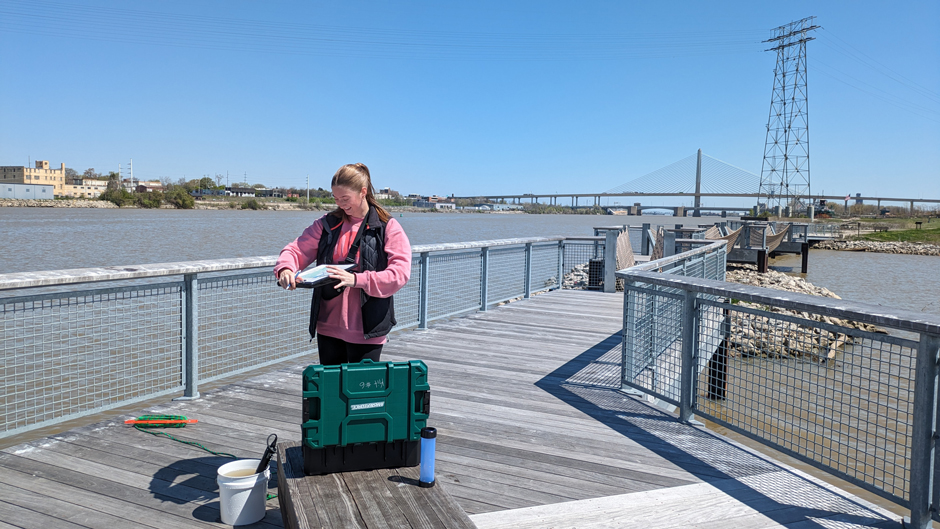
CWAT volunteers monitor a wide variety of sites, including urban locations like Glass City Metropark in downtown Toledo, pictured here. (Credit: Kat Kieffer / Partners for Clean Streams)
While the involvement of stakeholders of all ages is important for enacting change in the watershed, Stock notes the role of young people in particular—specifically their existing knowledge on how to improve the environment.
He explains, “[Young people] know what individual things they can do in their own household that will contribute to the quality of the water long term. There are times where I’ve gone out and talked to them, and I’m like, ‘I’m not smarter than that fifth grader.’”
Stock continues, “I’m so impressed with the conversation and their awareness, and that really gives me hope and inspires me to think that maybe they’ll think about the environment differently than how we’ve handled it during my lifetime—that the future decision makers will be better for the natural world.”
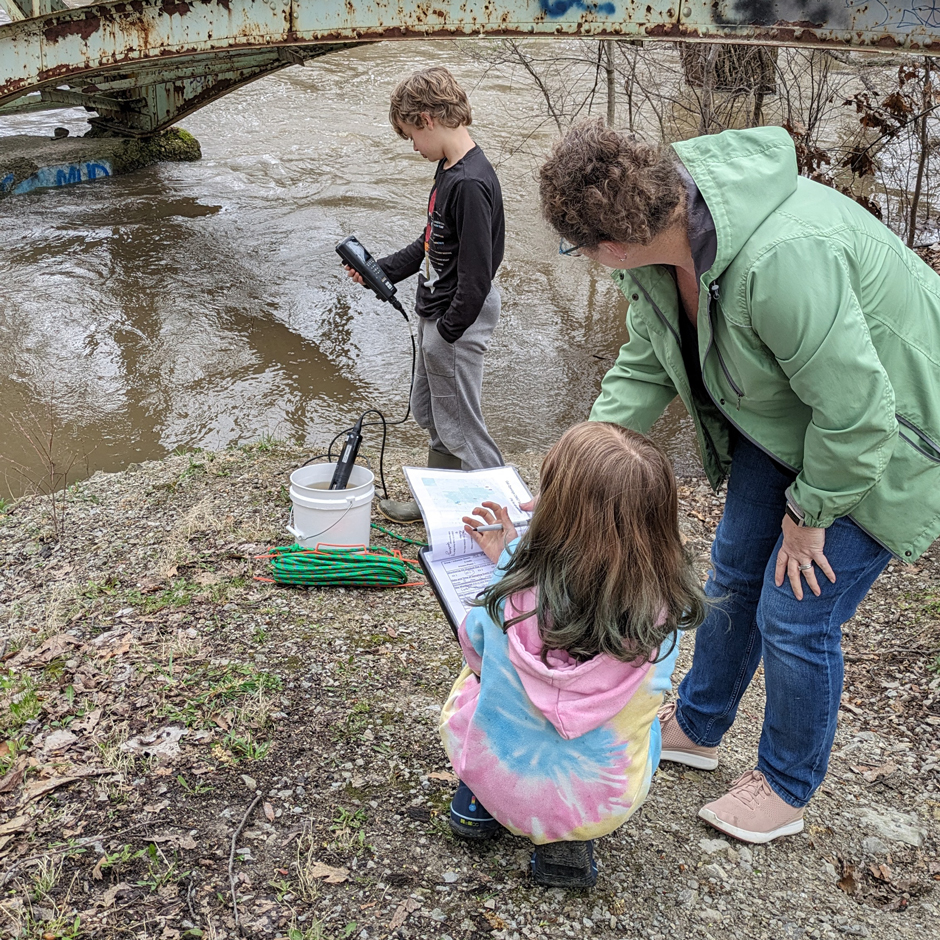
CWAT has connected volunteers of all ages with local waterways: family sampling at Highland Park in Toledo. (Credit: Kat Kieffer / Partners for Clean Streams)
Working Together to Serve a Larger Purpose
While individual contributions and business outputs have certainly had an effect on the environment, most of the issues impacting Northwest Ohio are related to agriculture, and Stock stresses that a conversation needs to be had about how everyone can contribute to protect the environment.
He explains, “It doesn’t have to be a conversation that’s adversarial. There’s a clear history of pointing fingers, and yet, have we done enough? Have we done enough community building and community organizing in a way that doesn’t create barriers for future work?”
All members of the public, from business-owners, to farmers, to average-day workers, need water to survive and keep their livelihoods, and Stock stresses that there just aren’t enough funds in the region to fix the environmental issues here—he says, “We can’t policy our way out of this.”
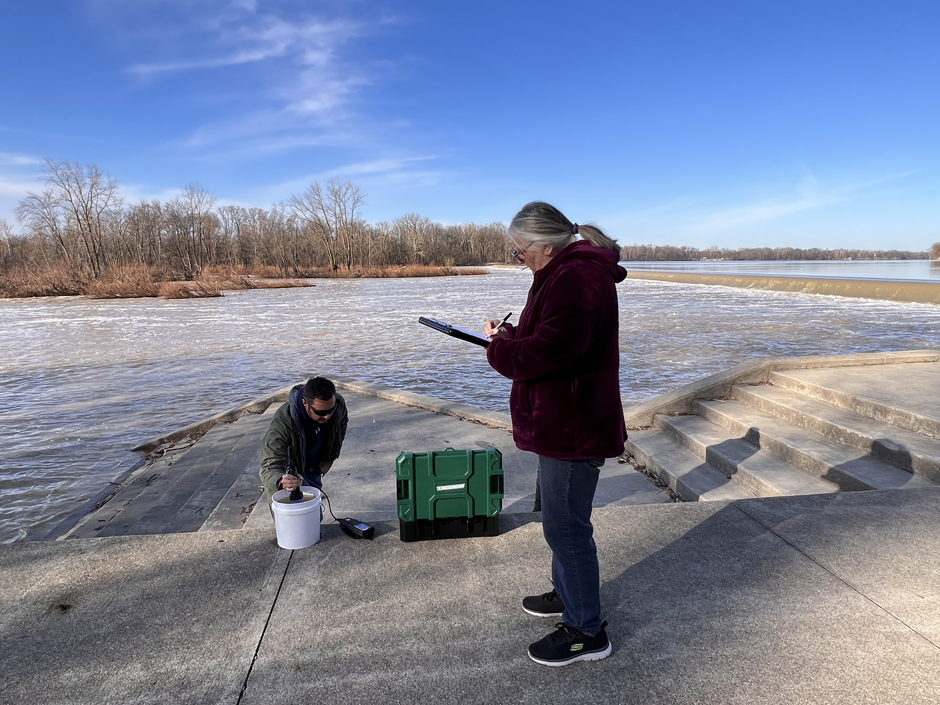
CWAT volunteers collecting data at Portage Metropark on the Maumee River. (Credit: Kat Kieffer / Partners for Clean Streams)
The solution, according to Stock, requires coming together over the understanding that water is a shared resource under threat. “There is no way that we’re going to be able to address the quality of our water without partnership and collaboration in the space.”
Working with groups to foster amicable but important conversations about the state of the region’s water is vital to preserving life on Lake Erie’s western shore. This is one of the founding reasons that Partners for Clean Streams emphasizes community members being the people who go out and make the measurements.
Stock explains, “I really believe that people are the solution to issues that we’re having. We were the cause, but we’re the solution as well. Because it was a human-created problem, humans can be the solution. And in order to get there, what we need is participation, understanding, and spaces that invite people into this work.”
If you are interested in joining the Partners for Clean Streams volunteer program, please contact admin@partnersforcleanstreams.org for more information or visit them online at www.partnersforcleanstreams.org





0 comments