

Restoring the Heart of the Everglades Starts at Lake Okeechobee
Standing on the southern bank of Lake Okeechobee, central Florida, sawgrass bows to the relentless wind, and the white caps of wind waves scour the grey line of the horizon.
Lake Okeechobee is the second-largest freshwater lake in the contiguous United States–so vast it acts like an inland sea. Yet it is also breathtakingly shallow: only nine feet, on average.
“The lake is the heart of the entire Greater Everglades ecosystem,” says Dr. Anna Wachnicka, a Principal Scientist at the South Florida Water Management District (SFWMD). “It’s an amazing but highly dynamic and highly complex system.”
But after centuries of agricultural and urban expansion and changing environmental conditions, Okeechobee has been heavily degraded. “When the heart is sick, then the rest of the body obviously doesn’t function well,” Wachnicka explains soberly.
In 2000, the Florida Legislature enacted the Lake Okeechobee Protection Act and the subsequent Lake Okeechobee Protection Program to restore the lake and its watershed. This was expanded in 2007 to strengthen protection for the Northern Everglades.
Large strides are already being made in restoration efforts that, guided by data, aim to rehabilitate these environments to their natural state, and build a more complete understanding of ecological health and change.
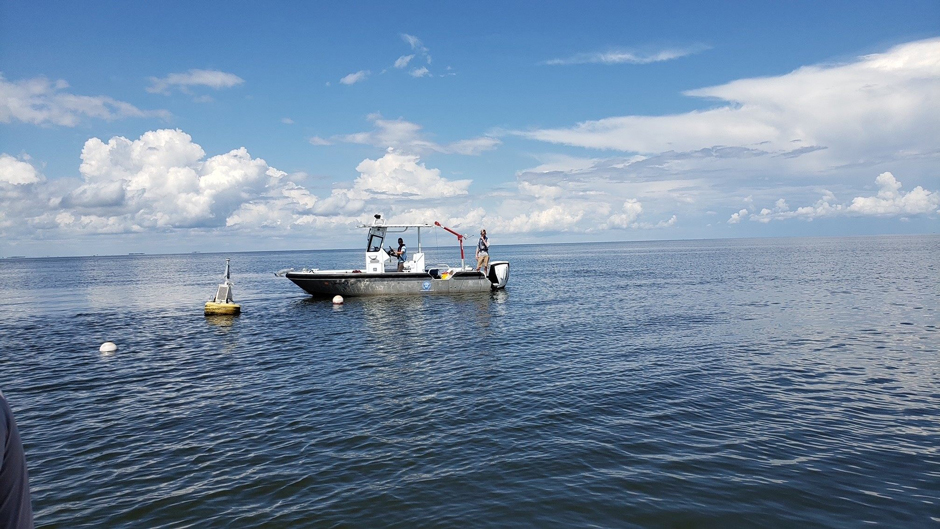
The buoys offer a flexible deployment platform, and Councilman’s team can adjust the payload to meet specific partner needs and research goals. (Credit: SFWMD)
South Florida Water Management District
The SFWMD is a regional government agency that manages water resources in 16 counties in southern Florida, stretching from Orlando in the North, to the Florida Keys in the south.
Alongside its core mission of managing and protecting water resources, the SFWMD is undertaking the largest environmental restoration project in US history–the restoration of the Everglades.
Dr. Wachnicka is part of the SFWMD’s Applied Sciences Bureau’s Lake and River section. She evaluates water quality conditions on Lake Okeechobee and investigates the factors that change this–including extreme weather events, and human operations.
Wachnicka works closely with SFWMD Office of Water Quality colleague Jimmy Councilman, the Field Manager responsible for overseeing the continuous water quality monitoring network deployed in the region.
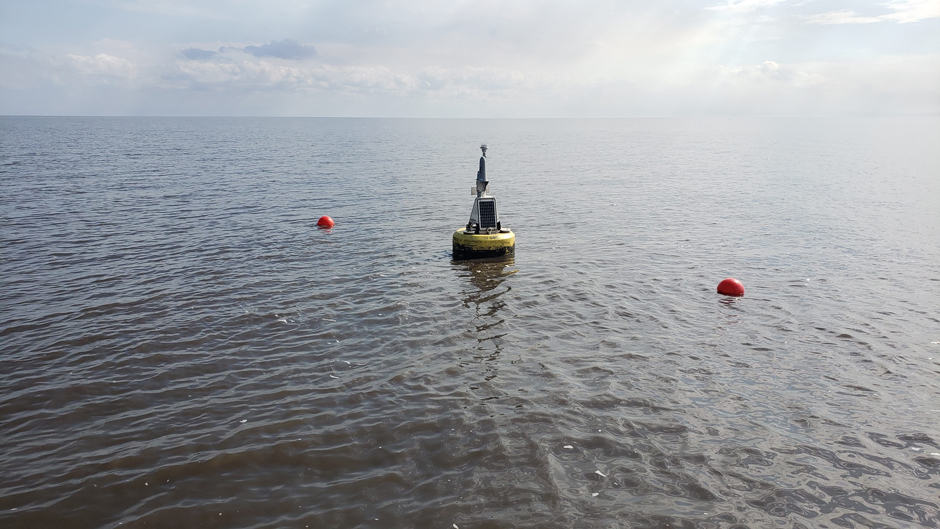
The data from the buoys has two main uses: to assess environmental conditions and evaluate the effectiveness of restoration efforts. (Credit: SFWMD)
Continuous Monitoring of a Changing Environment
The District’s environmental monitoring effort is vast. Sample collection includes surface water, soil, and fish tissue, though Councilman’s primary focus is on water quality.
Two NexSens CB-450 buoys were first deployed on the lake in 2020 as part of a state-led initiative to better understand Lake Okeechobee’s ecological conditions.
Each buoy is equipped with a YSI EXO2 sonde that measures physical parameters such as temperature, dissolved oxygen, pH, conductivity, and turbidity, as well as biological indicators like chlorophyll and phycocyanin. Measurements are collected autonomously every 30 minutes and transmitted in near real time, where data is accessible online.
Councilman’s team adjusts buoy payloads to meet partner needs and research goals. “The larger data well gives us space to put larger batteries for more sensors that are a little bit more power hungry,” he states. The four-inch pass-through well also means the buoy can support large, multi-parameter sondes.
“We’ve installed a lot of different manufacturers of sensors as we continue to learn and grow and figure out which ones are better suited for the environment and the needs we have,” Councilman explains. “Having that flexibility has been great to not just be stuck with one kind of component.”
As part of a broader network that includes nine fixed platforms, the mobile buoys allow teams to target specific locations.
“We can anchor them down in the location, and then if, say, Anna’s group, they’d rather focus on different areas, we can easily move that data buoy to a different area,” Councilman notes.
He adds that they are also cheaper–“we don’t have to worry about infrastructure”–and can be fully assembled and tested before field deployment, ensuring reliable data collection once installed–“so it’s definitely a little bit more efficient.”
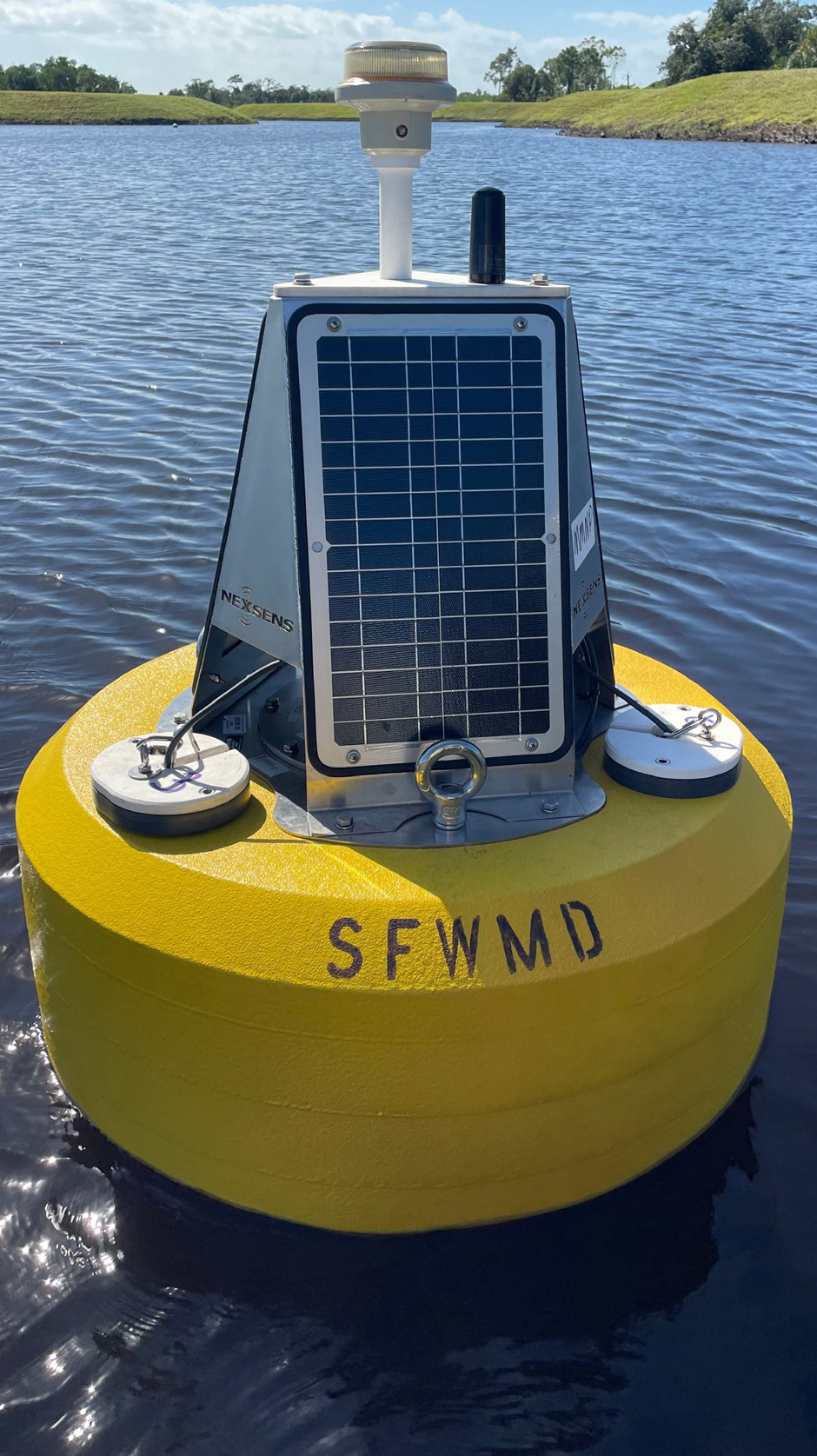
Data from the buoys supports rehabilitation efforts and contributes to a more complete understanding of ecological health and change. (Credit: SFWMD)
An Environment in Flux
Collected data is supplied to internal and external partners, and the public.
Broadly, its uses are twofold. Firstly, it is used to assess conditions and inform understanding of what “optimal” looks like for this environment, and secondly, to evaluate the effectiveness of restoration efforts.
“This data is incredibly useful to us,” states Wachnicka. Excess nutrients are one of the biggest problems on Lake Okeechobee, and eutrophication leads to algal blooms. “Trends and patterns in the data help us better understand or warn us about blooms, and pinpoint the areas where they’re about to start,” she says.
When temperatures exceed 20 degrees Celsius, a bloom is very likely imminent–“they love hot water,” Wachnicka adds.
Looking over the longer term, “What physicochemical water quality conditions are triggering the blooms in different parts of the lake? Because different types of cyanobacteria also form the blooms on the lake.”
“We also can track turbidity, and that also tells us a lot about how, for example, extreme weather events like hurricanes affect the light environment in the lake, which subsequently can have profound effects on benthic habitats.”
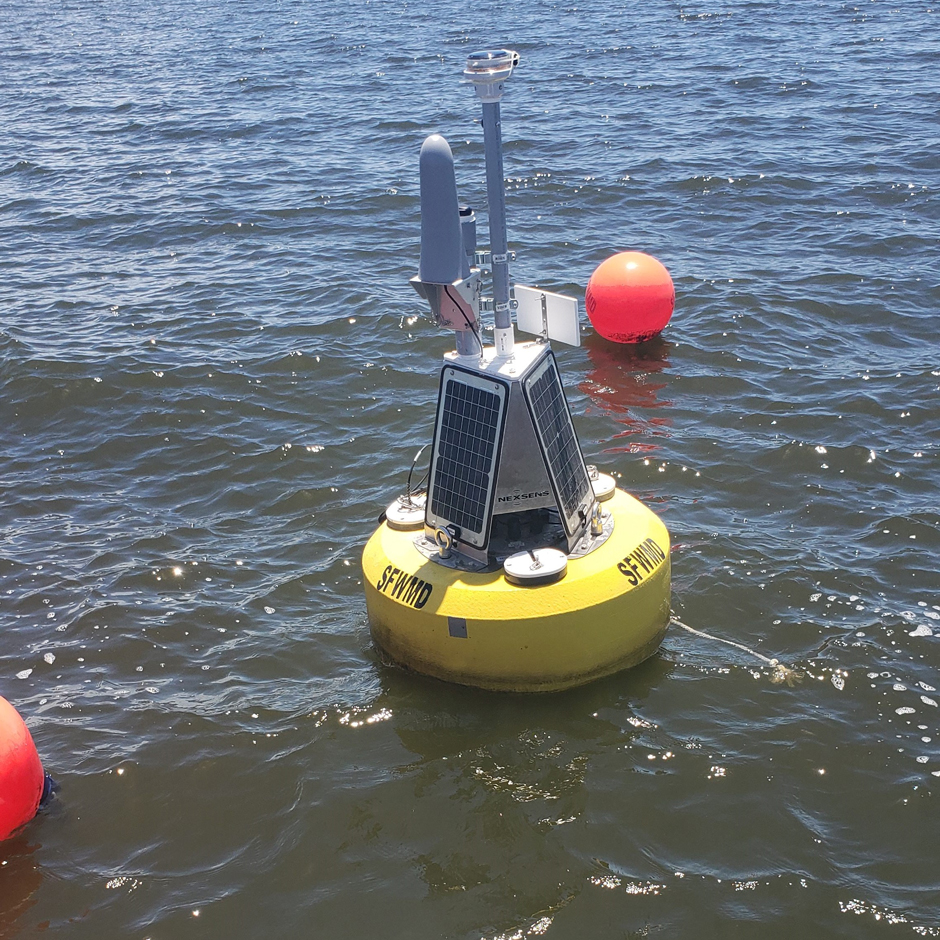
Two NexSens CB-450 buoys were first deployed on Okeechobee in 2020. (Credit: SFWMD)
Evaluating Restoration Efforts
The Kissimmee River Restoration Project restored more natural flow through the floodplain. Continuous water quality monitoring on the floodplain enables the team to map and quantify how sediment and nutrients are being removed from the water before reaching Lake Okeechobee.
At the same time, data on optimal conditions for submerged aquatic vegetation are supporting restoration efforts within the lake. Together, reduced nutrient inputs from the Kissimmee and healthier vegetation that lowers turbidity and nutrient levels are expected to improve water quality and help reduce toxic blooms.
In addition, the Dispersed Water Storage Program will convert thousands of acres of private land into seasonal water storage, slowing water flow and reducing nutrients moving through Lake Okeechobee and into downstream estuaries.
Towards a Restored Everglades
Restoring the heart of the Everglades is not something that happens overnight. It requires sustained effort and evaluation–but progress is undeniable.
“We realize that every data point we collect is a piece of the puzzle,” says Councilman.
Wachnicka continues–“Together, this represents one of the best monitoring networks in the country, and arguably one of the best in the world, really, it’s an amazing set.”
“I think the district and our partners have made so much progress on environmental infrastructure projects–we expanded monitoring, and we’re helping to restore the quality and ecology of these critically important ecosystems,” she concludes.
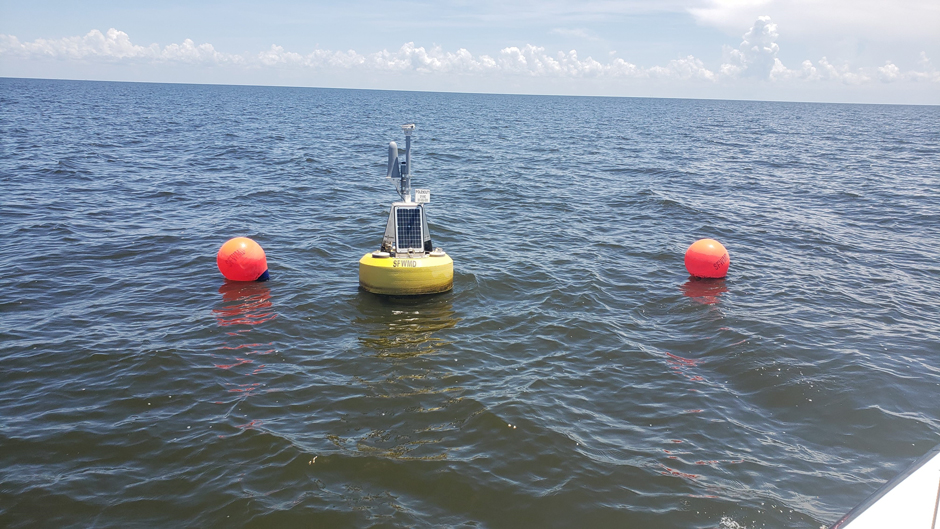
Lake Okeechobee is the second-largest freshwater lake in the contiguous United States, but is only nine feet deep, on average. (Credit: SFWMD)






0 comments