

Riding the Renewable Wave: Testing Wave Energy Converters at Oregon’s PacWave Site
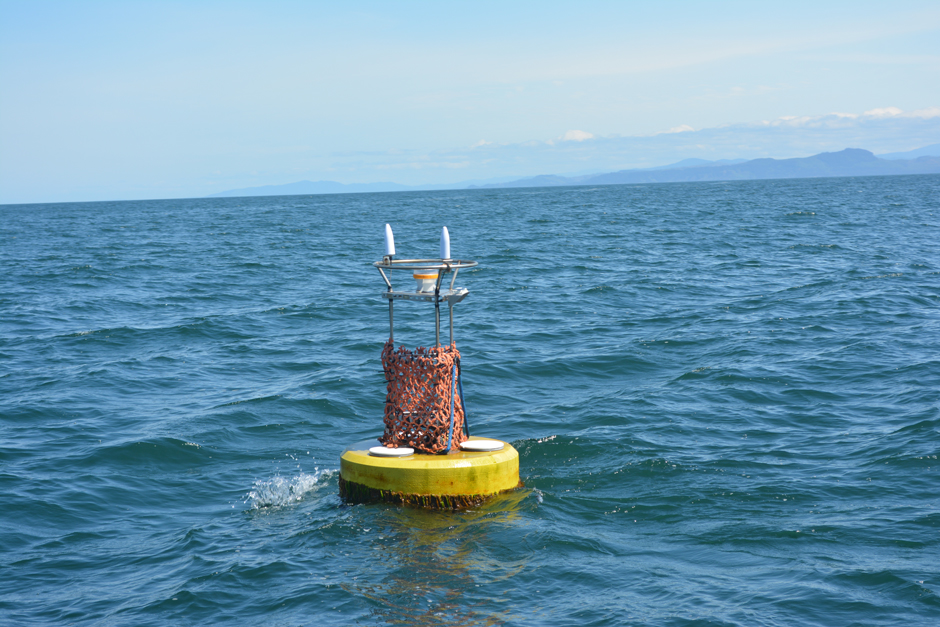 Oregon’s coast is the ideal location for WEC technology, but with maximum wave heights exceeding 60ft, it’s a challenging working environment. (Credit: PacWave)
Seven miles off Oregon’s weather-beaten coastline, the world’s biggest wave power testing facility, PacWave, is primed to put the latest renewable energy technology to the test.
“There is a huge amount of energy that is not harvested in the ocean,” states the team at Oregon State University involved in the PacWave project.
When it comes to harnessing the power of the waves, “It’s exciting because it [wave power] is a non-polluting, non-carbon burning technology,” the team says.
Wave Power
The U.S. Energy Information Administration explains that tidal energy harnesses the flow of seawater in depth under the gravitational forces exerted by the sun and moon–the drivers of tides–while wave energy derives from the kinetic energy of wind-blown surface waves.
Both offer predictable and reliable sources of renewable energy, and the potential is huge. The US Energy Information Administration estimates that the theoretical annual energy potential of wave energy off the US coast equals over 60% of the nation’s total utility-scale electricity generation at 2023 levels.
But wave power is difficult to access. Costs remain high, and the development of technology and infrastructure has lagged behind renewables like solar and wind.
Nonetheless, experts are optimistic, with some suggesting that wave power could become cost-competitive with offshore wind power in the 2030s.
Oregon’s coast is the ideal location for WEC technology, but with maximum wave heights exceeding 60ft, it’s a challenging working environment. (Credit: PacWave)
PacWave
Owned and operated by Oregon State University, PacWave offers a standardized testing facility that comes complete with infrastructure, technical expertise, and wraparound support.
The completion of the South Test Site in early 2025 means PacWave now hosts two pre-permitted sites, giving researchers and companies a low barrier of entry into real-world testing of wave energy converters (WECs).
The South Test Site is approximately four by two kilometres, subdivided into four berths, each connected to the land-based energy grid by subsea cable.
NexSens buoys configured with acoustic equipment are one part of the facility’s infrastructure, used to listen to the noise generated by the WECs.
Understanding the marine acoustic impact of WECs is important because of their potential impact on marine wildlife and, accordingly, to ensure compliance with the Marine Mammal Protection Act.
This isn’t just about preventing fatalities, the team notes, but also “any incident that alters the behavior of marine mammals, whether that’s their migration, feeding, or communication. It’s also for fisheries protection as well.”
Developing an Acoustic Monitoring System
Over time, the PacWave acoustic buoys have evolved. Initially, the team borrowed a DART (Deep-ocean Assessment and Reporting of Tsunamis) buoy from NOAA’s Pacific Marine Environmental Lab (PMEL), and the DART team was heavily involved in engineering the hardware and recording device.
The modified DART buoy was deployed for an initial test in 2023, and despite working effectively, it wasn’t perfect.
The team needed the system to be “a little more compact and manageable”—fitting within the constraints of semi-rural Oregon’s coastal infrastructure and the vessels available. This led the team to NexSens buoys.
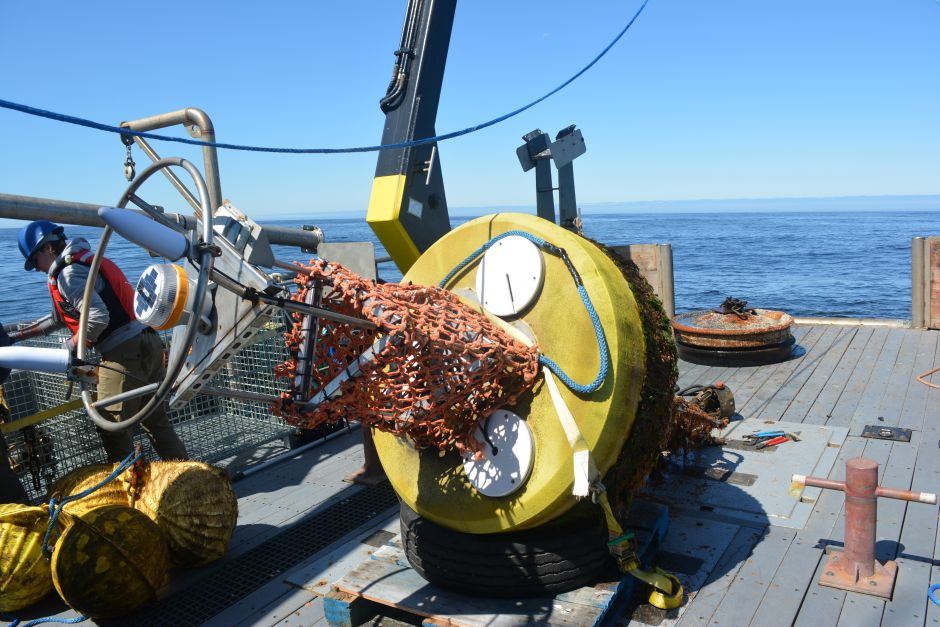
At 48” wide, the NexSens CB-1250s are relatively compact for ocean-going buoys. Their size means deployment is feasible within the constraints of semi-rural Oregon’s coastal infrastructure, and the available vessels. (Credit: PacWave)
The Acoustic Impact of Wave Energy Converters
In 2024, a NexSens CB-1250 buoy was deployed for its first test. After a successful season, it was redeployed in Spring 2025.
Now, the team has six NexSens CB-1250 buoys ready for deployment on the South Test Site alongside WECs–one system per berth and two spare, in case of battery or instrument failure.
Each buoy is fitted with an identical mooring that supports a real-time acoustic monitoring system. On the seafloor, a lander has a battery and recording device connected to a hydrophone, which listens to the ambient environment 24/7.
When a WEC is being tested, a NexSens buoy system needs to be within about 350ft of it to detect its impact on the underwater soundscape.
“It stops recording every few hours, processes the data that it just recorded into a condensed power spectrum, and then it transmits that power spectrum via an acoustic modem to an acoustic modem that’s receiving, attached to the NexSens buoy,” the team explains.
This data is then transmitted from the buoy via cell signal to shore six times a day, so scientists and engineers can monitor the data.
If the WEC is detected to be producing sound that exceeds thresholds set by the National Marine Fisheries Service, a field team is deployed with hydrophones to get higher-resolution data.
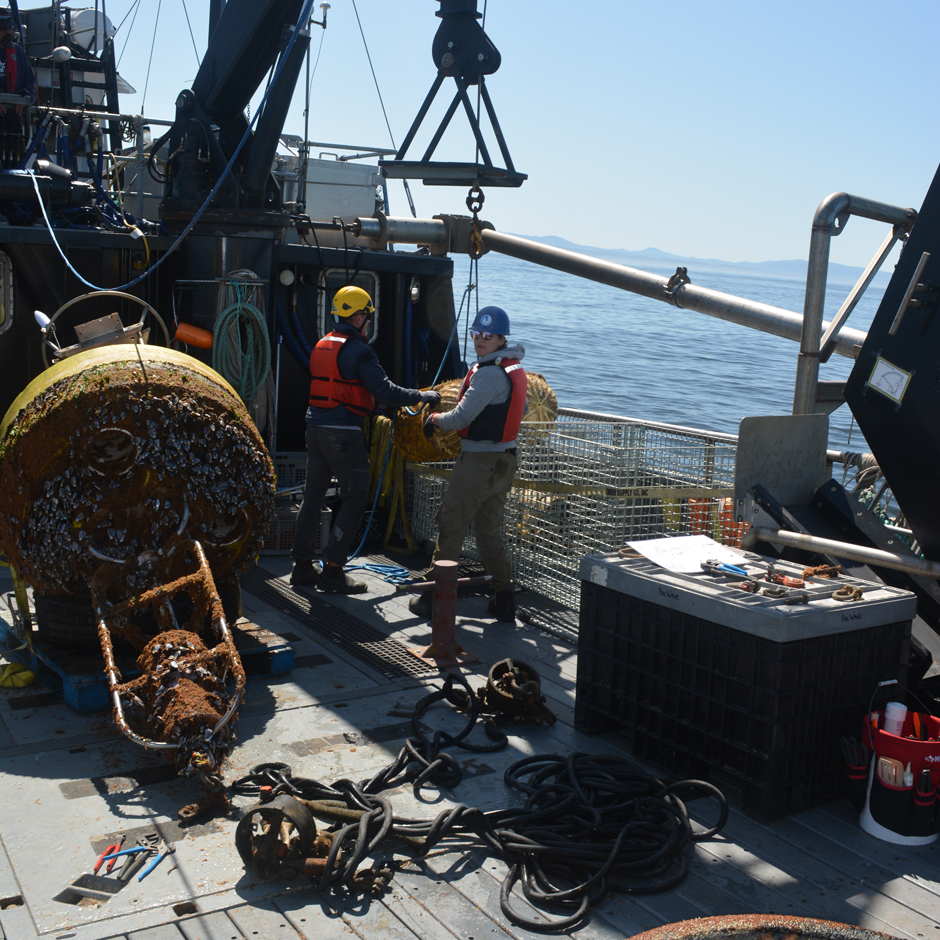
The NexSens buoys have been successfully deployed for two test seasons and are now ready to be deployed alongside WEC tests. (Credit: PacWave)
A Challenging Environment
“The ocean is a terribly corrosive, violent and energetic place,” the team says frankly.
“The waters are very nutrient rich, which means that lots of things grow,” they add, indicating the intense biofouling these buoys experience.
The team are the first to call themselves “pessimistic engineers”—but with a maximum wave height of over 60ft measured near the PacWave site in 2025, it pays to be cautious.
Each buoy is also equipped with a commercial asset tracker. Powered independently, they are a fallback if the buoy goes dark or is cast adrift. But so far, none have been lost or failed unexpectedly.
The team attributes this success to the flexibility of the NexSens systems and the unique, custom-built mooring system designed by PMEL, which incorporates a bungee-like element to ensure the buoy can ride the waves while maintaining the tight, 200ft watch circle required for communication between the seafloor and buoy components.
The NexSens buoys have other advantages, too. Their high profile and distinctive yellow color make them more easily identified by maritime traffic, giving them “a fighting chance of avoiding a ship strike.”
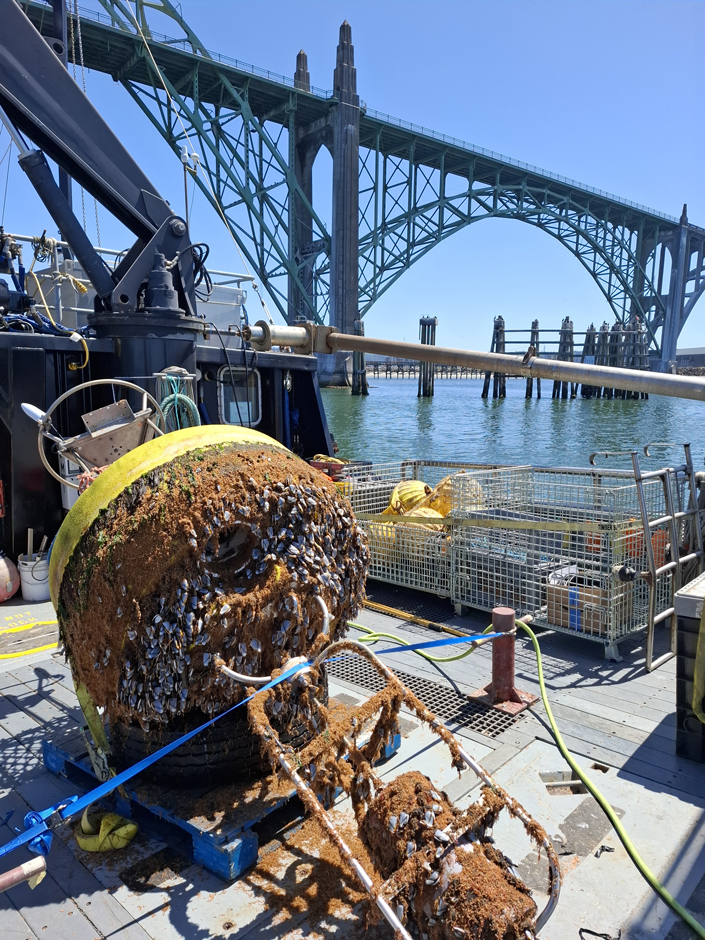
The nutrient-rich waters host abundant wildlife, but also mean buoys suffer intense biofouling. (Credit: PacWave)
Ready for Deployment
With two tests successfully completed and acoustic data received as expected, the team is confident that the system is “working and ready for deployment when we have wave energy converters.”
Acknowledging the challenges of securing funding, the team is optimistic that there are “at least half a dozen or so companies that are at a stage where they could be able to bring out instrumentation or devices to test.” The first WECs are expected to be deployed at the South Test Site next season.
The potential of wave power to contribute to a diverse and green energy mix is exciting, and the PacWave project is helping to put pioneering tech through its paces, ensuring compliance and sustainable development in this sector.
“It’s a really rich and productive, biologically diverse area,” the team concludes. “We want to protect that while balancing the needs for energy generation.”






0 comments