

Understanding the Impacts of Lake Browning: How Three Pennsylvania Lakes are Recovering from Acid Rain
For over three decades, researchers have been collecting water quality data on three Pennsylvania lakes: Lake Giles, Lake Lacawac, and Lake Waynewood. Historical measurements include dissolved organic carbon concentration, temperature, dissolved oxygen, nutrients, chlorophyll, and phytoplankton and zooplankton community dynamics.
Over the years, these lakes have changed dramatically, particularly in increases of dissolved organic carbon concentrations and pH. The phenomenon is known as lake browning and is characterized by decreases in lake clarity driven by an increase in the dissolved organic matter.
“This is a phenomenon that’s been observed in lakes throughout the Northeast as well as elsewhere in the US, Europe, and other places,” explains Kevin Rose, a Professor at Rensselaer Polytechnic Institute.
Rose and co-investigator, Lesley Knoll–Assistant Professor at Miami University–are investigating whether these increases in dissolved organic matter accelerate a shift in trophic status through anoxia-driven feedbacks in oligotrophic lakes.
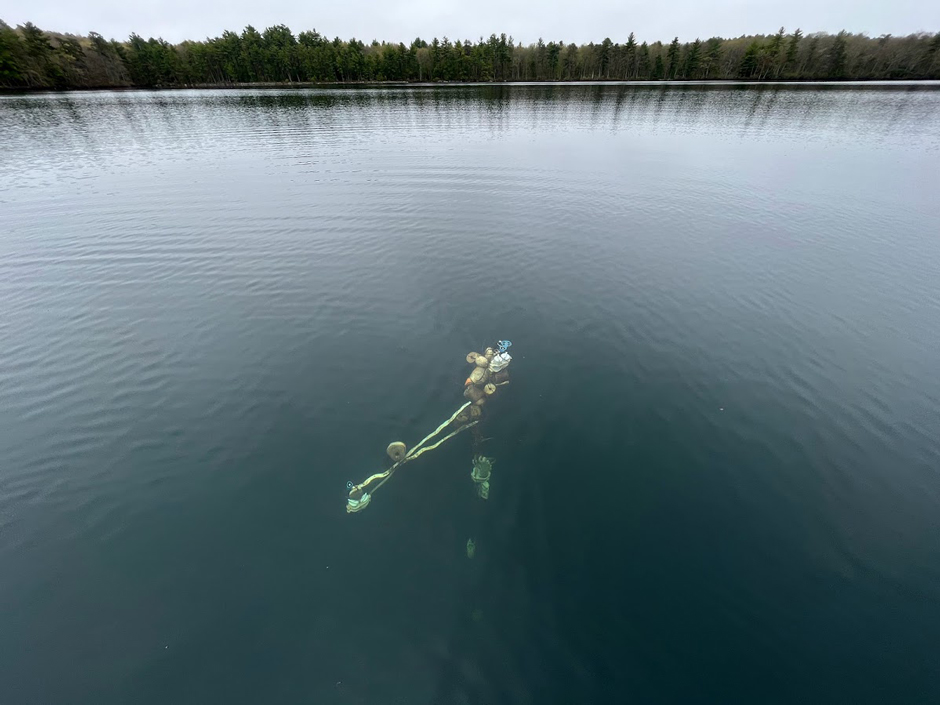
Aerial view of the sub-surface sensor string in Lake Giles. Sensors measuring photosynthetically active radiation (PAR) are affixed to a cross arm at two different depths to measure light attenuation through the water column. (Credit: Jenna Robinson / RPI)
Lasting Impacts of Acid Rain Inputs
Drivers of these increases have been attributed to reductions in acid rain that have occurred since the 1980s.
“Historically, a lot of these lakes looked very pristine and very clear, but the reality is, they were heavily impacted by acid rain, or other forms of acid deposition that prevented the organic matter from being dissolved in water,” explains Rose.
Now, as the lakes recover from decades of acid rain lowering their pH, the pendulum has swung the other way, leading to increases in organic matter.
While recovery of the lakes is an “environmental success story,” according to Rose, there are concerns about what “super recovery” could do to these ecosystems.
“It might be a return to a pre-impacted state—what we might have found in the lakes maybe 100 years ago—or we could have what we think of as ‘super recovery,’ where organic matter is actually shooting past what might have been historically normal,” states Rose.
Regardless of where the ecosystem is going, the increases in dissolved organic matter are leading to lake browning and decreasing transparency, which can impact a large variety of ecosystem dynamics.
“And that’s where our research really begins,” states Rose.
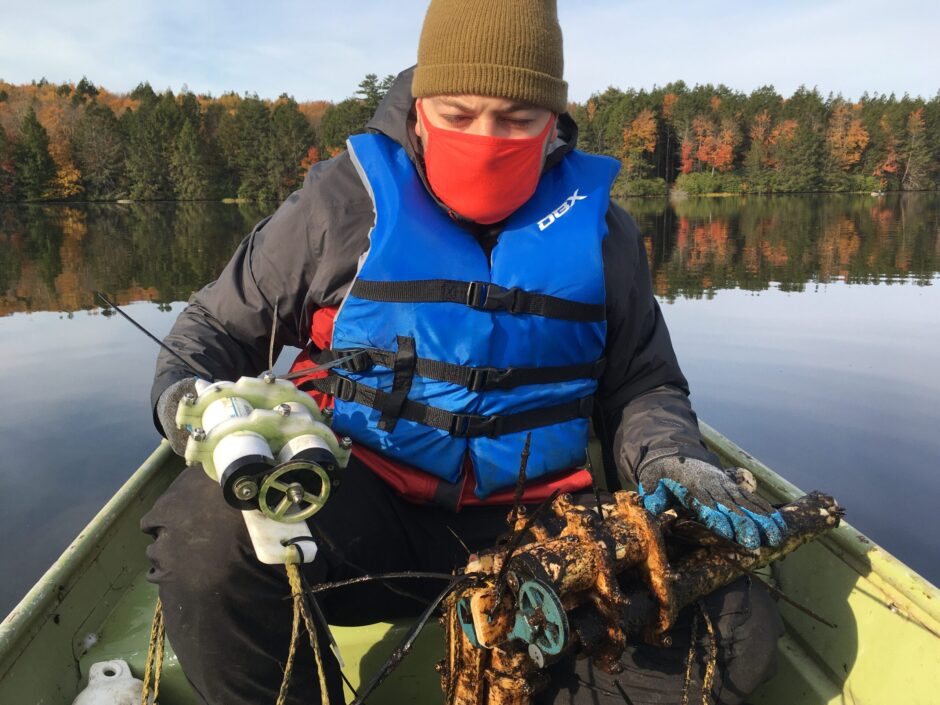
Dr. Jonathan Stetler with sensors retrieved from two different depths in Lake Waynewood. The sensors on the left were located in the deep anoxic (oxygen-free) waters where no algal biomass accumulated. The sensors on the right were located close to the surface where dissolved oxygen supported substantial algal growth. (Credit: Jenna Robinson / RPI)
Building off of Historical Data
Building off historical data from Lake Giles, Lake Lacawac, and Lake Waynewood, located in the Poconos region of Pennsylvania, Rose is hoping to get to the bottom of how these lakes are changing.
These three lakes were chosen because they represent different levels of watershed influence, with Lake Lacawac being heavily protected, Lake Giles being somewhat impacted by watershed development, and Lake Waynewood being more heavily impacted by nearby agriculture, though “not tremendously high,” according to Rose.
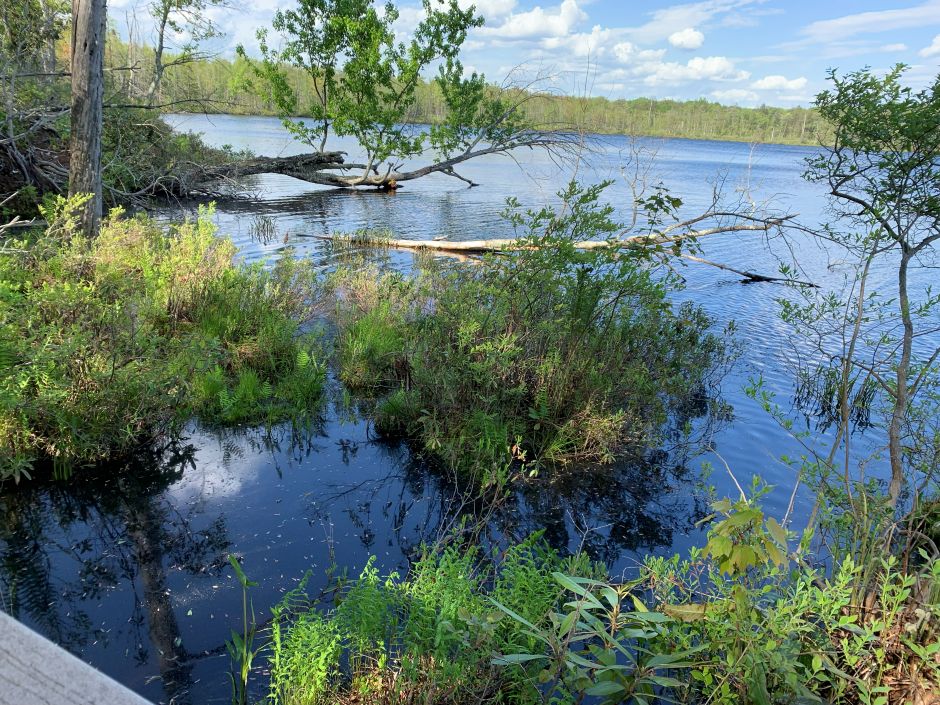
View from the protected shoreline of Lake Lacawac. (Credit: Jenna Robinson / RPI)
Ideally, Rose will be able to use the historical data as a baseline for lake conditions decades ago. Rose has deployed a suite of modern sensors on each lake to collect continuous, high-resolution data, which can be compared to historical conditions.
HOBO temperature loggers are positioned every meter through the water column. PME miniDOTs equipped with wipers measure dissolved oxygen and temperature every 2 meters.
Turner Designs fluorescent dissolved organic matter loggers are also installed on the sensor strings, placed at the top and bottom of the line.
The sensors are deployed year-round on sub-surface floats, with data download happening every few months. Because the system is submerged, the team can leave them deployed even when the lakes freeze over—collecting data 24/7, 365 days of the year.
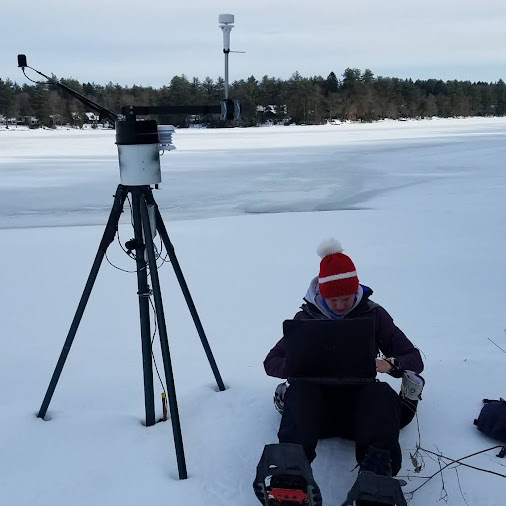
Dr. Jenna Robinson downloading data from a weatherstation on the shore of a frozen Lake Waynewood. (Credit: Max Glines / RPI)
On a monthly basis, someone from the team goes out and collects temperature, conductivity, chlorophyll fluorescence, phycocyanin fluorescence, fluorescent dissolved organic matter, and turbidity profiles in the lake using a YSI EXO2 Sonde.
Rose is hoping this long-term, comprehensive data collection will help determine how lake browning is altering the structure of these lakes—specifically, dissolved oxygen availability.
He adds, “And how reductions in dissolved oxygen from lake browning alter things like dissolved organic matter and nutrient availability, primary productivity, gross primary production, and ecosystem respiration—these larger ecosystem level attributes.”
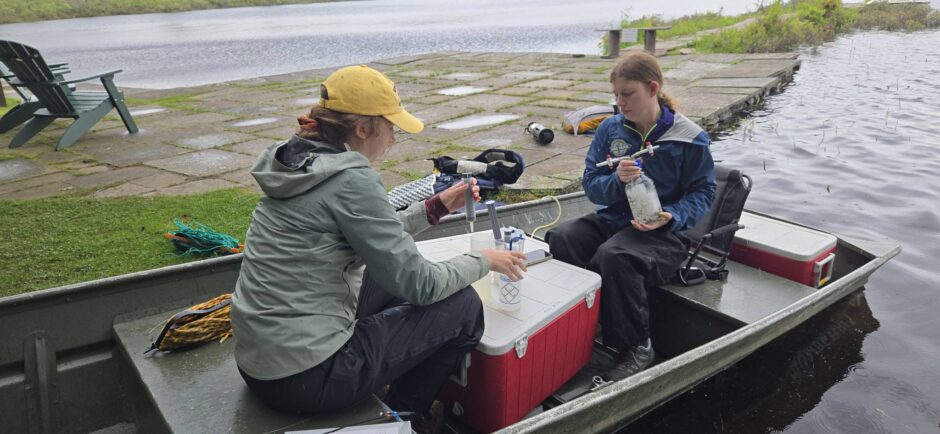
Current graduate students Georgia Larzelere and Shaelyn Prada using the headspace technique to measure dissolved greenhouse gases in water from Lake Lacawac. (Credit: Kasey Crandall / RPI)
Understanding Lake Browning and Recovery
Answering these questions is key to understanding how and why lakes are changing as they recover from decades of damage.
“We know that acid rain has had major impacts on lakes throughout the Northeastern US and elsewhere and we know that a lot of water bodies are recovering now,” states Rose.
He continues, “But then we’re also potentially seeing the super recovery of organic matter, and we know that a reduction in water clarity and dissolved oxygen has a number of ecosystem effects, but we really don’t know if there will be knock-on effects or cascading impacts from these changes.”
For example, reductions in water clarity amplify temperatures at the surface and suppress deep water temperature because light is trapped near the surface.
Temperature changes can alter rates of primary production and respiration, and therefore oxygen production and consumption.
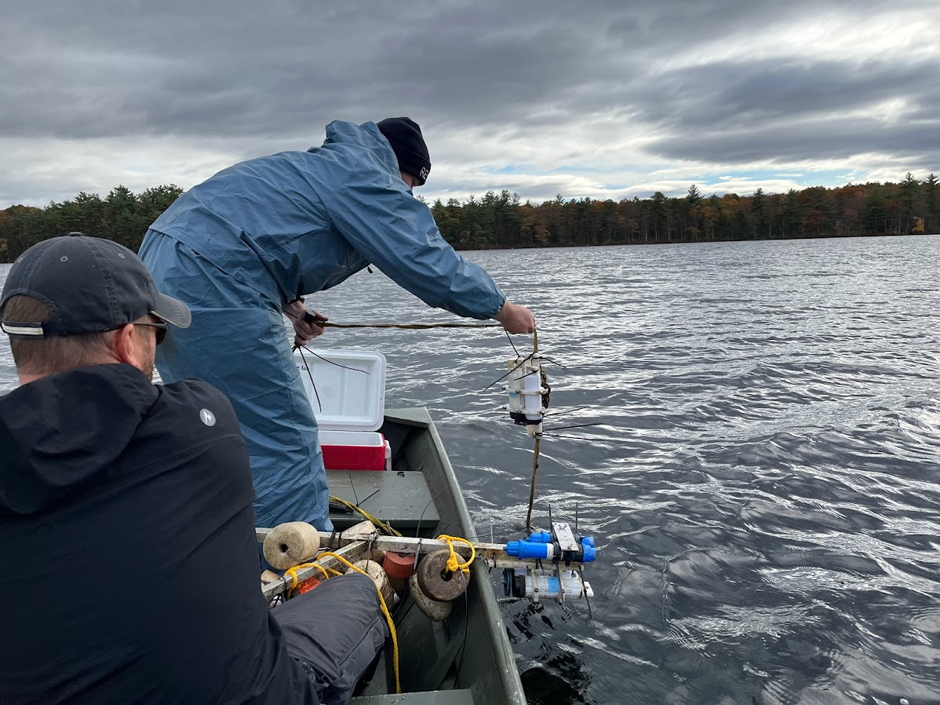
Researchers from RPI lowering a sensor string which includes light, temperature, dissolved oxygen, chlorophyll-a fluorescence, and dissolved organic matter fluorescence in Lake Giles. (Credit: Jenna Robinson / RPI)
Rose also notes the changes to thermal stratification, with fewer periods of seasonal mixing. “Browning lakes have darker warmer surface waters, and cooling deep waters. These changes create a greater temperature difference between our surface waters and deep waters, strengthening stratification.”
He continues, “So you get a bigger temperature differential, which reduces lake mixing, which then reduces the mixing of oxygen from the atmosphere to down deep in the lakes.”
This reduces dissolved oxygen availability for fish, and can contribute to the release of phosphorus from lake sediments or greenhouse gas production in deep water.
“We’re trying to understand what the effects of Lake Browning are, and—as these systems change—forecast what’s going to be the long-term future of these lakes,” explains Rose.
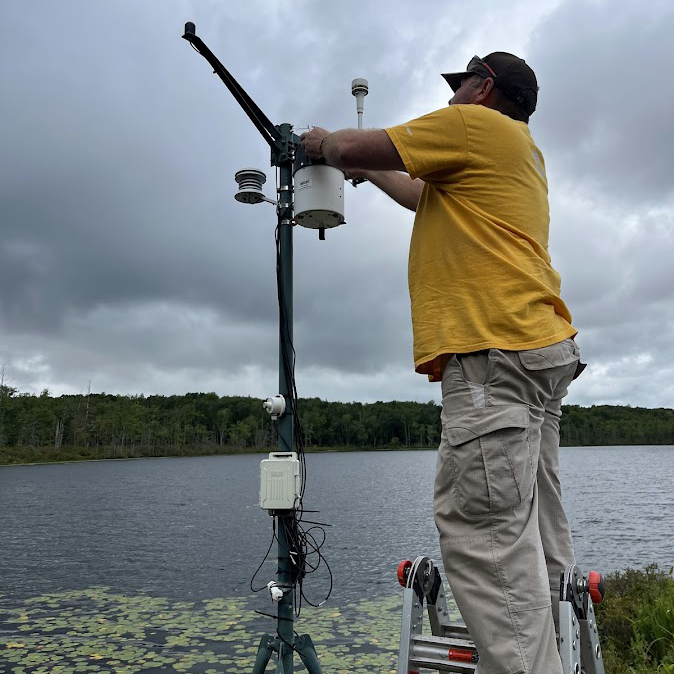
An employee at Lacawac Sanctuary in Lake Ariel, PA, working on an Onset weather station deployed on a dock at the lake. (Credit: Jenna Robinson / RPI)
Sharing Data and the Importance of Collaboration
Data is shared with project collaborators and publicly via the Environmental Data Initiative, informing lake management and providing a foundation for research.
Rose highlights Knoll as a key collaborator, helping to facilitate data collection and processing.
“Sharing data publicly benefits lake science advancements because researchers can tackle questions that a single dataset alone cannot capture,” explains Knoll.
She continues, “Part of the work my lab is doing for this project is helping to get our data in a form ready to be shared with our collaborators, and more broadly, with the public.”
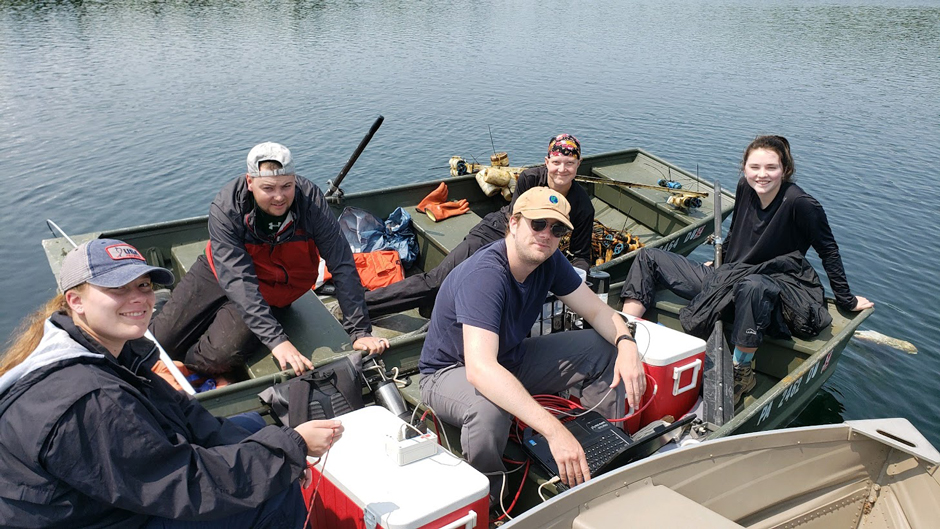
A group of RPI undergraduate students, graduate students, and a professor/researcher from RPI on Lake Giles with a recently retrieved sensor line and coolers filled with water samples and sampling equipment. (Credit: Cassie Roberts / RPI)
Documenting Changes Over Time
While early results suggest that dissolved oxygen availability in deep waters is declining over time as dissolved organic matter concentrations increase, Rose notes that there is a lot of variability year to year based on factors such as the timing of ice-on and ice-off dates and that more research is needed.
Rose and Knoll are in year two of a five-year grant from the National Science Foundation, and Rose notes that he sees the project continuing long after.
“We’ve been sampling these lakes for many years before that, and so I don’t anticipate the sampling will end when the funding ends.”
The team will also be working with the Adirondack State Park and the Global Lake Ecological Observatory Network to compare lake data on a larger scale.
Rose concludes, “We are fortunate that decades ago scientists had the foresight to collect data on many lake water quality attributes. We now understand how these globally important ecosystems are changing only through the context of long-term data. We anticipate the data we collect today will likewise be critical to understanding future ecological change for decades to come.”
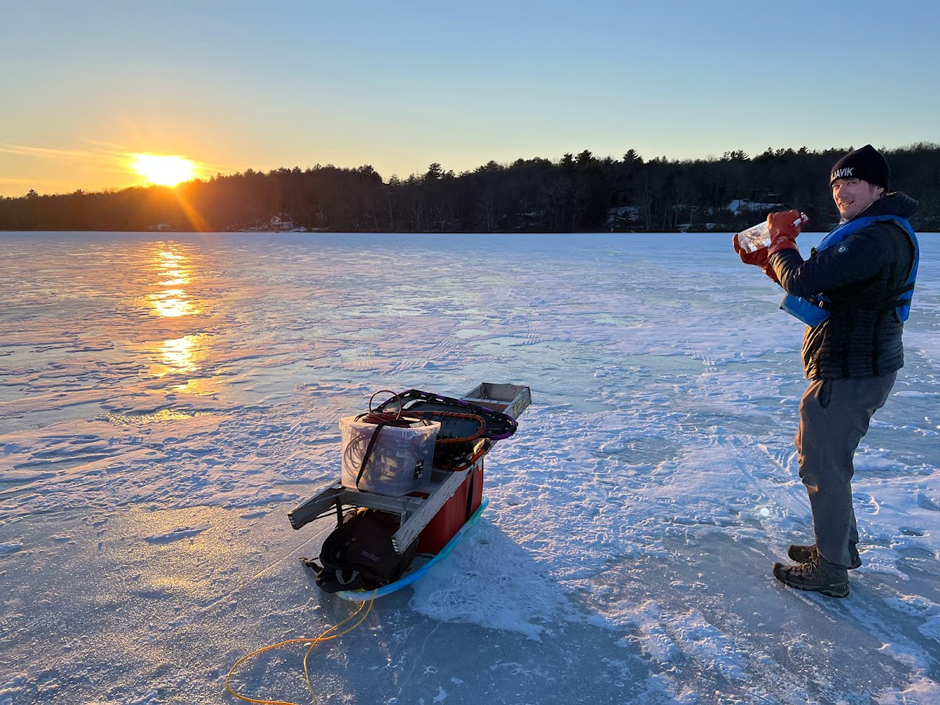
Dr. Max Glines, a former graduate student at RPI, using the headspace technique to measure dissolved greenhouse gases in lake water in Lake Giles. (Credit: Jenna Robinson / RPI)






0 comments