

Monitoring Aquatic Ecosystems: How Science Drives Waterway Management in Northwest Georgia
The University of Georgia is home to multiple labs that focus on monitoring aquatic ecosystems and organisms across the state. The River Basin Center connects these monitoring efforts with external partners, including government agencies and NGOs, to inform management and restoration of the state’s waterways.
Phillip Bumpers is a Postdoctoral Associate in the Rosemond lab and the Wenger lab at the Odum School of Ecology and an affiliate of the River Basin Center. An aquatic ecologist, Bumpers’ research focuses on quantifying how environmental variability shapes aquatic ecosystems and understanding the drivers of these trends.

Researchers at the University of Georgia’s River Basin Center seining for fish in the Etowah River, GA. (Credit: Sara Buckleitner / River Basin Center, University of Georgia)
Monitoring Aquatic Ecosystems in Northwestern Georgia
Recently, Bumpers and Dr. Seth Wenger have been monitoring ecosystems in the Northwestern part of Georgia, collecting water quality data and conducting fish surveys in Holly Creek and the Conasauga and Etowah Rivers. This data is used to establish a baseline of conditions in the waterways, documenting interactions within the ecosystem.
While all three waterways are monitored, the Holly Creek data has a slightly different goal. Holly Creek has undergone some remediation and restoration in recent years, along with some land use reform, making it the ideal environment to test the success of these changes.
Four continuous monitoring stations are set up along Holly Creek, monitoring dissolved oxygen and temperature using a PME miniDOT, water level using a HOBO U20L level logger, and specific conductance using a HOBO U24 conductivity logger. Measurements are performed every 15 minutes and stored internally on each device for download at a later date.
Across each of the lab’s focused waterways, dissolved oxygen, temperature, water level, and conductivity spot measurements are collected using a YSI ProQuatro.
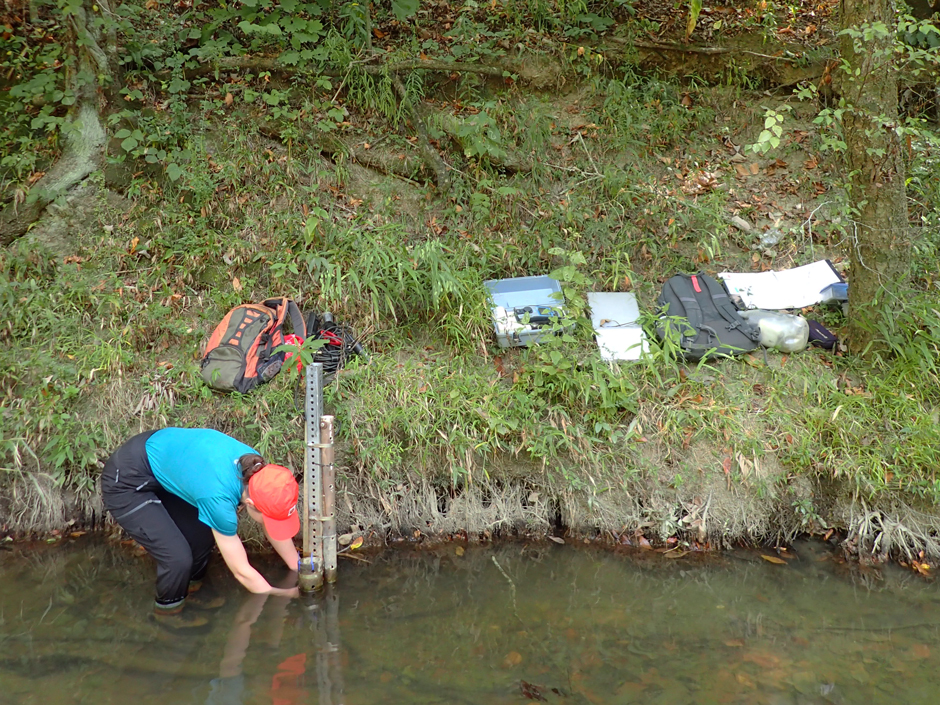
A research technician at the University of Georgia, checking on sensors in Holly Creek. (Credit: River Basin Center, University of Georgia)
In addition to water quality monitoring, Bumpers’ team samples fish in all three rivers annually, quantifying occupancy and measuring abundance for all species encountered during these outings.
Data is added to the long-term database in order to track abundance trends over time. Mussels are also sampled via similar means by project partners in Holly Creek exclusively.
Data-Informed Management of Georgia’s Water Resources
All three of the monitored waterways, which are located in the Mobile River Basin, are home to at least six species of endemic fish, all of which are considered imperiled. Finding out what makes these ecosystems tick is a key part of protecting these species.
For example, agricultural runoff, which can lead to increased algal production and potentially reduced dissolved oxygen caused by increased respiration, is common in some areas of the rivers and could be contributing to declines in several species.
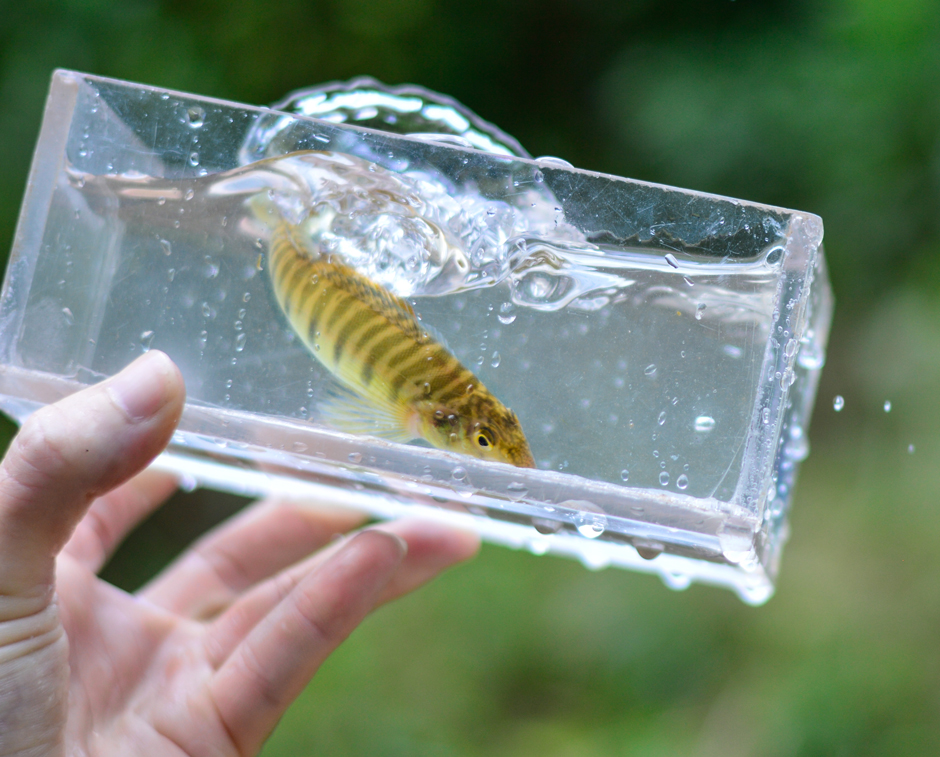
A Mobile Logperch in the Etowah River. Mobile Logperch are native to the Mobile River basin. (Credit: River Basin Center, University of Georgia)
Identifying these trends could inform management, such as the creation of riparian buffer zones and other strategies to minimize nutrient loading.
Water quality and aquatic species data are then sent to the River Basin Center’s funders as well as other outside organizations and groups to help inform management actions in the watershed.
The Center’s long-term monitoring efforts have been ongoing for 28 years, and the large data pool assists with trend spotting as well as documenting conditions in the waterways before, during, and after management.
The long-term monitoring was started by Dr. Bud Freeman, an ichthyologist at the Odum School, to monitor Amber Darter populations in response to water extraction and land use change.
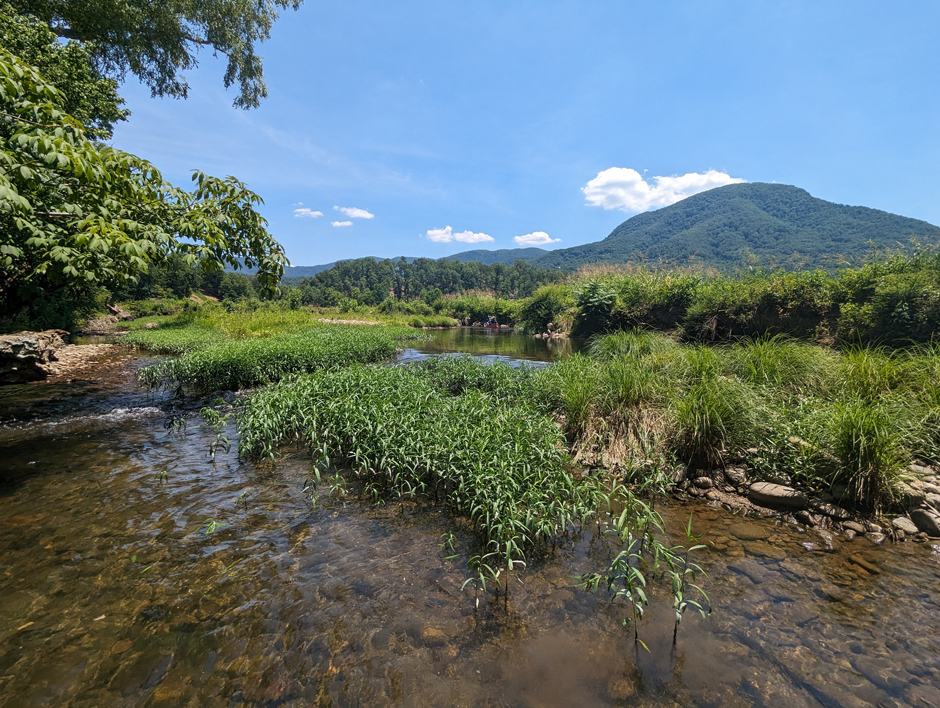
Holly Creek, in northwest GA, is monitored for tracking fish responses to restoration and management actions. (Credit: River Basin Center, University of Georgia)
This dataset may inform how well management policies are protecting aquatic ecosystems, which helps improve water resource management throughout the region.
In addition to guiding management, the data collected by Bumpers and his team will help improve existing understanding of Georgia’s rivers and streams, particularly in pulling apart what is really threatening aquatic ecosystems.
Bumpers explains, “These rivers are highly biodiverse, it’s important to understand what is happening to these systems so that we can keep these fish, several of which live nowhere else in the world, around for future generations. The threats that rare species are facing are myriad, and it’s important to shed light on how these organisms are faring ”
He continues, “We are monitoring the temporal trends in these species, but we can also understand drivers of population variability-how aquatic organisms respond to variation in their environment, such as streamflow or temperature.”
Though time-consuming, Bumpers stresses that this work is essential to protecting the aquatic ecosystem in the region. Fortunately, he has a motivated group of students helping to lead the way.
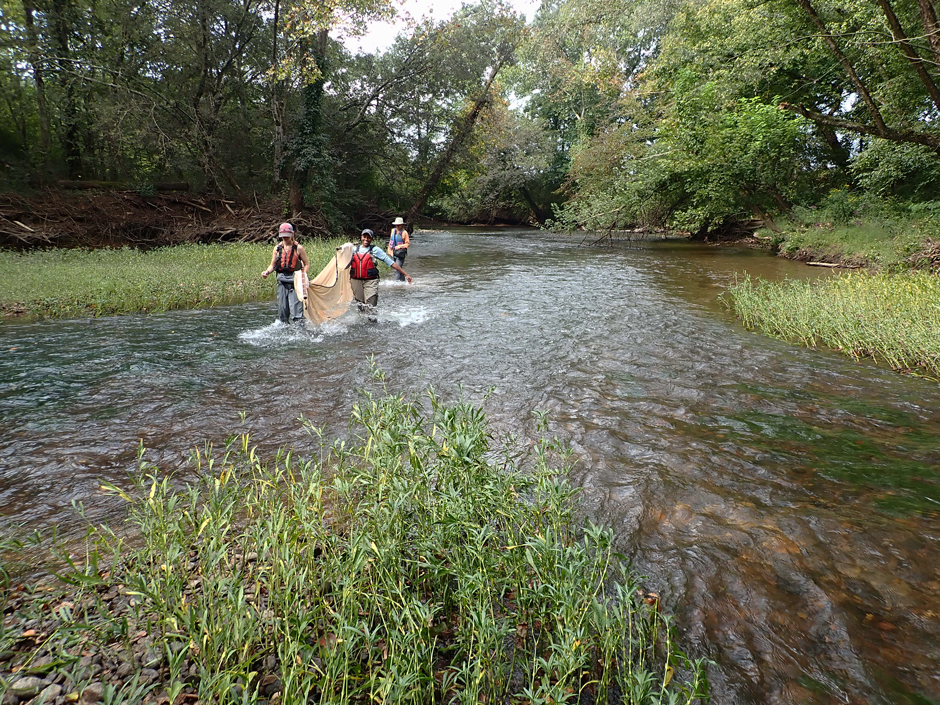
Members of the River Basin Center surveying rare fish in the Conasauga River, GA. (Credit: River Basin Center, University of Georgia)
Conclusion
With an ever-changing environment, understanding drivers of change in aquatic ecosystems is essential to protecting organisms and water resources. Because watershed management is so multi-faceted, research topics can vary from the fish that inhabit these systems to larger physical processes.
Studying each of these variables and building a comprehensive understanding of them is essential to making informed management decisions and protecting aquatic ecosystems as effectively as possible.
“This can help us make predictions about how aquatic systems or particular species may respond to future management actions or changes in their environment,” states Bumpers.
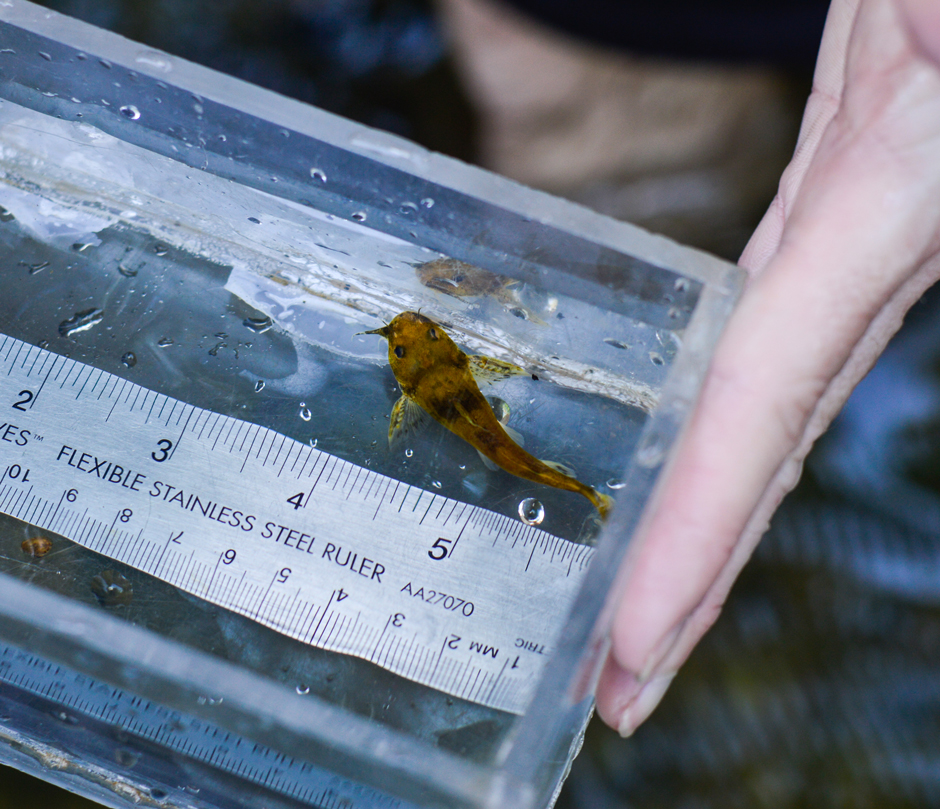
Frecklebelly Madtom observed in the Etowah River, GA. Fish were handled with permits. (Credit: River Basin Center, University of Georgia)





0 comments